
Political leadership directly affects global markets because elected officials and appointed policymakers control taxation, regulation, government spending, and trade policy—all forces that reshape corporate profits, consumer spending, and investment decisions. When a new administration enters office or an election approaches, investors immediately reassess expectations for these four pillars, often triggering sharp price swings across stocks, bonds, and currencies. The clearest evidence comes from 2026 itself: oil spiked above $100 per barrel in March due to geopolitical tensions tied to political decisions, triggering broad stock market volatility, while the looming November midterm elections are already driving elevated uncertainty as investors position for potential shifts in tax and regulatory policy.
This article explores the mechanisms through which political leadership moves markets, examines current 2026 examples ranging from U.S. election-year volatility to Japan’s new growth agenda, and explains what investors and business leaders should monitor in the months ahead. We’ll also cover the practical challenge many face today: the Federal Reserve is holding rates at 3.4% to fight inflation, but investors are betting on deeper cuts to 3.0%, creating a disagreement that political pressure and fiscal decisions will likely influence.
Table of Contents
- How Political Decisions Become Market Movements
- Election Year Uncertainty and Business Investment Behavior
- Global Political Shifts and Regional Market Reactions
- Trade Policy and Tariff Uncertainty—A Practical Guide for Investors
- The Federal Reserve vs. Political Pressure on Interest Rates
- Geopolitical Political Events and Commodity Markets
- The 2026 Outlook and Political Calendar Ahead
- Conclusion
How Political Decisions Become Market Movements
Political leadership affects markets through four primary transmission channels. Taxation changes alter corporate profit margins and consumer spending power—when a government cuts corporate tax rates, companies become more profitable immediately, lifting equity valuations. Regulatory policy reshapes entire industries: stricter environmental rules can crush fossil fuel stocks while lifting renewable energy plays, or new financial regulations can compress bank profitability. Government spending decisions inject or remove demand from specific sectors, whether through infrastructure investment, defense procurement, or entitlement changes. Trade policy, perhaps most visible today, either opens or closes markets to businesses, directly affecting supply chains and prices consumers pay.
Consider the Latin American political shift now underway. Right-wing governments are replacing left-leaning administrations, bringing promises of lighter regulation and business-friendly reforms. Markets are responding by pricing in higher growth potential and lower political risk for investors. Conversely, when an administration signals tariff plans—as the Trump administration has done—uncertainty rises because tariffs increase costs for importing companies and can trigger retaliation, shrinking export markets. The Supreme Court struck down the administration’s use of the International Emergency economic Powers Act for tariff authority, but officials have signaled “plan B” alternatives including time-limited and product-specific levies under other trade law sections, keeping investors guessing about exactly what will be implemented.

Election Year Uncertainty and Business Investment Behavior
Elections create a distinctive market dynamic: political uncertainty causes firms to delay investment decisions until the outcome is known. Research shows that U.S. companies reduce capital expenditures by nearly 5% during election years—a measurable, tangible response to leadership uncertainty. This creates a temporary drag on economic growth and job creation, though it usually rebounds once new leadership is installed and the policy direction becomes clear.
The November 2026 U.S. midterm elections will follow this pattern, though with a twist: markets are already volatile due to unrelated factors like the March 2026 oil spike above $100 per barrel (driven by geopolitical tensions) and sticky inflation shown by consecutive “hot” Producer Price Index readings. Higher volatility typically means wider swings in both directions, creating both risk and opportunity for investors. However, this same volatility can become self-reinforcing—if multiple sources of uncertainty stack up (elections + trade policy + geopolitical tensions + inflation uncertainty), capital markets can freeze, spreads can blow out, and liquidity can evaporate. Japan’s introduction of new Prime Minister Sanae Takaichi and her “Sanaenomics” growth policies showed the opposite dynamic: investors responded positively to clarity about future spending and middle-class stimulus, driving Japanese equity expectations higher for 2026.
Global Political Shifts and Regional Market Reactions
Political leadership changes are sweeping multiple regions, each with distinct market implications. In Japan, the shift to Takaichi’s administration signals a pivot toward growth-oriented fiscal policy aimed at reviving middle-class spending. Japanese investors and global equity funds are already repricing Japanese stocks higher based on expectations of sustained stimulus and higher consumer demand. This illustrates an important principle: markets often react more to the *direction* and *clarity* of policy than to the magnitude.
If a new government is clearly pro-growth and pro-business, that confidence translates into capital flowing back into that market. Latin America shows a different pattern. The regional swing toward right-wing leadership reflects investor appetite for lighter regulation, lower corruption risk, and friendlier business environments compared to the prior left-leaning governments. However, political swings in emerging markets carry additional risks: populist pressure can reverse reform agendas, debt crises can force sudden reversals, and commodity dependence means that falling prices can destabilize governments regardless of their stated policies. A country can elect a pro-business leader, but if the price of its main export commodity crashes, political instability often follows.
Trade Policy and Tariff Uncertainty—A Practical Guide for Investors
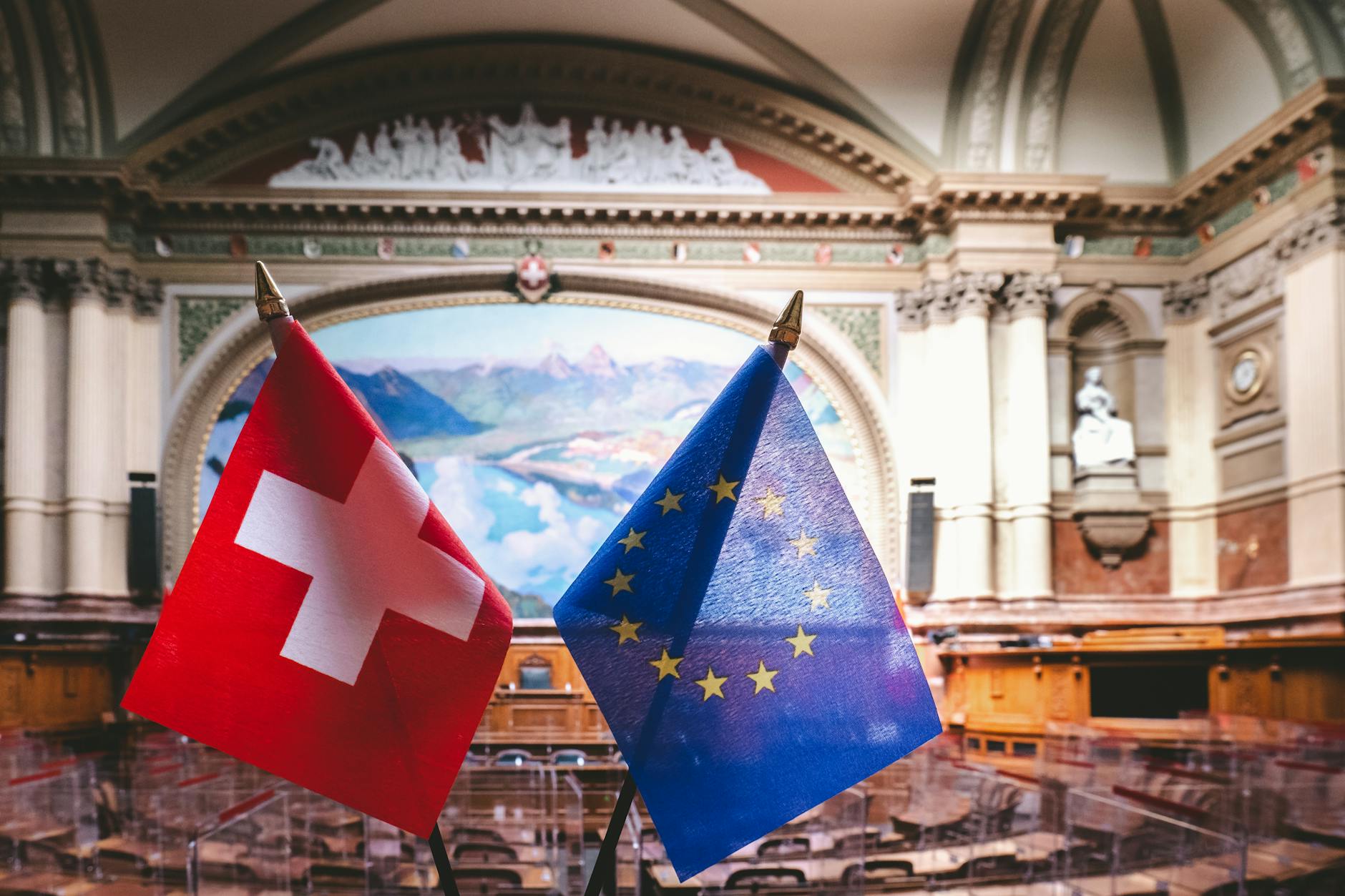
Trade policy has become one of the most direct levers through which political leadership reshapes markets. Tariffs act as a tax on imported goods, raising costs for companies that rely on global supply chains and ultimately raising prices for consumers. The Trump administration’s 2026 tariff agenda has created significant investor confusion because initial plans under the International Emergency Economic Powers Act were struck down by the Supreme Court, yet the administration signaled “plan B” alternatives including time-limited and product-specific levies under other trade law sections. For investors, this legal uncertainty is as important as the economic impact.
If tariffs are narrowly targeted—say, on steel imports only—companies outside that sector can plan accordingly. But if tariffs are broad and time-limited, firms cannot commit to long-term supply chain investments because they don’t know if costs will remain elevated. This creates a comparison worth noting: a tariff regime that is narrow, predictable, and permanent is easier for business to price in than one that is broad, legal-uncertain, and temporary. Stock markets typically punish the latter scenario with higher volatility and wider valuation spreads across sectors. Companies heavily dependent on imports—consumer goods, automobiles, electronics—face margin pressure, while domestic producers of competing goods can see temporary profit expansion, creating opportunity for tactical investors familiar with supply chain details.
The Federal Reserve vs. Political Pressure on Interest Rates
One of the most consequential tensions in 2026 involves a disagreement between political leadership and monetary policy. The Federal Reserve plans to keep interest rates at approximately 3.4% through the end of 2026 to manage sticky inflation shown by recent Producer Price Index data. However, investors and politicians are betting on deeper cuts to around 3.0% based on hopes that inflation will cool and economic growth will justify lower rates. This disagreement matters because interest rates affect everything: the discount rate used to value stocks, the attractiveness of bonds, the cost of mortgages and auto loans, and ultimately consumer and business spending.
Political leadership can influence this dynamic through two channels. First, government spending and fiscal stimulus pressure the Fed by pushing inflation higher, forcing the Fed to hold rates steady or cut more slowly than investors hope. Second, rhetoric and public criticism from elected officials can subtly shift Fed expectations over time. The Fed is legally independent, but it operates within a political system, and sustained political pressure—especially combined with an actual downturn or financial stress—can shift central bank calculations. However, the Fed’s inflation-fighting credibility is a hard-won asset, and abrupt political pressure to cut rates risks destroying that credibility and causing inflation to accelerate again, which would ultimately hurt both the economy and the stock market more than short-term lower rates would help it.

Geopolitical Political Events and Commodity Markets
The March 2026 oil price spike above $100 per barrel illustrates how geopolitical decisions by political leaders abroad immediately cascade into global markets. War, sanctions, embargoes, and diplomatic breaks can all disrupt commodity supplies, driving prices higher and rippling through inflation expectations and stock valuations. Oil is the most visible example, but the same dynamic applies to wheat, metals, fertilizer, and other globally traded commodities.
Investors who understand political risk often position ahead of such events. If geopolitical tensions rise in a major oil-producing region, savvy traders buy energy stocks and oil futures in anticipation, while companies with commodity exposure adjust hedging strategies. The March 2026 event happened quickly, suggesting that some investors were caught off-guard, but the broader lesson is clear: political leadership decisions abroad—especially military decisions—are market-moving forces that cannot be ignored in a globally integrated economy.
The 2026 Outlook and Political Calendar Ahead
Looking forward through 2026, the political calendar is packed with market-moving events. The U.S. midterm elections in November will drive equity volatility higher than normal, as noted by Morgan Stanley’s outlook on political trends investors should watch. Japan’s new leadership will continue implementing Sanaenomics, creating potential outperformance for Japanese equities and yen strength depending on how aggressively stimulus is deployed.
Latin America’s political rightward shift will likely continue, with markets rewarding countries that deliver on business-friendly reforms while punishing those that fail to control inflation or corruption. The tariff situation remains unresolved with legal uncertainty, meaning investors should expect continued volatility in sectors like technology, retail, and automotive until a clearer picture emerges. The Fed’s decision to hold rates steady despite political pressure for cuts will remain a critical focal point. Any shift in the Fed’s stance—either a surprise rate cut or a change in language signaling a longer period of held rates—could trigger sharp repricing across all asset classes. For investors, the key principle is simple: monitor the political calendar, understand the policy positions of major candidates and leaders, and anticipate market reactions before they happen rather than reacting after the fact.
Conclusion
Political leadership affects global markets through taxation, regulation, government spending, and trade policy. These levers reshape corporate profitability, consumer behavior, and investment decisions across the entire economy. The 2026 economic environment—marked by sticky inflation, geopolitical oil spikes, an approaching U.S. midterm election, and ongoing tariff uncertainty—demonstrates how political decisions create market volatility, uncertainty for business investment, and opportunities for informed investors.
The most successful investors and business leaders take a proactive approach: they study the political landscape, understand the specific policy positions of leading candidates and officials, and anticipate how those policies will reshape their industry or portfolio. Rather than treating politics as an external shock, treat it as a predictable force with measurable economic consequences. Monitor election calendars, tariff negotiations, central bank rhetoric, and geopolitical tensions. The markets are already pricing in expectations about political outcomes; your edge comes from understanding those expectations better than the crowd.