
Sanctions and policy changes can crater or stabilize global markets with little warning, as seen in March 2026 when a single Treasury action to stabilize oil prices after the Iran war simultaneously triggered a transatlantic political rift. The unexpected part isn’t the policy shift itself—it’s the cascading second and third-order effects that catch investors off guard. When governments rewrite trade rules or tighten sanctions regimes, the immediate headline impact (cheaper oil, lower tariffs) masks a complex web of disruptions: supply chains fracture across regions, compliance costs explode for financial institutions, and entire sectors recalibrate their cost structures overnight.
This article examines how recent sanctions and tariff changes in 2026 have reshaped global markets, why investor expectations often miss the real impact, and what specific risks remain embedded in the current policy landscape. The challenge for investors is that policy-driven shocks move at government speed, not market speed. Markets are flat for much of 2026 despite expectations for strong earnings and AI-driven productivity gains, largely because the Iran war energy shock and cascading policy responses have reintroduced stagflation fears—the twin threat that stocks and bonds fall together. Understanding how geopolitical policy decisions translate into portfolio risk requires looking beyond the policy announcement to the enforcement mechanics, the international response, and the structural changes in supply chains and compliance costs that follow.
Table of Contents
- How Do Oil Sanctions Changes Immediately Ripple Through Energy and Equity Markets?
- Why Have Tariff Changes Triggered Persistent Stagflation Risks Rather Than Inflation Relief?
- How Supply Chain Restructuring Shifts Competitive Advantage Away From Globalized Producers
- What Do Investors Need to Know About Sanctions Compliance Costs as a Drag on Corporate Margins?
- Why Global Growth Projections Remain Subdued Despite Policy Support for Stability
- How Institutional Investors Are Repositioning Portfolios in Response to Policy Uncertainty
- What Should Investors Expect as 2026 Unfolds and Policy Regimes Crystallize?
- Conclusion
How Do Oil Sanctions Changes Immediately Ripple Through Energy and Equity Markets?
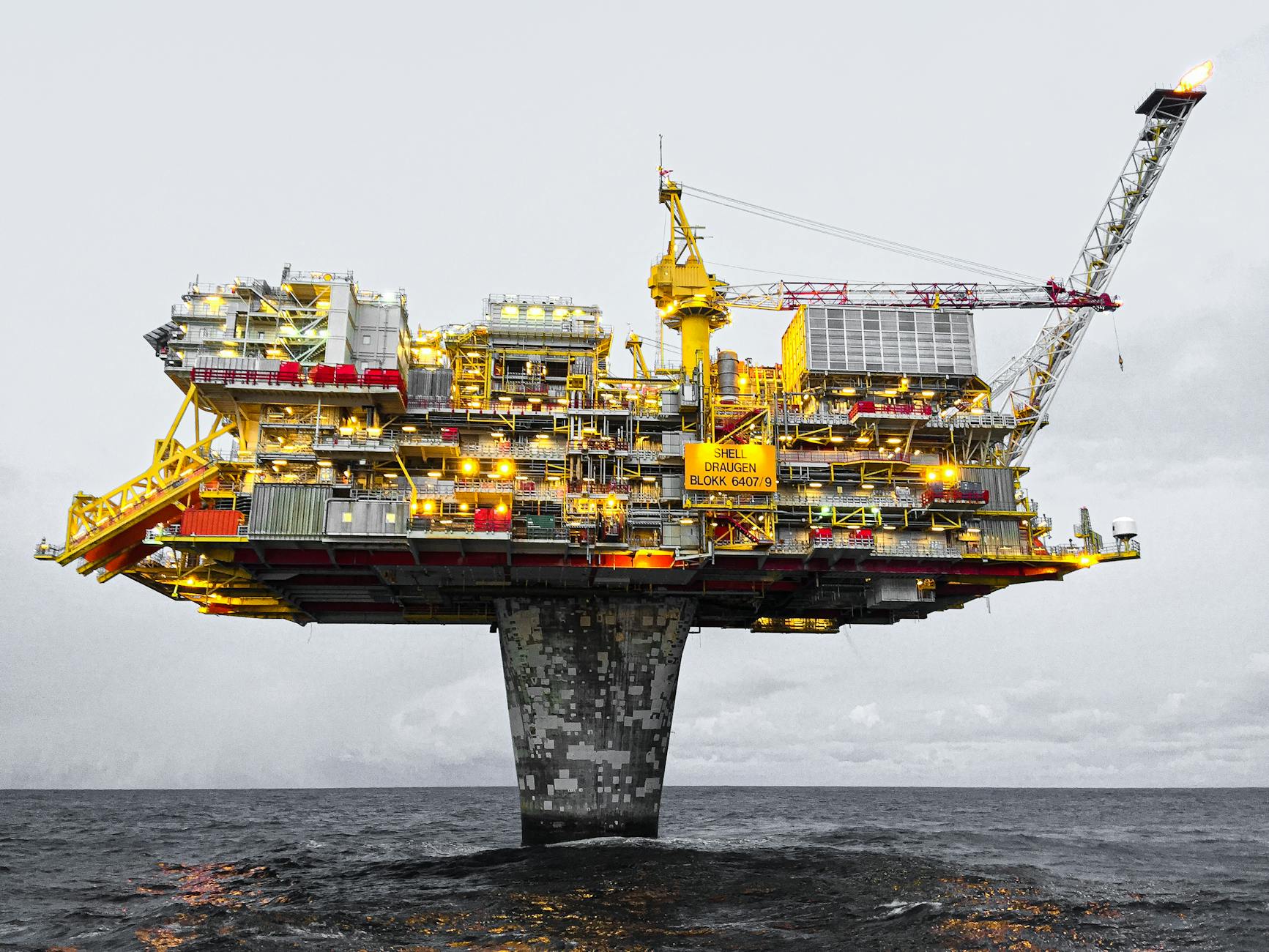
In March 2026, the U.S. Treasury expanded Russian oil import permissions under General License 134, a direct policy reversal aimed at stabilizing global oil prices after the Iran war disrupted Strait of Hormuz flows. The stated objective—Treasury Secretary Scott Bessent’s goal to “keep prices low” and “promote stability”—was clear. But the market reaction exposed a fault line: the European Commission and EU leaders opposed this relaxation, creating a significant transatlantic policy split that markets had not fully priced in. Oil prices, which respond instantly to supply signals, stabilized somewhat, but equity markets remained oddly flat, suggesting that investors were hedging against the risk that the EU sanctions-policy divergence could fragment the global energy market into competing blocs.
This creates a specific risk for energy-heavy portfolios. European energy companies, which had positioned for a complete Russian oil cutoff, now face unpredictable competition from U.S. and non-EU importers leveraging the broader GL 134 license. Meanwhile, companies in EU member states face compliance complexity: EU law still prohibits Russian oil purchases under the 12th sanctions package, but the U.S. now permits it, forcing firms to choose between markets or face legal exposure in one jurisdiction. The longer-term concern is that Russia redirects supply toward Asia, strengthening Beijing’s negotiating position over commodity flows—a geopolitical shift with 10+ year implications for energy security pricing.
Why Have Tariff Changes Triggered Persistent Stagflation Risks Rather Than Inflation Relief?
The Supreme Court’s February 2026 ruling struck down all IEEPA-based tariffs—the reciprocal and fentanyl tariff regimes—only to be replaced within weeks by a flat 10% import tariff under Section 122 of the Trade Act of 1974, signaled to rise to 15%. On paper, tariff policy simply shifted its legal foundation; in practice, this created a structural tax on the entire import-dependent economy. J.P. Morgan’s analysis quantifies the household impact: the average U.S. household faces a $1,500 tax increase in 2026 alone, the largest tariff-based tax increase as a percent of GDP since 1993.
However, the stagflation risk stems from a deeper structural problem: tariffs raise input costs, which compress profit margins while simultaneously raising consumer prices. This creates the worst of both worlds—slower earnings growth (downward pressure on stock valuations) combined with goods inflation (upward pressure on interest rates). The unemployment impact crystallizes the risk: tariffs are projected to increase U.S. unemployment by 0.3 percentage points by year-end 2026, even as price pressures keep the Federal Reserve from easing rates aggressively. A limitation of this analysis is that it assumes tariffs remain unchanged; if the 15% escalation is delayed or negotiated downward, the employment and inflation impacts could moderate—but markets are pricing in continued escalation, not rollback.
How Supply Chain Restructuring Shifts Competitive Advantage Away From Globalized Producers
Global firms are no longer optimizing purely for cost; they’re restructuring around geopolitical risk. The shift from offshoring to “near-shoring”—moving production closer to end markets—is accelerating through 2026 as companies diversify suppliers, localize critical inputs, and vertically integrate operations to avoid sanctions exposure and tariff penalties. This benefits regional producers and developed-market manufacturers with higher labor costs but lower geopolitical risk, while penalizing the integrated global supply chains that dominated 2010-2020.
A concrete example: pharmaceutical and semiconductor firms are reshoring advanced manufacturing to North America and Europe, accepting 20-30% higher labor costs to escape tariff exposure and sanctions compliance complexity. Meanwhile, companies remaining in low-cost jurisdictions face margin compression from tariffs on their inputs plus customer pressure to move production. This creates a 2-3 year transition window where valuations remain volatile because investors can’t yet model which competitors will successfully navigate the shift. Companies that have already invested in near-shoring capacity gain competitive advantage; those still optimizing legacy global supply chains face margin pressure and potential tariff clawbacks.

What Do Investors Need to Know About Sanctions Compliance Costs as a Drag on Corporate Margins?
Sanctions enforcement has moved beyond geopolitical edge cases into systematic financial sector overhead. OFAC enforcement actions in 2023-2024 exceeded $1 billion, excluding the far larger remediation, monitoring, and systems costs that fall on banks, investment firms, and multinational corporations. As sanctions regimes expand and policy shifts create legal uncertainty—like the March 2026 GL 134 surprise—compliance costs rise further because firms must update screening systems, retrain personnel, and audit existing transactions for gray-area exposure. This creates a material headwind for financial services stocks and multinational corporations with complex global operations.
A bank operating in EU and U.S. jurisdictions simultaneously now faces conflicting compliance obligations if one regulator relaxes sanctions while the other tightens them, forcing expensive dual-compliance frameworks. The tradeoff is stark: companies can invest heavily in compliance infrastructure (raising operational costs) or accept regulatory risk and potential fines (overhang on earnings). Smaller firms often choose the latter because they lack the scale to absorb compliance costs, which shifts market share toward larger competitors—a consolidation dynamic that may take years to fully price in.
Why Global Growth Projections Remain Subdued Despite Policy Support for Stability
The IMF and UNCTAD project global economic growth at approximately 2.6% in 2026, compared to 3.3% showing current resilience. This subdued projection reflects the persistent headwinds from tariffs, sanctions uncertainty, and energy volatility—not a bounce-back from these shocks. Developing economies excluding China are expected to slow to 4.2%, a significant drag that limits export-driven growth for emerging market equities.
The warning here is that investor portfolios remain heavily weighted toward equities in developed markets, which benefit from near-shoring trends but face higher labor and compliance costs, while emerging markets (higher nominal growth rates) face structural headwinds from tariffs and policy volatility. The Iran war, which triggered the entire 2026 policy cascade, remains an ongoing geopolitical risk that could spike oil prices again if the conflict expands to include additional straits or infrastructure targets. If that occurs, the Treasury’s GL 134 authorization could be quickly reversed, introducing a second wave of supply chain and pricing disruption. Markets are currently pricing in a “contained conflict” scenario with moderated oil prices; a shift to broader regional instability would likely trigger a repricing of risk assets.

How Institutional Investors Are Repositioning Portfolios in Response to Policy Uncertainty
Asset managers are increasingly applying “policy risk” as a distinct valuation factor alongside traditional financial metrics. Firms with high tariff exposure, heavy reliance on Chinese supply chains, or significant Russian/EU exposure are being repriced downward, not on earnings fundamentals alone, but on the multiple-compression effect of persistent policy uncertainty.
Conversely, companies with diversified supply chains, large domestic market exposure, and low sanctions complexity are trading at relative premiums because their policy risk profile is lower. The specific repositioning involves rotation into sectors less vulnerable to tariff escalation (technology with low import content, healthcare with insulated pricing power, utilities with domestic revenue bases) and away from sectors highly exposed to trade policy (consumer discretionary, automotive, industrial manufacturing). This rotation explains much of why equity markets remain flat despite strong AI earnings expectations—policy risk is offsetting technology earnings growth.
What Should Investors Expect as 2026 Unfolds and Policy Regimes Crystallize?
By mid-year 2026, the tariff regime will likely stabilize at either the proposed 15% level or some negotiated reduction, reducing policy uncertainty and allowing clearer valuations to emerge. The EU’s final implementation of Russian LNG import bans (complete by January 2027) will lock in long-term energy relationships—China’s absorption of larger portions of Russian LNG is virtually certain given its existing 30% stake in Yamal LNG and energy diversification priorities. This creates a structural energy realignment with lasting implications for European energy security and pricing dynamics.
The broader lesson is that policy changes create persistent winners and losers that markets take time to identify. Investors who focus only on the immediate policy announcement—cheaper oil, broader import access—miss the institutional complexity (compliance costs, geopolitical fragmentation, supply chain restructuring) that determines real portfolio returns. The flatness of equity markets in early 2026 reflects this uncertainty; as policies crystallize and firms complete their supply chain transitions, volatility is likely to increase as valuations reset to reflect the new competitive landscape.
Conclusion
Sanctions and policy changes affect global markets through multiple, overlapping channels: immediate commodity price movements, longer-term supply chain restructuring, compliance cost escalation for financial institutions, and geopolitical fragmentation that fragments previously unified global markets. The March 2026 Russian oil sanctions shift and the January 2026 tariff regime changes illustrate this dynamic—both policies were presented as stabilizing measures, yet both have contributed to equity market flatness and revived stagflation concerns because their second-order effects (EU-U.S. policy split, margin compression from tariffs and compliance costs, near-shoring disruption) outweigh the first-order stabilization benefits.
For investors, the key takeaway is to look beyond policy headlines to institutional implementation, geopolitical responses, and supply chain implications. Diversification across supply chain exposure, compliance cost profiles, and tariff sensitivity is now a core risk management requirement, not a peripheral concern. As 2026 progresses, markets will likely reprice as policy regimes crystallize and firms complete their structural adjustments—creating opportunities for investors who understand which companies navigate the new landscape successfully and which face persistent headwinds from evolving trade and sanctions policy.