
Economic policies serve as either shock absorbers or shock amplifiers for global markets—the difference often determines whether investors navigate smooth waters or face sudden turbulence. The core answer is straightforward: stabilizing policies maintain clear rules, gradual adjustments, and predictable timelines; destabilizing policies introduce sudden shifts, conflicting signals, and uncertainty that triggers panic selling and capital flight. Right now, in March 2026, we’re watching this play out in real time. The Federal Reserve’s decision to hold rates steady at 3.5%-3.75% on March 18—a deliberate 11-1 vote to stay the course—demonstrates the stabilizing approach: clarity and patience.
Conversely, the global tariff escalation and geopolitical tensions that triggered the financial “fear index” to reach its third-highest level on record (after only COVID-19 and 2008) show how destabilizing policies create investor paralysis. This article explores the mechanics of how different economic policies either steady global markets or send them into crisis mode. We’ll examine what happened when central banks maintained predictable pathways versus when trade policy uncertainty spooked markets worldwide. We’ll look at how monetary policy decisions ripple through stock markets in Europe and Asia, why inflation forecasts matter more than inflation readings themselves, and how supply chain upheaval affects smaller economies disproportionately. Finally, we’ll cover the practical reality: investors must distinguish between policy noise (short-term market moves) and policy risk (structural market damage).
Table of Contents
- How Monetary Policy Signals Determine Market Confidence
- Why Inflation Expectations Matter More Than Current Inflation Numbers
- Trade Policy Shocks and Supply Chain Destabilization
- How Global Growth Forecasts Shape Investment Risk Appetite
- Why Smaller Economies Are Most Vulnerable to Policy Shocks
- Market Contagion: From Policy Signals to Stock Market Reality
- The Forward-Looking Risk: Policy Clarity in a Fragmented World
- Conclusion
How Monetary Policy Signals Determine Market Confidence
The Federal Reserve’s decision to hold interest rates steady, with projections indicating only one rate cut in 2026 and possibly another in 2027, exemplifies stabilizing monetary policy. Markets don’t actually care about the precise rate—they care about predictability. The Fed’s willingness to maintain the 3.5%-3.75% range despite rising oil prices and persistent inflation expectations sends a message: we have a plan, we’re not panicking, and neither should you. This stability allows investors to price assets based on fundamentals rather than fear of surprise rate shocks. Compare this to the opposite scenario, which we saw hints of in 2025: when central banks appear indecisive or reactive, markets convulse. The Bank of England’s March 2026 pivot to a more hawkish stance—removing language about future rate cuts—initially unsettled markets because it signaled a possible change in policy direction.
However, because the BoE telegraphed this view transparently, it provided investors time to adjust positioning rather than shocking the market. The difference between orderly repricing and chaos often comes down to communication clarity. A rate hike announced in advance causes less disruption than a surprise rate hike, even if the economic outcome is identical. The Fed’s continuation of its $6.6 trillion balance sheet—purchasing Treasury bills and securities with short maturities of three years or less—further stabilizes by ensuring liquidity in the short-term funding markets. This is the kind of unglamorous, steady policy work that prevents financial plumbing from seizing up. When liquidity dries up, even fundamentally sound investments become unsellable at rational prices. The Fed’s balance sheet size gets less media attention than interest rates, but for market stability, it’s equally critical.

Why Inflation Expectations Matter More Than Current Inflation Numbers
The distinction between current inflation and inflation expectations is crucial for understanding policy impact. February 2026 core CPI rose 0.2% month-over-month, and the annual rate held at 2.5%—both reasonable, nearly-neutral figures. Yet the Federal Reserve projects 2.7% inflation for 2026 based on personal consumption expenditures. This small gap—between current reality (2.5%) and expected future reality (2.7%)—is precisely what central banks obsess over, because it drives investment decisions. Here’s the warning: if policy makers allow inflation expectations to become unanchored—if investors and workers start believing inflation will persistently exceed the central bank’s target—then policy becomes destabilizing. Rising oil prices, which have become a significant factor in Fed policy discussions, create upward pressure on headline inflation.
If the Fed responds with rate hikes, it stabilizes inflation expectations but may slow growth. If the Fed ignores rising oil prices and holds steady, it risks expectations drifting higher. The Bank of England’s hawkish shift was partly a response to inflation being sticky above their 2% target; they signaled “we won’t let this drift higher,” which paradoxically stabilizes even if it involves tighter policy. The limitation: inflation expectations can only be anchored if the central bank has credibility. The Fed has earned credibility over 40+ years of Paul Volcker-era discipline. Newer or less-trusted central banks can announce the same inflation targets and find investors simply don’t believe them. This is why smaller nations with less institutional credibility suffer disproportionately when global inflation pressures arise—investors demand higher yields to compensate for the risk that the central bank won’t maintain its commitment.
Trade Policy Shocks and Supply Chain Destabilization
The 2025 tariff surge represents one of the clearest recent examples of destabilizing policy. Global tariffs rose dramatically, driven primarily by US measures, and the impact rippled through manufacturing globally. Nearly two-thirds of global trade occurs within value chains—integrated production networks where a smartphone component made in Vietnam is assembled in Thailand and sold in America. When tariffs suddenly shift, these networks seize up. Firms must decide within months whether to relocate production, find new suppliers, or absorb tariff costs. This uncertainty is corrosive.
The April 2025 financial turbulence that sent the fear index to its third-highest level on record was directly traceable to tariff uncertainty. Investors couldn’t accurately price earnings if they didn’t know whether a company would face tariffs, tariff exemptions, retaliatory tariffs, or new trade agreements. Supply chain restructuring is actively occurring right now—firms are diversifying suppliers and relocating production to avoid tariff exposure—but this is expensive and slow. The real-world example: automakers that built supply chains over 20 years are now spending billions to reconfigure them. During this transition, profitability suffers. The critical limitation: supply chain restructuring cannot happen overnight, which means trade policy shocks inflict damage over years, not weeks. A tariff that seems modest in March 2026 can cascade into layoffs and factory closures by 2027 when firms complete their relocation planning.

How Global Growth Forecasts Shape Investment Risk Appetite
The IMF projects global growth at 3.2% for 2025 and 3.1% for 2026—a slight deceleration that reflects policy uncertainty and tariff headwinds. Goldman Sachs offers a more granular forecast: 2.8% global GDP growth for 2026, with the US accelerating to 2.6% and China expanding 4.8%. The slight divergence between these forecasts matters less than the direction: slowing growth globally, with developed economies (US, Europe, Japan) growing slower than emerging markets (China). This forecast directly influences asset allocation. Slower global growth typically means lower corporate earnings, which means lower price-to-earnings multiples for stocks.
However, slower growth also means less inflation pressure, which could eventually support central bank rate cuts. The policy tradeoff is stark: stabilizing policies that prevent deflation (rate cuts, fiscal stimulus) may boost near-term markets but require higher future inflation. Destabilizing policies that combat inflation too aggressively (sharp rate hikes, tariffs) protect long-term price stability but create sharp near-term losses. Real-world comparison: Japan’s economy expanded slowly for decades, but large investors could still profit by understanding the slow-growth regime and allocating accordingly. Conversely, the 2008 financial crisis destroyed portfolios not because growth was slow but because the slowdown was unexpected and destabilizing. The difference between a slow, steady policy environment and a crisis-level environment is certainty, not the absolute growth rate.
Why Smaller Economies Are Most Vulnerable to Policy Shocks
Larger, diversified economies like the US, China, and Europe can absorb tariff shocks, currency volatility, and interest rate changes because they have multiple levers to pull. The US can raise tariffs on foreign goods but sell services globally and maintain a deep capital market. China can redirect supply chains and stimulate domestic consumption. Europe can coordinate fiscal and monetary policy across member states. Smaller economies, often with less diversified export bases, are disproportionately vulnerable.
Growth in developing economies excluding China is projected to slow to 4.2% in 2026, down from faster rates in prior years, precisely because tariff uncertainty forces them to retrench. If a small nation’s primary export is textiles, and new tariffs make textile exports uncompetitive, that economy has few alternatives. The fiscal strain is severe: tariffs reduce export revenue, which reduces government tax intake, which forces spending cuts at the exact moment the economy needs stimulus. The warning: when you see announcements about global economic slowdown, check whether the slowdown is evenly distributed or concentrated in smaller nations. Concentrated slowdowns in vulnerable economies can trigger debt crises and currency collapses that spread globally.
Market Contagion: From Policy Signals to Stock Market Reality
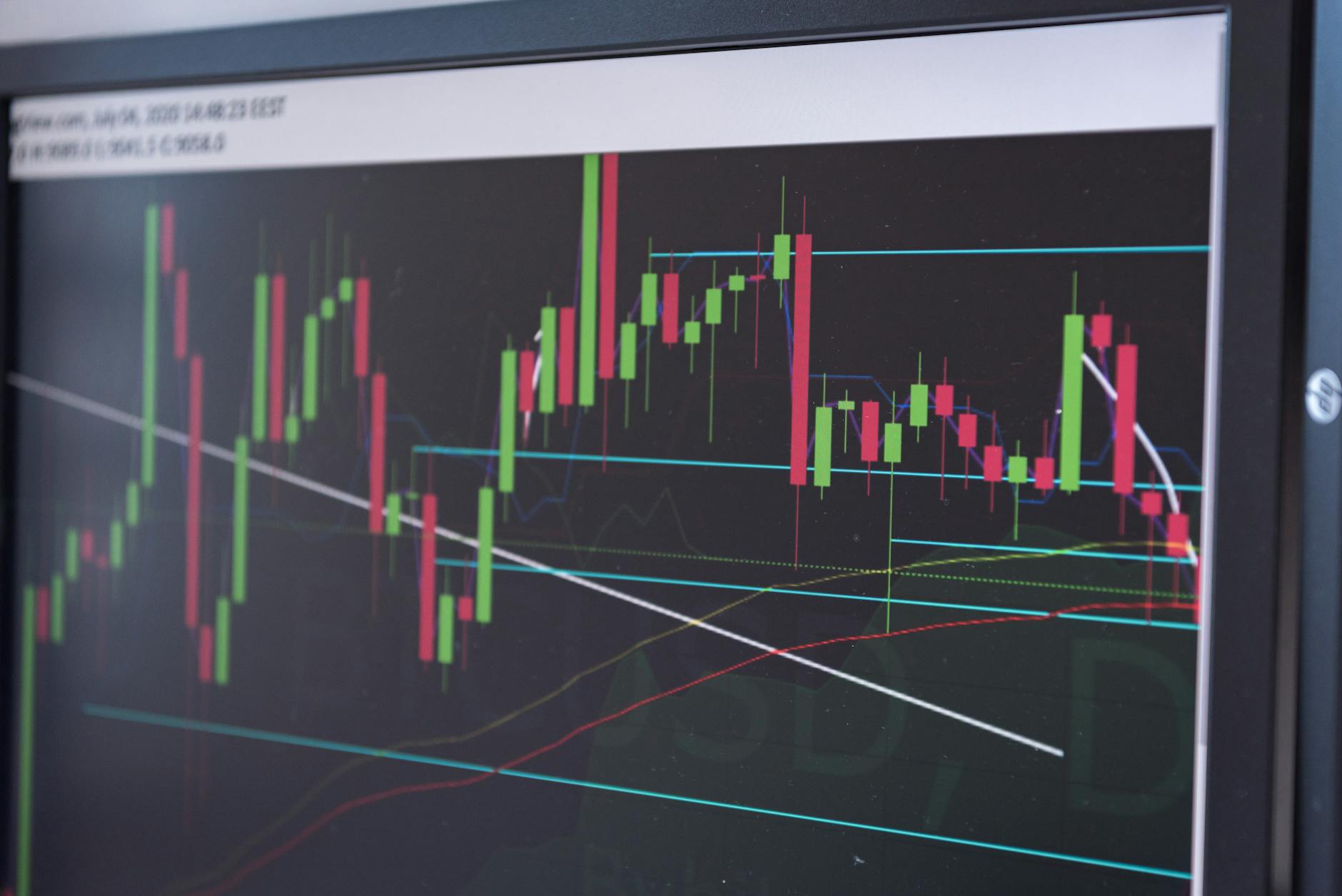
The recent declines in European and Japanese equities demonstrate how policy signals translate into instantaneous market moves. The STOXX Europe 600 Index slipped 0.47% in local currency terms after BoE signaled a hawkish shift. The Nikkei 225 Index declined 3.24% and TOPIX Index fell 2.36%, partly in response to expectations that higher US rates would weaken the Japanese yen and compress corporate margins.
These aren’t massive crashes, but they’re consistent and directional. The policy lesson: markets respond not to economic reality but to changes in policy direction. A weak quarter is often absorbed calmly if investors expected it; a strong quarter can trigger selling if investors expected even stronger results. Policy surprises—whether inflation coming in higher than expected or central banks shifting their stance—generate outsize market moves.
The Forward-Looking Risk: Policy Clarity in a Fragmented World
Looking ahead to late 2026 and beyond, the critical policy question is whether central banks and governments will maintain coordinated, clear messaging or drift into conflicting signals. The Fed’s 11-1 vote to hold rates steady suggests internal consensus, which is stabilizing. However, global policy fragmentation is rising: the BoE moves hawkish while other central banks remain accommodative; tariffs continue to escalate; geopolitical tensions fuel unpredictable energy prices.
In such an environment, even a “steady” policy from the Fed cannot fully stabilize global markets if other major economies are pulling in different directions. The forward-looking insight is that policy clarity matters more than policy content. A world with higher interest rates but clear central bank guidance may be more stable than a world with lower rates and constant policy surprises. Investors should monitor not just the Fed’s interest rate decision in June 2026 or the ECB’s December announcement, but the language accompanying those decisions and the degree of internal dissent or consensus.
Conclusion
Economic policies stabilize or destabilize global markets primarily through their predictability, clarity, and internal consistency. The Federal Reserve’s March 2026 hold on interest rates, paired with transparent forward guidance about future cuts, exemplifies stabilizing policy. Conversely, the 2025 tariff escalation and resulting supply chain uncertainty, which triggered the third-highest fear index reading on record, exemplifies destabilizing policy. The gap between these extremes is not the absolute level of rates or tariffs but the presence or absence of clear, credible communication and gradual implementation.
For investors, the practical takeaway is simple: monitor policy announcements not just for the decisions themselves but for the signals they send about future policy. Is the central bank moving gradually or abruptly? Are tariffs being phased in or imposed suddenly? Are smaller developing economies being given time to adjust or facing immediate shocks? Clarity and gradualism stabilize; surprise and abruptness destabilize. In March 2026, we’re in a period of moderate stability supported by clear central bank guidance, but surrounded by tariff and geopolitical uncertainty that could shift the calculus quickly. Stay alert to policy signals and prepare for the scenario where stability erodes into shock.