
Heart rate variability directly reflects your autonomic nervous system activity during sleep, and it serves as a measurable indicator of sleep quality. When you experience high-quality sleep, your body shifts from sympathetic nervous system dominance—the physiological state of stress and vigilance—to parasympathetic dominance, characterized by lower heart rate, reduced blood pressure, and greater recovery. This parasympathetic state produces higher heart rate variability, meaning the intervals between your heartbeats vary more, which paradoxically indicates a healthier, more resilient nervous system at rest.
Consider a person wearing an HRV-tracking device who typically shows HRV values around 30-40 milliseconds; when they improve their sleep habits and achieve deeper, more restorative sleep, their HRV often increases to 50-60 milliseconds, reflecting the parasympathetic nervous system’s enhanced dominance during that recovery period. The connection goes both directions: not only does good sleep produce higher HRV, but low HRV during sleep predicts poorer sleep quality and fragmented rest. Research involving over 21,000 individuals revealed that those with higher HRV variation during sleep also reported longer, more consistent sleep duration, higher physical activity levels, and lower BMI. This bidirectional relationship makes HRV a valuable metric for anyone seeking to understand and optimize their sleep architecture.
Table of Contents
- WHAT IS HEART RATE VARIABILITY AND WHY DOES IT MATTER DURING SLEEP?
- THE MEASURABLE LINK BETWEEN HRV AND SLEEP QUALITY INDICATORS
- USING HRV TO PREDICT SLEEP PROBLEMS BEFORE THEY DEVELOP
- HOW EXERCISE, LIFESTYLE, AND DAILY HABITS SHAPE YOUR HRV-SLEEP RELATIONSHIP
- WEARABLE ACCURACY MATTERS: HOW RELIABLE IS YOUR HRV MEASUREMENT?
- SLEEP DEPRIVATION AND HRV: WHAT HAPPENS TO YOUR NERVOUS SYSTEM UNDER STRESS
- THE FUTURE OF HRV AS A DIGITAL HEALTH INDICATOR
- Conclusion
WHAT IS HEART RATE VARIABILITY AND WHY DOES IT MATTER DURING SLEEP?
Heart rate variability measures the microsecond-level fluctuations in the time intervals between consecutive heartbeats. Rather than your heart beating at a perfectly steady rate—say, exactly 60 beats per minute—a healthy heart exhibits natural variation, with intervals between beats changing slightly from moment to moment. This variation is entirely controlled by your autonomic nervous system, which operates in two opposing modes: the sympathetic nervous system, which accelerates heart rate and prepares your body for action, and the parasympathetic nervous system, which slows heart rate and activates your body’s rest-and-digest functions. During quality sleep, your ANS shifts dramatically toward parasympathetic dominance, and this shift produces measurably higher HRV values.
The physiological stages of sleep show distinct ANS patterns. During non-REM sleep, sympathetic activity steadily decreases, becoming minimal during slow-wave sleep, the deepest sleep stage where parasympathetic influence is strongest. As you approach waking or enter REM sleep, sympathetic activity surges back up, but autonomic balance remains tilted toward parasympathetic dominance throughout healthy sleep. Someone monitoring their HRV throughout a night would see the pattern shift: as they fall asleep, HRV typically increases; during deep, restorative slow-wave sleep, HRV remains elevated; and as they transition toward waking or lighter sleep stages, HRV begins to decline. This pattern directly mirrors the shift in autonomic nervous system balance, making HRV a noninvasive window into your body’s internal state during sleep.
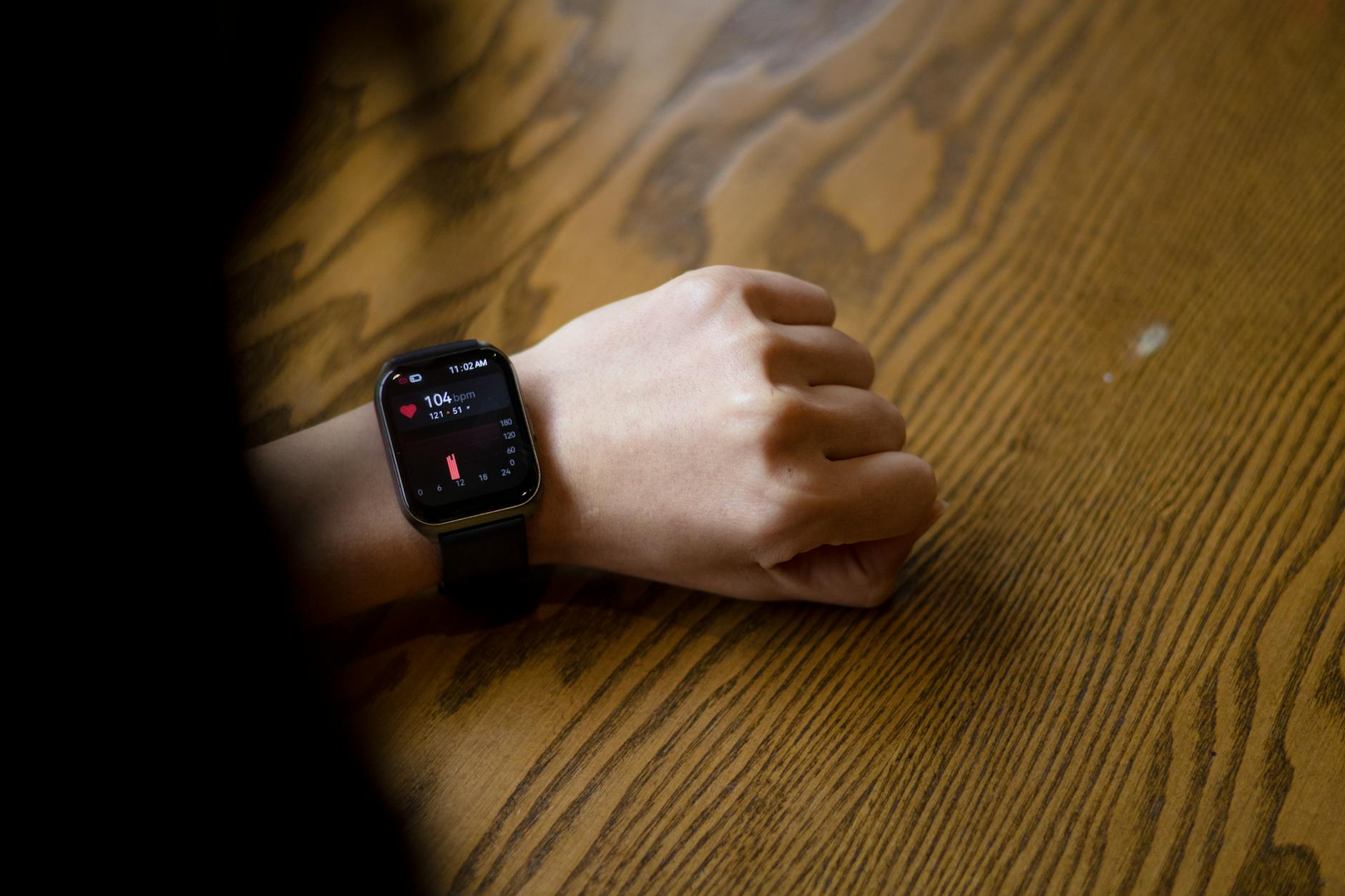
THE MEASURABLE LINK BETWEEN HRV AND SLEEP QUALITY INDICATORS
Research consistently shows that poorer sleep quality associates with lower HRV values, which carries potential implications for cardiovascular health over time. A person struggling with insomnia typically exhibits lower HRV than someone sleeping well, and this difference becomes more pronounced when comparing individuals with chronic sleep disruption to those with consistent, restful sleep. Enhanced parasympathetic activity—reflected as higher high-frequency HRV components—correlates strongly with sleep onset and a greater proportion of deep sleep, while increased sympathetic activity associates with difficulty falling asleep and a higher percentage of light, fragmented sleep. If you spend most of your sleep in shallow, easily disrupted stages rather than deep restorative sleep, your HRV readings will be noticeably lower.
The important limitation is that HRV alone cannot diagnose sleep disorders, but it functions as a reliable correlate of sleep continuity and fragmentation. Recent 2025 research found that pre-sleep heart rate variability—measured right before attempting to sleep—could predict chronic insomnia and measures of sleep continuity in study populations, suggesting that your autonomic nervous system state going into sleep actually influences whether you’ll sleep well that night. This finding has important implications: a person consistently showing low HRV in the hour before bed might benefit from relaxation techniques or lifestyle modifications specifically timed to shift autonomic balance before sleep, rather than waiting to measure HRV during sleep itself. However, external stressors, caffeine timing, and recent physical activity can all affect pre-sleep HRV independent of your actual sleep quality, so interpreting the data requires context.
USING HRV TO PREDICT SLEEP PROBLEMS BEFORE THEY DEVELOP
The predictive power of pre-sleep HRV offers a fascinating clinical application: monitoring your autonomic state before bed may provide early warning of sleep difficulties. A 2025 study of national-level athletes found that pre-sleep heart rate variability effectively predicted which individuals would experience chronic insomnia and reduced sleep continuity. This means that poor sleep might not arrive suddenly—instead, your nervous system signals may show warning signs hours before you actually attempt sleep.
An athlete or executive tracking HRV might notice their pre-sleep readings dropping over several days, providing opportunity to intervene with stress management, exercise timing adjustments, or relaxation protocols before insomnia develops. Beyond prediction, artificial neural networks trained on digital biomarkers including HRV data from consumer wearables now effectively predict sleep quality across populations, establishing HRV as a validated health indicator. This technological advancement means your HRV data can feed into machine learning models that assess your overall sleep quality risk, sleep fragmentation patterns, and even your individual optimal sleep duration. The clinical application expands as researchers validate HRV’s utility: some sleep medicine clinicians now reference HRV trends alongside traditional sleep study data when evaluating patients with suspected sleep disorders, particularly those showing autonomic imbalance or sympathetic hyperactivity at night.

HOW EXERCISE, LIFESTYLE, AND DAILY HABITS SHAPE YOUR HRV-SLEEP RELATIONSHIP
A comprehensive 2025 analysis of over 21,000 individuals revealed that individuals with higher HRV coefficient of variation during sleep shared several lifestyle characteristics: they reported longer and more consistent sleep, engaged in greater physical activity, and maintained lower BMI compared to those with lower HRV during sleep. Conversely, higher HRV variation also correlated with greater alcohol consumption and older age, suggesting that while age-related changes to HRV occur naturally, behavioral factors significantly modulate this relationship. For example, someone implementing a regular exercise program while maintaining consistent sleep timing could expect HRV improvements across multiple dimensions simultaneously. However, the interaction between exercise and sleep quality proves complex.
A 2025 cross-sectional study of 391 adults found that short sleep duration or poor sleep quality actually amplified the negative association between inadequate exercise and low HRV—meaning that if you’re exercising too little and sleeping poorly, your HRV suffers compounded damage. This tradeoff highlights an important insight: exercise benefits your HRV, but only when paired with adequate sleep. Someone exercising intensely while chronically sleep-deprived won’t see HRV improvements; instead, the combination creates additional autonomic stress. Conversely, someone improving sleep consistency while maintaining their current exercise level will see HRV gains, and combining sleep improvement with increased activity creates the strongest HRV elevation.
WEARABLE ACCURACY MATTERS: HOW RELIABLE IS YOUR HRV MEASUREMENT?
The accuracy of wearable devices for measuring HRV varies substantially across consumer options, which directly impacts the reliability of HRV-based sleep quality assessments. A 2025 validation study of 536 nights involving direct ECG comparison found that Oura Gen 4 achieved a concordance correlation coefficient of 0.99 with reference ECG (Polar H10)—essentially perfect agreement, making it the most accurate consumer HRV device tested. Oura Generation 3 and 4 rings consistently displayed the highest agreement with reference devices, while WHOOP 4.0 and Polar Grit X Pro showed intermediate accuracy, and Garmin Fenix 6 displayed notably lower concordance. This variation matters: if you’re using a lower-accuracy device, your HRV readings might misrepresent your actual autonomic state, leading to incorrect conclusions about your sleep quality.
The practical implication is that device choice affects the reliability of your self-assessment. Someone using an Oura ring can trust their HRV readings to inform decisions about sleep adjustments, while someone using a less-accurate wearable should view their HRV numbers as directional rather than precise. Interestingly, a 2025 study found that higher average wear frequency of HRV-tracking wearables and week-to-week increases in wear frequency associated with lower resting heart rate, higher HRV, longer sleep, and greater physical activity—suggesting that the monitoring itself may motivate behavioral improvements independent of the device’s accuracy. However, a critical warning: relying on an inaccurate device while believing it’s precise could lead you to ignore genuine HRV declines or to overestimate improvements that haven’t actually occurred.

SLEEP DEPRIVATION AND HRV: WHAT HAPPENS TO YOUR NERVOUS SYSTEM UNDER STRESS
A 2025 systematic review and meta-analysis examining sleep deprivation studies found significant effects on heart rate variability measurements across diverse study populations, confirming that insufficient sleep directly suppresses HRV. When you deprive yourself of sleep, your sympathetic nervous system remains chronically elevated, unable to shift fully into parasympathetic dominance even when you do sleep. The HRV reduction under sleep deprivation reflects this autonomic imbalance—your body stays in partial fight-or-flight mode.
This has direct health implications: chronic sleep deprivation combined with suppressed HRV creates cardiovascular stress that accumulates over weeks and months. The relationship between sleep deprivation and reduced HRV is dose-dependent, meaning even partial sleep loss produces measurable HRV reduction. Someone losing just two hours of sleep nightly shows HRV suppression, and this compounds over time. What makes this concerning is that suppressed HRV is associated with increased cardiovascular risk, making chronic sleep loss a pathway to both immediate autonomic stress and long-term heart health consequences.
THE FUTURE OF HRV AS A DIGITAL HEALTH INDICATOR
As wearable technology improves and artificial intelligence advances, HRV is transitioning from an academic research metric to a practical personal health indicator. Digital biomarkers derived from HRV data now feed into machine learning systems that predict sleep quality, sleep fragmentation, and overall sleep health with increasing accuracy. This evolution suggests that consumer devices will eventually provide not just HRV numbers, but evidence-based assessments of your sleep-autonomic health, personalized recommendations for optimal sleep timing, and early warnings of potential sleep disorders before symptoms become apparent.
The frontier includes using HRV data alongside other biometric measurements to create comprehensive autonomic health profiles that extend beyond sleep quality into stress resilience, cardiovascular fitness, and overall wellness. The convergence of improved wearable accuracy, larger research datasets, and validated machine learning models means that HRV-based sleep assessment will become increasingly precise and personalized over the next several years. For individuals tracking their health, this represents an opportunity to understand their autonomic nervous system function at a level previously available only in clinical sleep laboratories.
Conclusion
Heart rate variability provides a direct physiological window into your autonomic nervous system during sleep, serving as both a mirror of current sleep quality and a predictor of future sleep health. The established connection shows that high HRV correlates with deeper, more restorative sleep characterized by parasympathetic nervous system dominance, while low HRV indicates sleep fragmentation, insufficient depth, and sympathetic nervous system stress.
This relationship operates bidirectionally: improving your sleep quality elevates your HRV, and conversely, maintaining behaviors that support high HRV—consistent exercise, adequate sleep duration, stress management, and limited alcohol consumption—directly supports better sleep. If you’re considering HRV monitoring, begin with an accurate device like Oura Gen 4, establish a baseline of your current HRV patterns during sleep, and use that data to track changes as you adjust sleep timing, exercise patterns, or stress management approaches. Remember that HRV represents one component of overall sleep health rather than the complete picture, but as a measurable, noninvasive physiological indicator, it offers valuable feedback for optimizing your autonomic nervous system function and, by extension, your restorative sleep quality.