
Crispy salmon skin comes down to one principle: getting the skin completely dry and the pan hot enough to render the fat without overcooking the fish. The most reliable method is to start with a room-temperature fillet, skin-side down, in a cold pan set to medium-high heat. You press gently on the top with a spatula for the first two to three minutes as the fat renders and the skin loses moisture. The skin will release from the pan naturally when it achieves that golden-brown, crispy texture.
A common example of this working well: a five-ounce salmon fillet that’s been air-dried in the refrigerator for two hours, placed in a dry stainless steel pan with a light coating of oil, will have crispy skin in about four minutes with zero sticking. The reason this method works is that moisture is the enemy of crispiness. Wet skin steams rather than crisps, and it sticks to the pan. By drying the fish first and using a gentle initial temperature, you give the fat time to render gradually while the skin loses its surface moisture. The exterior firms up and begins to brown before the interior reaches serving temperature.
Table of Contents
- Why Does Salmon Skin Stick to the Pan?
- The Importance of Drying the Fish Before Cooking
- Choosing the Right Oil and Temperature for Pan Searing
- The Flip Technique and the Risk of Overcooking the Top
- Common Problems and How to Avoid Them
- Finishing and Seasoning Strategy
- Beyond the Basic Pan Sear
- Conclusion
- Frequently Asked Questions
Why Does Salmon Skin Stick to the Pan?
Salmon skin sticks when moisture acts as a lubricant that prevents the skin from developing a protective crust against the hot surface. Fresh salmon that hasn’t been dried will release steam at the contact point, and that steam creates a barrier that keeps the skin from making proper contact with the hot pan. Once enough water has evaporated and the skin begins to brown, it stops sticking—the browning process creates a seal that allows the skin to slide away from the pan surface. The type of pan matters here as well. Stainless steel and carbon steel hold heat more evenly and allow better crust formation than nonstick pans, which are designed to prevent sticking but also prevent the Maillard reaction that creates that desirable brown color and crispy texture.
A comparison: the same fillet in a nonstick pan will have pale, soft skin, while the same fillet in a stainless steel pan will brown deeply and crisp up. Temperature control is also critical. If the pan is too hot when you add the fish, the skin will stick aggressively before it has time to dry, and you risk tearing it when you try to flip. If the pan is too cool, the skin will simmer in its own released moisture and become rubbery rather than crispy. Medium-high heat with a cold or room-temperature fillet gives you the narrow window where browning happens without aggressive sticking.
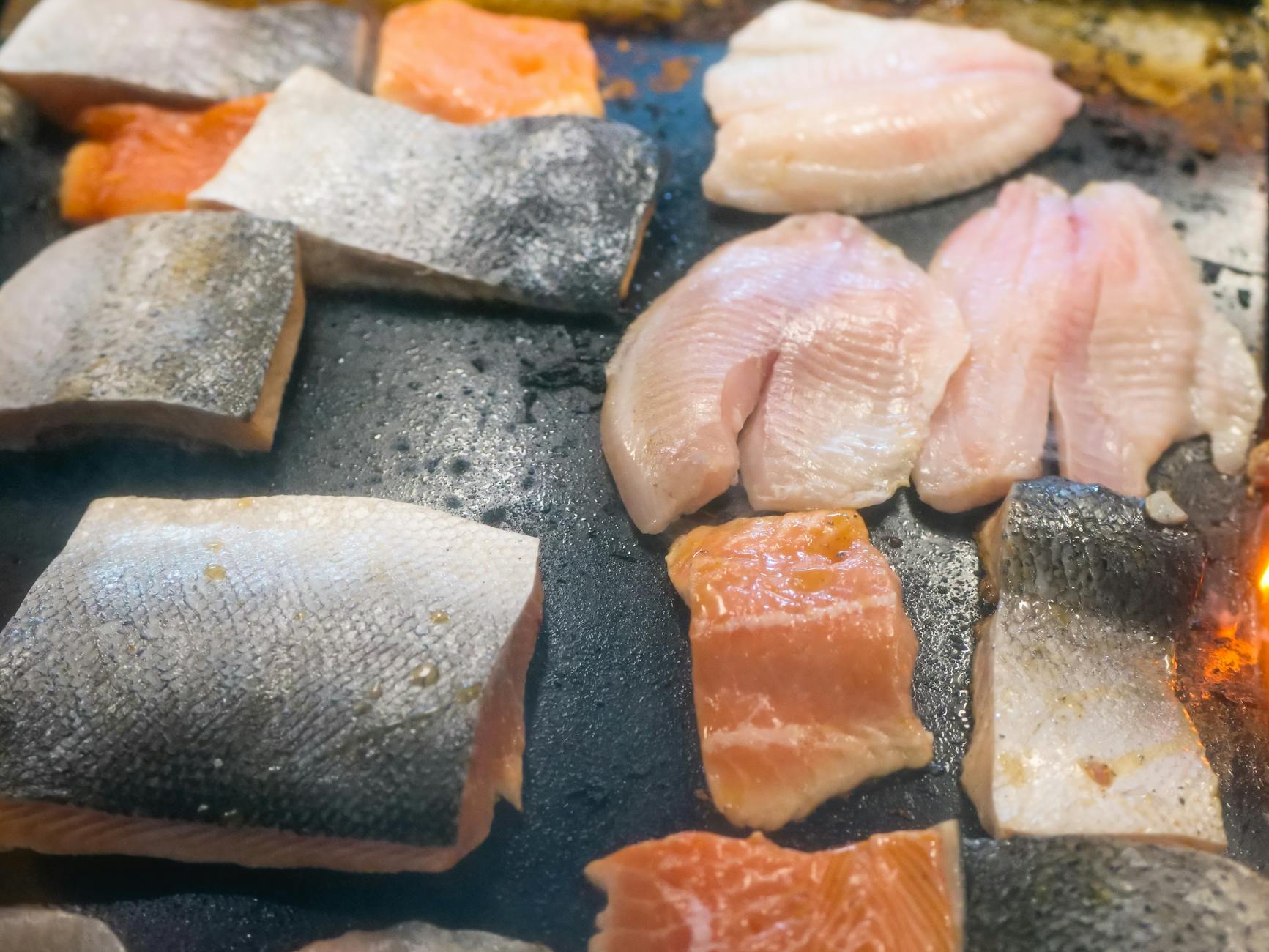
The Importance of Drying the Fish Before Cooking
Any moisture on the surface of the salmon—whether from rinsing, storage, or thawing—will interfere with browning and crisping. The most effective approach is to remove the fillet from the refrigerator 20 to 30 minutes before cooking to let it come to room temperature, then pat it dry thoroughly with paper towels. For even better results, you can place the fillet skin-side up on a plate lined with paper towels in the refrigerator for 1 to 2 hours before cooking. This allows the air circulation to remove surface moisture gradually. one limitation of this approach is time.
If you’re cooking on a schedule, the advance drying step can be inconvenient. A warning here: leaving salmon at room temperature for more than 30 to 40 minutes increases the risk of bacterial growth on the surface, so there’s a practical ceiling on how long you can air-dry. For most cooks, 20 to 30 minutes is sufficient to reduce surface moisture without creating food safety concerns. The difference in results is measurable. A salmon fillet that has been patted dry will crisp up in three to four minutes, while a fillet that is still wet from rinsing may take six to eight minutes and may never achieve the same level of crispiness because some of that heat energy goes into evaporating water rather than browning the surface.
Choosing the Right Oil and Temperature for Pan Searing
The oil you use should have a high smoke point to avoid burning at the elevated temperatures needed for crisping salmon skin. Neutral oils like vegetable oil, canola oil, or refined avocado oil work well. Some cooks prefer clarified butter or ghee for flavor, though these have lower smoke points and require slightly lower heat. Extra virgin olive oil has a relatively low smoke point and will begin smoking at around 375 degrees Fahrenheit, which is below the ideal temperature for crispy skin, so it’s not the best choice for this application. A specific example: a pan preheated to 400 degrees Fahrenheit with one tablespoon of canola oil will have the salmon skin crisping and browning within three minutes.
The same setup with extra virgin olive oil would start smoking at around the two-minute mark, and the temperature would drop as the smoke point is exceeded. The oil quantity also matters—too much oil will keep the skin from making direct contact with the hot surface and will result in more frying than pan-searing, which produces greasier, less crispy skin. The pan itself should be heated to temperature before you add the oil, and the oil should be allowed 30 to 60 seconds to heat as well. You’ll know it’s ready when you place the salmon in the pan and hear a distinct sizzle immediately upon contact. If there’s no sizzle, the pan isn’t hot enough, and the skin will stick and steam rather than crisp.

The Flip Technique and the Risk of Overcooking the Top
One of the counterintuitive aspects of pan-seared salmon is that you ideally want to spend most of the cooking time on the skin side and very little time on the flesh side. A typical approach is to cook skin-side down for three to four minutes and then flip for only one to two minutes to finish the top. This keeps the skin crispy because it’s not spending time in contact with the hot pan after it’s already browned. The tradeoff here is between even cooking and skin texture.
If you cook skin-side down for the full time and never flip, the top won’t cook evenly—it may be raw or translucent in the center. If you flip for too long, the skin loses its crispy texture as it cooks in the residual heat and any released moisture. The middle ground is a quick flip with a brief finish on the other side. A comparison to illustrate this: a two-inch-thick salmon fillet cooked skin-side down for four minutes and then flesh-side down for two minutes will be properly cooked through with crispy skin. The same fillet cooked skin-side down for the full six minutes will have a crispier skin but an unevenly cooked interior, potentially with a raw center.
Common Problems and How to Avoid Them
One frequent issue is the skin separating from the flesh during or after cooking. This happens when the fillet is cooked at too high a temperature or for too long, causing the fat between the skin and flesh to render too quickly and create a gap. The fix is to monitor the internal temperature with a meat thermometer and remove the salmon from the heat when it reaches 120 to 125 degrees Fahrenheit for medium-rare, which is the typical target for salmon. The residual heat will continue cooking the fish after you’ve taken it off the pan. Another warning: if you try to move the salmon too early, while it’s still sticking, you’ll tear the skin. Patience is important here.
Wait until the skin has turned golden brown and has begun to release from the pan on its own. If you use a spatula and encounter resistance, give it another 30 to 60 seconds rather than forcing it. A third issue is uneven cooking where the edges are overcooked and the center is underdone. This typically happens when the pan is too hot or the fillet is too thick. Lowering the heat slightly to medium or medium-high and cooking a bit longer usually solves this. A meat thermometer is the most reliable tool for getting this right consistently.

Finishing and Seasoning Strategy
The timing of seasoning affects both the crust and the flavor. Salt applied to the fish immediately before cooking will draw out moisture and can interfere with crisping. The most effective approach is to season the fillet just as the pan reaches temperature, which gives enough time for any surface liquid to evaporate before the fish hits the pan.
Alternatively, you can salt the fillet 15 to 20 minutes ahead, which allows the salt to be reabsorbed into the fish and won’t draw out fresh moisture by the time you cook. An example: a salmon fillet seasoned five minutes before cooking will have a slightly damper surface and less crispy skin than one seasoned 20 minutes ahead or one seasoned at the exact moment you put it in the pan. A light dusting of freshly ground black pepper and a squeeze of fresh lemon added immediately after the fish comes off the heat will complement the crispy skin without interfering with the cooking process.
Beyond the Basic Pan Sear
The techniques for crispy salmon skin translate to other cooking methods. A wood-fired oven or grill can achieve similar results if you manage the heat and initial temperature the same way—dry fish, hot surface, skin-side down first.
Some restaurants use a technique of starting the salmon in a cold pan, which allows more gradual rendering of the fat and can sometimes produce even crispier skin, though it requires more precise timing and attention. Looking ahead, sous vide cooking has become more popular in home kitchens, and it offers an alternative path: you can sous vide the salmon to the exact doneness you want, then finish it in a hot pan for just 30 to 60 seconds to crisp the skin. This removes the challenge of cooking the flesh and skin at different rates and can be useful for larger or irregularly shaped fillets.
Conclusion
Crispy salmon skin is achievable with a straightforward method: dry the fish, use a hot pan with an oil that won’t smoke, cook skin-side down first without moving it, and listen for the natural release from the pan surface. The key is patience—resisting the urge to move the fish before the skin has developed that golden-brown crust.
Once you’ve done this a few times, the timing and technique become second nature. The reward is a fillet with a textural contrast that enhances the eating experience, with the crispy exterior giving way to moist, tender flesh. The skill requires no special equipment beyond a good pan and a bit of attention, making it one of the most reliable ways to improve a simple pan-seared salmon at home.
Frequently Asked Questions
Can I crisp salmon skin in a nonstick pan?
Nonstick pans are designed to prevent browning, which is exactly what you want to avoid. Salmon skin in a nonstick pan will remain pale and soft. Stainless steel or carbon steel is a better choice.
How do I know when to flip the salmon?
The skin will release from the pan on its own when it’s done browning. You should hear a clear sizzle when you first place it in the pan, and after three to four minutes, the skin will move freely when you gently push it with a spatula.
What if my salmon skin always burns?
The pan or oil temperature is likely too high. Lower the heat to medium-high and ensure the salmon is at room temperature before cooking. Also check that your oil has a high enough smoke point.
Should I remove the skin before serving?
If it’s crispy and cooked properly, the skin is edible and flavorful. Many people prefer to eat it. If you don’t want it on your plate, you can remove it before serving, but there’s no practical reason to do so if it’s cooked well.
Can I crisp salmon skin if the fillet is very thin?
Thin fillets will cook through quickly and may overcook on the flesh side before the skin is fully crispy. Fillets thinner than half an inch are more challenging. You can mitigate this by using lower heat and careful timing, but thicker fillets are more forgiving.
Does the type of salmon matter for crispy skin?
All salmon varieties can produce crispy skin, but the thickness and fat content may vary. Wild salmon tends to be leaner and thinner, while farmed salmon is often thicker and fattier. Thicker fillets with more fat will crisp more easily and more reliably.