
Some Manhattan streets that should be bustling with activity sit eerily quiet, and the reason isn’t a temporary inconvenience—it reflects deeper shifts in real estate economics and commercial viability. The phenomenon stems from a combination of factors: e-commerce disruption, remote work normalcy, changing tenant demand, and properties trapped in economic limbo between old business models and new ones. For investors, these quiet streets are more than urban oddities; they’re signals of neighborhood transitions, commercial real estate repricing, and emerging market opportunities.
Take Fifth Avenue in Midtown, where several blocks have seen high foot traffic plummet since the pandemic. Retailers that once paid premium rents have shrunk their footprints or departed entirely, leaving landlords struggling to find tenants willing to pay pre-2020 rates. This story repeats across Broadway, Times Square peripheries, and secondary retail corridors—the visible quiet is the product of landlords refusing to cut rents to realistic market levels, vacancy sitting at multiyear highs, and commercial property values facing structural headwinds.
Table of Contents
- How Commercial Real Estate Collapse Creates Urban Dead Zones
- The Permanent Shift in Office Demand and Street-Level Activity
- Retail Reckoning and the Death of Street-Level Commerce
- How to Interpret Quiet Streets as Real Estate Signals
- Remote Work’s Permanent Suppression of Street-Level Foot Traffic
- Neighborhood Variation and Where Quietness Reveals Opportunity
- Future Outlook for Manhattan’s Street-Level Economy
- Conclusion
- Frequently Asked Questions
How Commercial Real Estate Collapse Creates Urban Dead Zones
The primary driver of Manhattan’s quieter streets is straightforward economic math: retail space is worth far less than landlords believed it was. Before 2020, many commercial properties traded on the assumption that foot traffic would grow indefinitely. The pandemic exposed that assumption as fragile. E-commerce captured incremental retail spending, remote work eliminated commuter foot traffic, and consumer behavior shifted permanently away from physical retail for categories that don’t require immediate gratification. When landlord ask-prices don’t match economic reality, spaces sit vacant.
In neighborhoods like Hudson Yards and parts of Midtown South, developers built office and retail towers betting on 2010s trends. That capital is now stranded. A commercial property trading at a $500 per square foot valuation a decade ago might only attract bids at $250 today—or no bids at all. Rather than absorb losses, many landlords hold properties in hopes of market recovery, leaving storefronts dark and streets empty. This creates a vicious cycle: empty storefronts attract fewer foot traffic, which reduces appeal to remaining tenants, which pushes more closures.

The Permanent Shift in Office Demand and Street-Level Activity
Office real estate has undergone a similar correction, and it hits street-level quietness particularly hard because office workers were the primary customers for restaurants, coffee shops, and retail near their workplaces. When major companies adopted hybrid or fully remote policies—and didn’t reverse them after pandemic restrictions ended—the demand for centralized office space collapsed. The financial district, Midtown, and Hudson Yards all experienced office vacancy spikes. The warning here for real estate investors is that the “return to office” narrative, which dominated 2022 headlines, proved overstated.
Major employers like Google, Amazon, and Meta have quietly reduced return-to-office mandates or accepted flexible arrangements as permanent. This isn’t a temporary adjustment; it’s a structural reordering of commercial real estate. Office towers in secondary locations—those not in the absolute prime corridors—have been hammered. Conversion of office buildings to residential has become common precisely because new office demand won’t materialize at historical rates. Streets around these buildings lost one of their anchor sources of daily foot traffic, and the economics haven’t recovered.
Retail Reckoning and the Death of Street-Level Commerce
Retail on Manhattan streets faces headwinds from multiple directions simultaneously: reduced foot traffic, higher operating costs, lower sales per square foot, and landlords slow to adjust to new market conditions. This creates a literal emptiness that investors should recognize as a market signal rather than temporary blight. The best-performing retail now clusters in high-density tourist corridors (Times Square, SoHo) or in neighborhoods with strong residential density and walkable appeal (the Upper West Side, parts of Brooklyn Heights).
Consider the example of the Herald Square/34th Street area: once a retail powerhouse anchored by Macy’s, it has become noticeably quieter as Macy’s itself downsized, and surrounding chain retailers contracted. The street’s “quietness” partly reflects New York’s shift away from suburban-style urban malls. Instead, successful retail clusters now tend to be either (a) luxury/specialty merchants in concentrated luxury neighborhoods, or (b) convenience-oriented and local-serving businesses in residential neighborhoods. The mid-market retail that once defined Manhattan’s commercial streets has largely vanished, leaving economic dead zones where real estate sits undercapitalized.
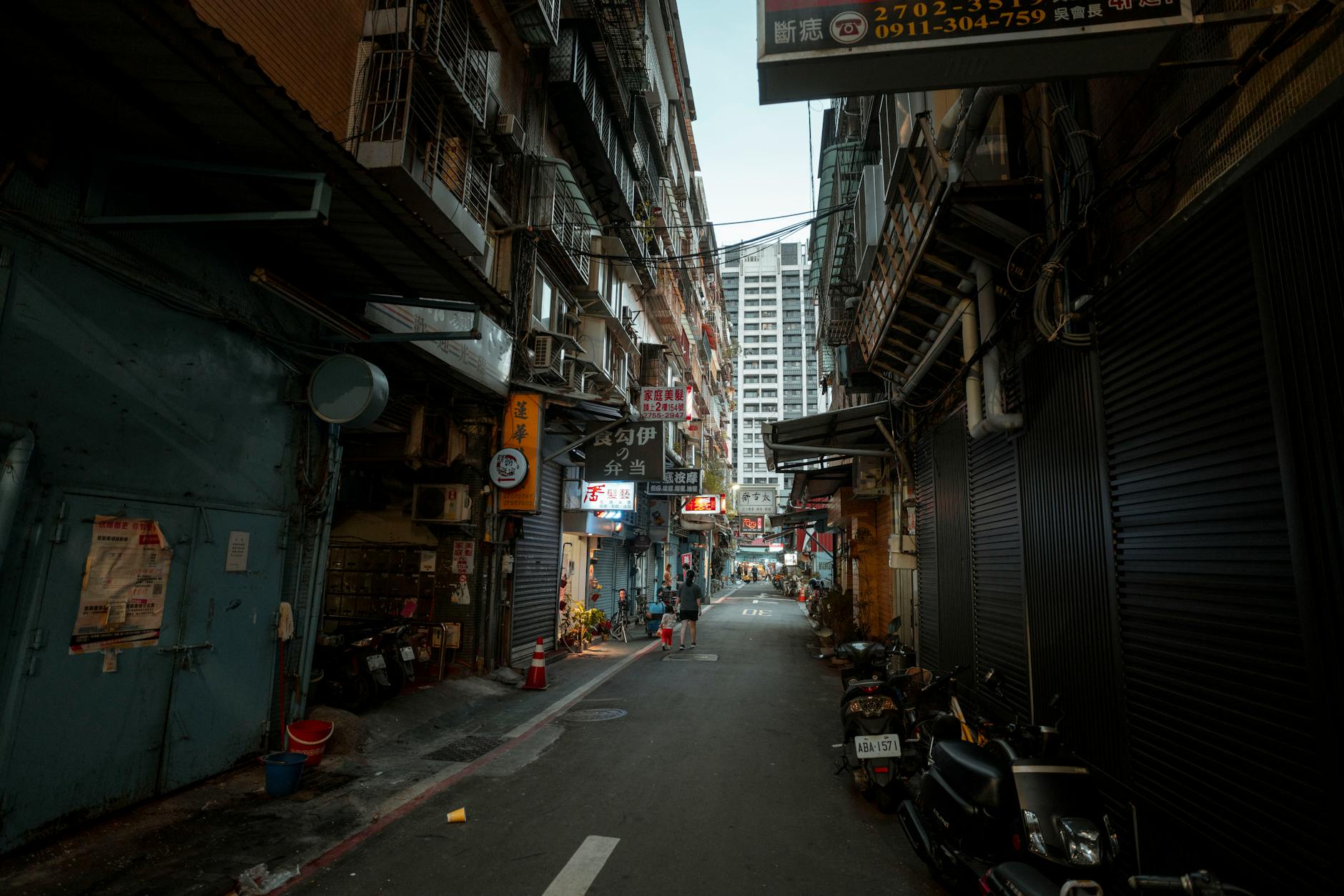
How to Interpret Quiet Streets as Real Estate Signals
For investors analyzing Manhattan real estate, street-level quietness is actionable information. A genuinely quiet street suggests one of several scenarios: (1) the neighborhood is in transition and prices may have room to fall further before stabilizing, (2) the property is trapped with an unmotivated or unrealistic owner, (3) structural economic factors have changed the area’s viability. Comparing foot traffic patterns across neighborhoods reveals where commercial activity has genuinely migrated. The practical approach is to distinguish between temporary quietness and structural decline.
Streets quiet due to temporary economic dislocation or landlord intransigence may eventually recover if landlords price realistically. Streets quiet due to structural shifts—like office-to-residential conversions in a labor market that’s moved—are unlikely to recover to previous commercial density. The second type creates opportunities for investors who can either (a) acquire properties at depressed prices assuming future demand, or (b) understand why traditional commercial use no longer makes economic sense and position accordingly. The tradeoff is that identifying which category applies requires on-the-ground analysis and understanding of the specific market.
Remote Work’s Permanent Suppression of Street-Level Foot Traffic
The normalization of remote work was portrayed by some as temporary, but office occupancy rates, commercial real estate values, and street-level foot traffic all point to permanent changes. Major financial firms, tech companies, and professional services firms have settled into hybrid or fully remote arrangements that are unlikely to reverse. This is particularly acute in Manhattan because the city’s commercial tax base was heavily reliant on office workers’ economic activity. A critical limitation to understand: even as residential demand in Manhattan has remained strong, the loss of office workers’ daytime spending has had outsized impact on street-level commerce.
A residential population of 1.6 million spent differently than a residential population of 1.6 million plus 1-2 million daily commuters. The commuters were concentrated spenders on lunch, coffee, transit-adjacent retail, and convenience items. Their absence has hollowed out street-level commerce in a way that residential demand hasn’t fully replaced. Investors betting on street-level retail recovery are often betting implicitly on a return of office workers—a bet that appears increasingly disconnected from reality.

Neighborhood Variation and Where Quietness Reveals Opportunity
Not all Manhattan streets are equally quiet, and the variation is instructive. The Upper West Side remains relatively robust; the East Village maintains pedestrian density; neighborhoods with strong residential appeal and local-serving businesses have weathered the transition better than office-district peripheries. This unevenness reveals that quietness isn’t uniform but is concentrated in specific property types and areas.
Consider Tribeca: despite the exodus of some finance-industry residents during the pandemic, the neighborhood maintained residential density and has developed a more stable local retail base. Compare this to Hudson Yards, where speculative office and retail construction created a neighborhood without indigenous demand, and the quiet reveals a structural problem rather than a temporary dislocation. For investors, mapping where quietness concentrates reveals where the market has fundamentally repriced value.
Future Outlook for Manhattan’s Street-Level Economy
The streets of Manhattan are unlikely to return to the density and constant motion of the 2010s. The combination of structural retail decline, remote work normalization, and reduced office demand suggests that current quiet periods may represent a “new normal” rather than a trough before recovery.
However, investors should also recognize that certain Manhattan neighborhoods are stabilizing at new, lower levels of street-level activity that remain economically viable. The forward-looking question isn’t whether streets will regain past vibrancy, but whether property owners and developers will adapt business models to accommodate lower-density, lower-traffic commercial real estate. Investors who can identify properties that are underpriced relative to their new equilibrium—rather than betting on nostalgic recovery—are more likely to identify genuine opportunities in Manhattan’s quieter streets.
Conclusion
Manhattan’s strangely quiet streets are economic symptoms, not urban mysteries. They reflect the repricing of commercial real estate in the face of e-commerce, remote work, and changed consumer behavior. For investors, these quiet streets are signals that property valuations have lagged behind new economic realities in some areas while possibly overshooting in others.
The opportunity lies in distinguishing between structural change—which creates permanent repricing—and temporary maladjustment, which creates opportunities for those with the capital and patience to own through recovery. Quiet streets in Manhattan are now information sources rather than problems to solve. Reading that information accurately is critical for commercial real estate investment decisions in the post-pandemic era.
Frequently Asked Questions
Will Manhattan’s street-level retail recover?
Partial recovery is possible in high-density residential and tourism-driven neighborhoods, but recovery to pre-2020 levels across all districts is unlikely. The structural shift toward e-commerce and away from office-based workers’ daytime spending appears permanent.
Are quiet streets always bad investments?
No. Quiet can reflect temporary landlord intransigence or neighborhood transition, which can create buying opportunities. However, quiet driven by structural economic change (like office-to-residential conversion) requires understanding what the “new equilibrium” will be.
Which Manhattan neighborhoods have quietest streets?
Secondary office districts like Midtown South (below 34th Street) and Hudson Yards have seen the most dramatic foot traffic decline. Herald Square, parts of Lower Midtown, and blocks in Chelsea show the most visible quietness.
Is remote work here to stay?
Current data suggests yes. Office occupancy rates have stabilized at 70-80% of pre-pandemic levels across major markets, and companies have made permanent policy decisions favoring flexibility. Full return to office appears unlikely.
What should investors do about quiet streets?
Map foot traffic patterns, understand whether quietness reflects temporary pricing or structural change, and price properties accordingly. Quiet streets in neighborhoods with strong residential demand may offer opportunities; quiet streets in former office districts may require understanding new use cases.
Are developers converting offices to residential?
Yes. This is now common across Manhattan, but conversion economics are challenging and require favorable property bases. This trend shows that even developers recognize office demand won’t return to historical levels.