
Authenticating a Charizard without sending it to a professional grading service requires careful visual inspection and knowledge of production details across different printings and eras. You can identify authentic Charizards by examining the card’s print quality, paper stock, color saturation, and the specific characteristics of the holographic pattern—all without risking shipping costs, processing delays, or the uncertainty of a grading company’s final assessment. The most reliable approach combines multiple verification methods: comparing your card against documented authentic examples, checking physical properties like weight and finish, and understanding what separates genuine cards from counterfeits for the specific Charizard version you own.
The advantage of authenticating at home is speed and control. You avoid the 4-8 week turnaround at grading companies and the $15-50 per-card fees that add up quickly when you’re evaluating a collection. However, this method requires patience and learning to recognize subtle details that separate real from fake—something professional graders train for months to perfect.
Table of Contents
- What Makes Charizard Cards Vulnerable to Counterfeiting
- Print Quality and Ink Application—The First Line of Defense
- The Holographic Pattern—The Signature Feature
- Card Dimensions, Weight, and Paper Stock Comparison
- Serial Numbers, Print Lines, and Manufacturing Defects
- Using Reference Resources and Expert Comparisons
- The Future of Authentication and When to Use Professional Grading
- Conclusion
- Frequently Asked Questions
What Makes Charizard Cards Vulnerable to Counterfeiting
Charizards command high prices across multiple printings, from the original Base Set to modern releases, which creates financial incentive for counterfeiters. The Base Set Charizard alone has sold for hundreds of thousands of dollars in gem condition, making it the most frequently counterfeited Pokémon card in existence. Understanding why counterfeiters target this card helps you know which details to scrutinize most carefully—the holographic pattern, the ink application, and the card’s structural integrity.
Counterfeits range from obvious fakes made with cheap printing to sophisticated reproductions that fool casual collectors. The most dangerous counterfeits come from improved printing technology in recent years, where overseas manufacturers have access to better equipment and paper that approximates the original more closely. A Base Set Charizard from a suspected source is worth inspecting intensely because the financial stakes justify the effort.
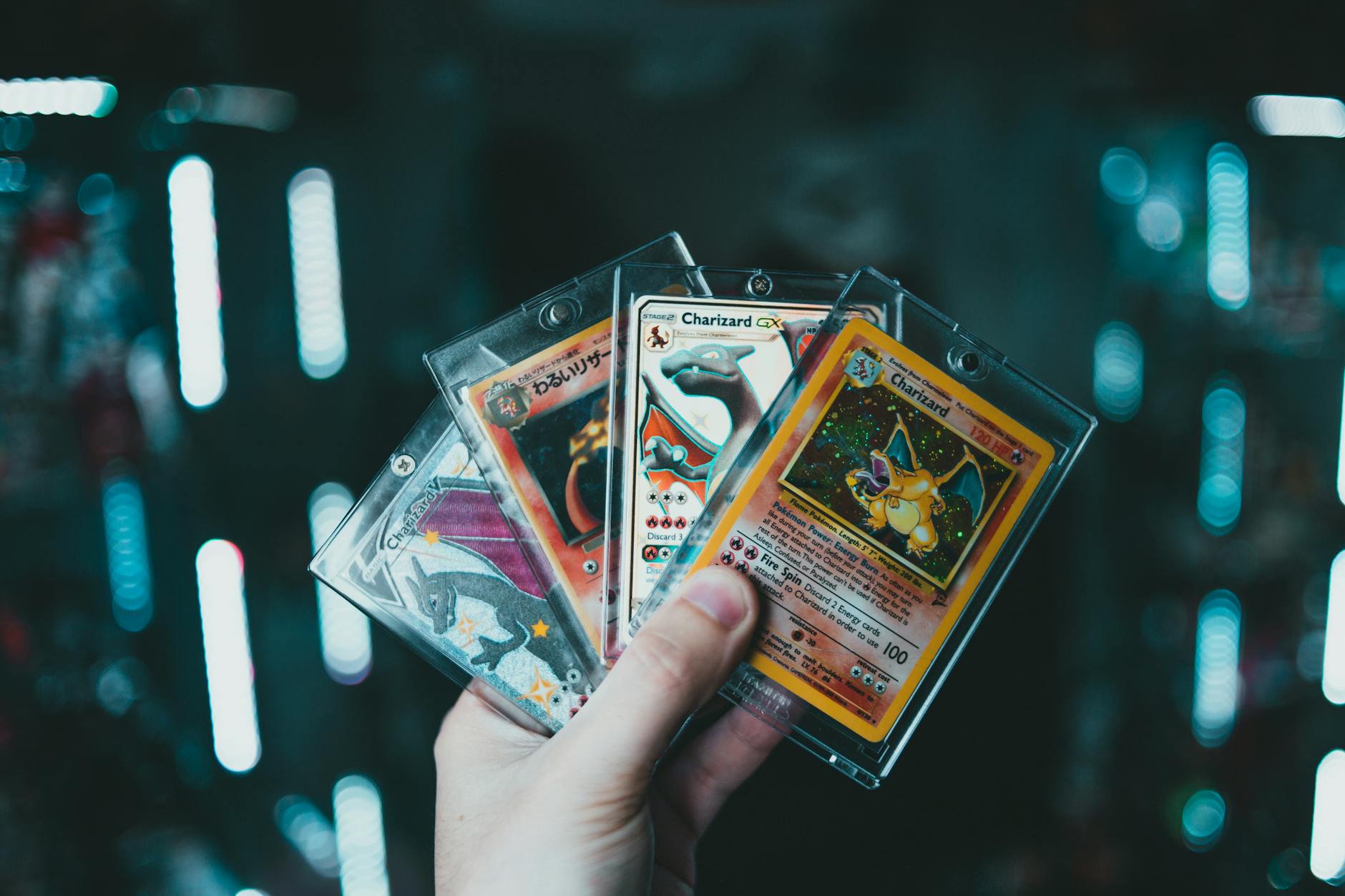
Print Quality and Ink Application—The First Line of Defense
Authentic Pokémon cards, especially vintage ones, have specific ink density and color characteristics that counterfeiters struggle to replicate perfectly. On a genuine Charizard, the text should appear crisp and clean, with consistent black ink that doesn’t blur or fade under magnification. The name “Charizard” and all printed text should have sharp edges when examined with a loupe or magnifying glass—counterfeits often show slightly fuzzy edges or inconsistent line weight because the counterfeiter’s printing process lacks the precision of official production. The background colors also reveal authenticity.
Authentic cards have specific color gradations and saturation levels that match the era they were printed in. A Base Set Charizard should have vibrant reds and yellows in the artwork with consistent color blocking, while the black borders should be pure black without brown tints that appear in lower-quality reprints. One critical detail: run your finger across the card surface. Authentic vintage cards have a specific finish—not too glossy, not matte—that comes from the original paper stock and lamination process. Counterfeits often feel either too slick or too rough.
The Holographic Pattern—The Signature Feature
The holographic layer is arguably the most important authentication point for a Charizard. Base Set Charizards use a unique “shadowless” or “1st edition” hologram pattern that differs from later printings, and counterfeitors frequently get this wrong. The authentic hologram should show a consistent sparkle pattern when tilted, with no dead spots, irregular lines, or areas where the hologram is obviously missing or applied unevenly. Compare your card directly against high-resolution images of known authentic examples, particularly if you’re examining a potentially high-value printing like a 1st Edition.
Look for the specific “texture” of the hologram—Base Set holos have a particular sparkle and depth that changed with each generation of printing. Modern counterfeits sometimes use generic hologram material that looks too uniform or too bright. The hologram should complement the artwork, not overpower it. If you’re unsure, finding a Charizard of the same edition and printing at a reputable dealer and comparing them side-by-side under the same lighting is invaluable.

Card Dimensions, Weight, and Paper Stock Comparison
Authentic Pokémon cards have specific dimensions (2.5″ × 3.5″) and weight that you can verify without specialized equipment. Counterfeit cards sometimes deviate slightly from these specifications because die-cutting equipment isn’t perfectly calibrated or the wrong paper stock was used. Weigh your Charizard on a scale that measures to the tenth of a gram—authentic cards typically weigh between 2.5 and 2.8 grams depending on the printing and paper type. The paper stock itself is worth examining.
Vintage authentic cards have a specific thickness and slightly different texture than modern reprints. The corners should be sharp and clean when new, and should wear in a specific way if the card has been played or handled. A counterfeited card often has slightly different corner wear patterns or corners that feel too soft or too hard. One limitation: this method works best for vintage cards where the paper stock has aged predictably. Modern Charizards are harder to authenticate this way because the margin for variation is smaller, and you need reference samples to compare.
Serial Numbers, Print Lines, and Manufacturing Defects
Every authentic Pokémon card includes a series number, often found in small print at the bottom of the card (like “102/102” for a Base Set card). Counterfeits sometimes get this number wrong or print it at the wrong size or position. Cross-reference the specific Charizard you’re examining with documented production details for that edition—a Base Set 1st Edition Charizard should have different numbering and positioning than a Shadowless or Unlimited printing.
Watch for manufacturing details that only appear on real cards: slight print misalignment, minor ink spots, or uneven edges that resulted from the original production process. Counterfeits that try to look “too perfect” are actually a red flag—authentic cards from the 1990s and early 2000s occasionally show minor flaws from the machinery that printed them. However, major printing defects like completely missing colors or obviously misaligned text indicate a counterfeit. The key warning here is that you’re looking for the specific, documented flaws of legitimate production runs, not random imperfections that suggest a fake made carelessly.

Using Reference Resources and Expert Comparisons
Building a reference library of authenticated Charizards is the single most valuable tool for at-home authentication. Join Pokémon card collector forums and communities where experienced collectors share high-resolution photos of authenticated cards from every printing and condition. Websites like TCGPlayer and eBay’s sold listings show authenticated, graded examples that you can study extensively.
Consider paying for a single professional authentication of a high-value card to get a “golden standard” reference. Once you have a professionally confirmed authentic Charizard in your collection, you can use it as a comparison point for other cards you acquire. This method works because human visual memory is powerful—after comparing dozens of authentic examples, you develop an intuition for what feels right that’s difficult to articulate but remarkably accurate.
The Future of Authentication and When to Use Professional Grading
As counterfeiting technology improves, authenticating cards at home becomes riskier for very high-value specimens. If your Charizard is worth more than $1,000, the professional authentication fee becomes justified as insurance against being fooled by a sophisticated fake.
The financial risk of misidentifying a counterfeit as authentic—or worse, accidentally selling a valuable card as a fake—outweighs the cost of professional verification. The next generation of authentication may include blockchain verification or chip-based tracking for newly released cards, which would shift the entire landscape. For now, the combination of visual inspection, comparison against documented authentic examples, and professional grading for high-value pieces remains the gold standard approach.
Conclusion
Authenticating a Charizard without sending it in requires methodical attention to print quality, holographic patterns, card dimensions, and comparison against known authentic examples. You can become proficient at identifying authentic cards by developing a reference library, understanding the specific production details of each printing era, and learning to spot the subtle differences between genuine cards and counterfeits. This approach works best for mid-range Charizards where the authentication cost isn’t justified, and when combined with careful research and community resources, it provides reasonable confidence in your assessment.
For cards with significant financial value or when doubt remains, professional grading remains the final verification method. The key is knowing your limits: at-home authentication works well for building a collection and identifying obviously fake cards, but genuine uncertainty warrants professional evaluation. Start by examining cards you know are authentic, compare them extensively with the Charizard you’re evaluating, and only authenticate high-stakes cards yourself once you’ve developed genuine expertise.
Frequently Asked Questions
Can I authenticate a Charizard just by comparing it to pictures online?
Partial comparison from high-resolution images helps, but in-person inspection under good lighting is far more reliable. You need to feel the card’s texture, weight, and corner wear—details that photographs don’t fully convey.
What’s the biggest giveaway that a Charizard is counterfeit?
The hologram is usually the first thing to fail on counterfeits. If the hologram looks off—too uniform, too bright, or missing entirely—the card is almost certainly fake.
Is a slightly misaligned print always a sign of a fake?
No. Minor misalignment is actually common on authentic vintage cards because the machinery that printed them wasn’t perfectly precise. You’re looking for documented, era-specific flaws, not random imperfections.
How much should I trust at-home authentication for expensive cards?
For cards worth $500+, professional grading is worth the cost. For cards under $100, at-home authentication is usually sufficient if you’ve done your research and compared thoroughly.
Can I tell if a Charizard is authentic by weight alone?
Weight is a useful data point but not conclusive by itself. Pair it with visual inspection and other checks. Counterfeit paper stock can sometimes fall within the normal weight range.
What should I do if I’re unsure after checking everything?
Don’t sell it without professional verification. Contact a reputable grading company or an experienced collector in a community forum and ask for a second opinion before proceeding with a high-value transaction.