
Congestion pricing fundamentally reshaped Manhattan’s traffic patterns since its January 5, 2025 launch, delivering measurable improvements that exceeded many predictions. The program reduced traffic entering Manhattan’s Congestion Relief Zone by 27 million vehicles in its first year—an average of 73,000 fewer vehicles per day—representing an 11% decrease in daily traffic volume. For investors and business operators, this shift marks a significant economic shift: the initiative generated $518 million in net tolling revenue through November 2025, while simultaneously improving productivity and operational efficiency across the city’s commercial districts. The real-world impact is visible on Manhattan streets during rush hour.
Where a driver commuting to Midtown might have lost 20+ minutes to congestion in 2024, that same journey now costs approximately 15 minutes in delays—a meaningful change when multiplied across millions of daily commutes. The program’s success challenges the conventional wisdom that congestion pricing would simply divert traffic rather than reduce it, instead demonstrating that pricing mechanisms can reshape transportation choices at scale. For investors, this isn’t merely a traffic story. The congestion pricing experiment offers a blueprint for how cities can monetize scarce infrastructure while simultaneously addressing economic inefficiency and environmental concerns—creating what many see as the first true win-win transportation policy implemented at major metropolitan scale.
Table of Contents
- What Happened to Manhattan Traffic After January 2025?
- How Dramatically Did Speeds Improve on Manhattan’s Main Routes?
- What Impact Did Congestion Pricing Have on Manhattan’s Air Quality and Public Health?
- How Much Revenue Did Congestion Pricing Generate, and What Does It Mean for Future Tolling Policies?
- What Were the Main Criticisms and Limitations of the First Year?
- How Did Congestion Pricing Affect Manhattan’s Commercial Real Estate and Business Operations?
- What Does the First Year of Success Suggest About Congestion Pricing’s Long-Term Future?
- Conclusion
What Happened to Manhattan Traffic After January 2025?
The first year of congestion pricing produced the largest traffic reduction New York City has experienced in decades. Daily vehicle entries into the Congestion Relief Zone dropped from the pre-pricing average to 662,000 vehicles per day—a loss of 73,000 vehicles daily compared to 2024 projections. This wasn’t a gradual decline; the reduction stabilized quickly as drivers adjusted commute patterns, suggesting the pricing signal effectively communicated the cost-benefit calculation to regular users. The reduction breaks down across different user segments. Long-haul commuters shifted toward transit alternatives and schedule changes.
Commercial vehicles adapted by consolidating trips and optimizing delivery windows. Taxi and ride-share services experienced temporary disruptions before adjusting pricing models—a real-world example of how congestion pricing creates cascading economic adjustments. By mid-2025, ride-share services had normalized pricing to account for the $15 tolls, and Manhattan’s four major traffic corridors showed consistent patterns, suggesting behavioral change had reached equilibrium. What’s particularly important for observers: the traffic reduction didn’t simply push congestion to neighboring boroughs or outer Manhattan. The Regional Plan Association’s analysis found that traffic improvements extended across all five boroughs and surrounding suburbs, indicating that congestion pricing actually reduced total vehicle miles traveled rather than just relocating congestion. This distinction matters because it proves the pricing mechanism worked as intended—raising the cost of driving into Manhattan motivated people to reduce unnecessary trips, change timing, and shift toward transit.

How Dramatically Did Speeds Improve on Manhattan’s Main Routes?
Speed improvements emerged as the program’s most visible benefit to remaining drivers. Morning rush hour speeds on major crossings entering and exiting the Congestion Relief Zone increased 23%—meaning what took 40 minutes in 2024 now takes roughly 31 minutes. Weekday vehicle speeds across Manhattan increased 4% compared to 2024 baselines, while weekend speeds jumped 6.2%, demonstrating that the traffic reduction benefited all commute periods, not just peak hours. Bus transit experienced a particularly significant turnaround. In 2023 and 2024, declining bus speeds had become a serious concern for transit advocates and municipal planners.
Congestion pricing reversed this trend: bus speeds within the CRZ increased 2.3%, the first year-over-year improvement in two years. For commuters using public transit, this represented a tangible quality-of-life improvement. A typical bus route from Midtown to Lower Manhattan that previously took 35 minutes now averages 34 minutes—a modest number in isolation, but across dozens of daily routes and hundreds of thousands of riders, the cumulative time savings amount to millions of hours recovered annually. However, speed improvements showed meaningful variance by location and time. Avenues with limited congestion in 2024 showed minimal gains, while heavily-trafficked corridors like Broadway and 5th Avenue saw speeds approach their physical limits, suggesting that further speed gains would require additional infrastructure investments rather than congestion pricing alone. This limitation matters for evaluating the program’s long-term potential and for municipalities considering similar policies in other major cities.
What Impact Did Congestion Pricing Have on Manhattan’s Air Quality and Public Health?
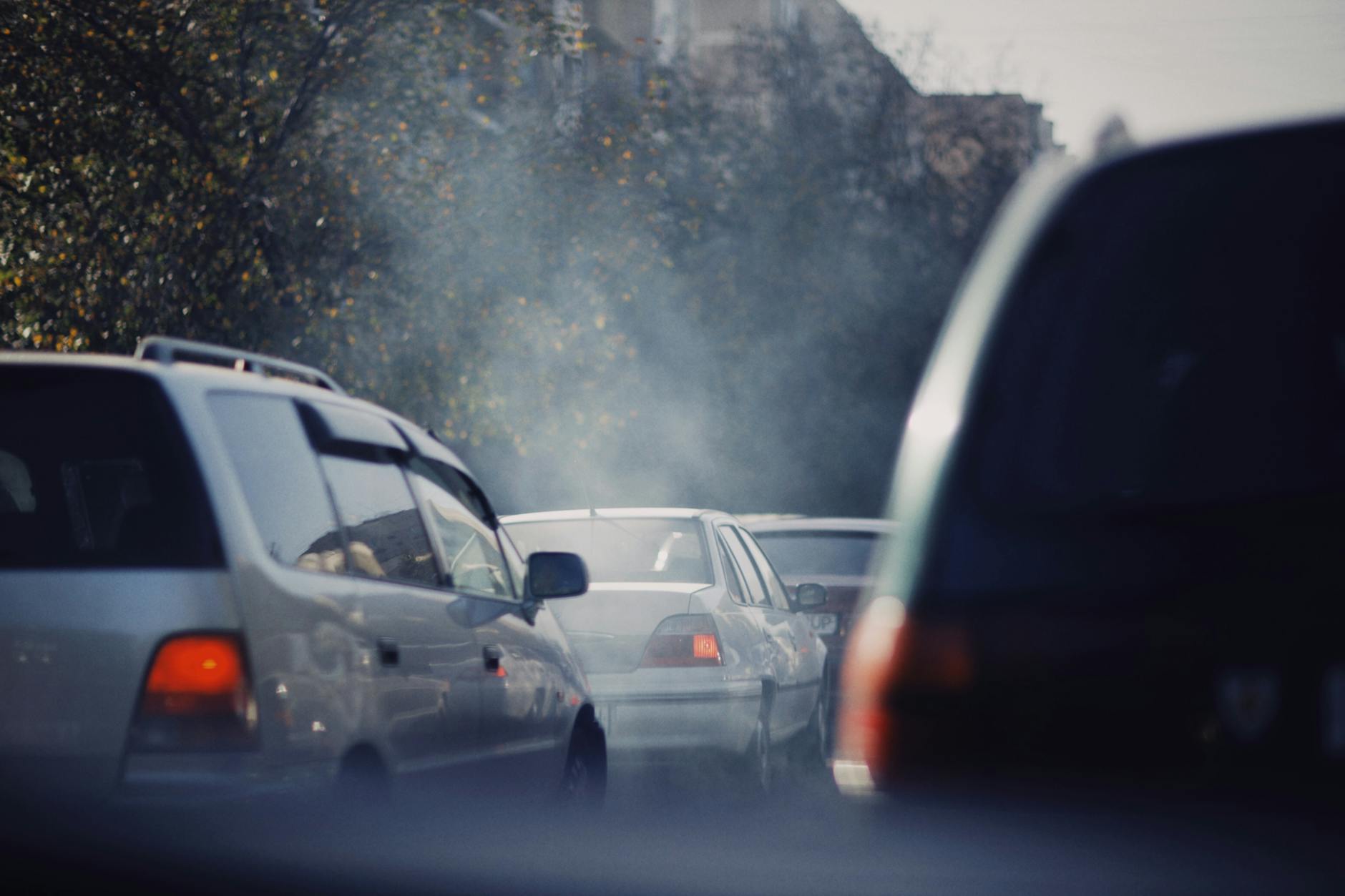
Beyond traffic and speed metrics, congestion pricing delivered significant public health benefits measurable in air quality data. Particulate matter (PM 2.5) concentrations in the Congestion Relief Zone declined 22% compared to 2024 baselines—a reduction validated through Cornell University’s air quality monitoring. These improvements weren’t confined to Manhattan; measurements across all five boroughs and surrounding suburbs registered measurable declines in fine particulate pollution, indicating that reducing vehicle volume generates environmental benefits that extend far beyond the tolled zone itself. The health implications translate directly to economic value. Reduced PM 2.5 correlates with fewer respiratory diseases, fewer lost workdays, and lower healthcare costs—benefits that investors and municipal budgets eventually realize.
A study by the NYC Department of Health estimated that the program’s air quality improvements could prevent thousands of asthma exacerbations annually, particularly in lower-income neighborhoods historically burdened by traffic pollution. The program effectively created a health equity benefit by reducing pollution exposure in areas where residents use public transit at higher rates and benefit most from cleaner air. Traffic safety metrics provide additional evidence of the program’s broader impact. Crashes within the CRZ declined 7%, while traffic injuries dropped 8%, and fatalities fell 40% through July 2025. These numbers suggest that reduced traffic volume and slightly higher average speeds (compared to the stop-and-go congestion patterns of 2024) created safer conditions for both vehicular and pedestrian traffic. However, a important caveat: the fatality reduction of 40% is preliminary data from the first seven months and should be monitored for full-year confirmation, as seasonal variations can significantly affect traffic safety statistics.
How Much Revenue Did Congestion Pricing Generate, and What Does It Mean for Future Tolling Policies?
From a financial perspective, congestion pricing proved remarkably successful as a revenue mechanism. Through November 2025, the program collected $518 million in net tolling revenue—money dedicated to transit system improvements and congestion-related mitigation initiatives. Year-end 2025 projections suggest annual revenues would exceed $550 million, creating a sustainable funding stream that the MTA has already earmarked for subway system upgrades and bus service expansion. For investors evaluating infrastructure financing models, this revenue performance validates congestion pricing as a tool for monetizing externalities. The approximately $15 average toll per vehicle entry created pricing elasticity that simultaneously reduced demand (improving traffic) while capturing significant revenue from the remaining traffic (funding improvements).
This dual benefit represents what economists call a “Pigouvian tax”—a policy that corrects market failures by charging the true cost of externalities while generating public revenue in the process. Other major cities from London to Singapore have used similar models for decades; New York’s success suggests the American market was ready for this approach, despite initial political resistance. The revenue allocation matters for evaluating the program’s broader impact. A portion of tollway revenues funds transit improvements that directly benefit lower-income residents who cannot afford to pay the congestion charge and rely on buses and subways. This creates a feedback loop where traffic reduction improves bus speeds, and toll revenues expand transit capacity—potentially creating a more equitable transportation system than pure congestion reduction alone. Investors in transit-related infrastructure companies benefited from both the immediate toll revenue announcement and the subsequent capital investment wave in subway infrastructure.
What Were the Main Criticisms and Limitations of the First Year?
Despite congestion pricing’s measurable successes, the program faced genuine operational challenges that warrant discussion. Small commercial operators—delivery services, independent contractors, and neighborhood businesses with multiple daily Manhattan trips—experienced the highest relative burden from tolling costs. A plumbing service that previously made five trips daily into Manhattan now faced $75 in daily tolling costs, compelling some operators to consolidate trips, adjust pricing to customers, or relocate services. While fleet optimization ultimately improved efficiency, the transition period created real costs for small business operators. The program also proved imperfect at addressing equity concerns. The $15 toll represents a trivial cost for high-income Manhattan commuters but a meaningful expense for workers traveling from outer boroughs.
Although the program included exemptions for certain commercial vehicles, the baseline toll structure did little to distinguish between discretionary trips (shopping, entertainment) and necessary trips (low-wage workers commuting to service jobs). Transit improvements funded by toll revenues benefit longer-term, but workers during the transition period faced genuine cost increases in their commuting expenses. Technology implementation also revealed limitations. The toll collection system required cameras, sensors, and billing infrastructure that proved more costly to maintain than initial projections. A small percentage of tolls went uncollected due to unregistered vehicles and license plate reading errors, suggesting that the administrative costs of congestion pricing are higher than many pure revenue models assume. These practical challenges don’t invalidate the program’s effectiveness, but they do highlight that congestion pricing as a policy tool requires substantial infrastructure investment and ongoing operational management costs.

How Did Congestion Pricing Affect Manhattan’s Commercial Real Estate and Business Operations?
Congestion pricing’s impact on Manhattan’s commercial landscape proved surprisingly nuanced. Real estate values in highly accessible neighborhoods without tolling (parts of the Upper West Side, northern Manhattan, Downtown Brooklyn) saw increased interest from businesses seeking to relocate away from tolled zones—a phenomenon that created unintended geographic winners and losers. However, central Manhattan commercial districts benefited from improved traffic flow and reduced delivery times, which partially offset the toll’s negative impact on accessibility. Office leasing activity showed mixed signals. Some companies reconsidered Manhattan office requirements, accelerating hybrid work policies to reduce commuting frequency.
However, the improved traffic conditions for those who did commute—faster express corridors and more reliable transit—made Manhattan office locations more appealing for certain business models. The net effect favored companies with flexible geographic requirements and those already committed to Manhattan operations; the toll created marginal pressure on the least-committed tenants while improving the experience for core users. For quick-service restaurants, retail, and service businesses, congestion pricing had paradoxical effects. Reduced pedestrian traffic in some peripheral neighborhoods was offset by higher-frequency visits from existing customers who consolidated trips and spent more time in preferred districts. Delivery services adapted by concentrating Manhattan operations to specific zones, creating new logistics hubs in outer boroughs and improving delivery reliability—a shift that benefited logistics companies while creating winners and losers among neighborhood restaurants.
What Does the First Year of Success Suggest About Congestion Pricing’s Long-Term Future?
The program’s proven effectiveness has already sparked discussions about expanding congestion pricing beyond Manhattan’s current zone. The MTA and city planners are evaluating whether similar pricing mechanisms could benefit other congested corridors, and multiple cities globally are studying New York’s implementation before designing their own systems. For investors in infrastructure, transportation, and urban development, this suggests congestion pricing will likely become a standard tool in major metropolitan transportation planning, creating opportunities in toll collection technology, transit infrastructure, and urban logistics.
The environmental and public health outcomes may ultimately prove more significant than the traffic metrics themselves. As cities and investors focus increasingly on air quality, carbon reduction, and public health externalities, congestion pricing’s documented improvements in these areas—the 22% particulate reduction, the 40% decline in fatalities—provide empirical evidence that pricing mechanisms can simultaneously improve environmental outcomes and generate revenue. This evidence may accelerate adoption in other cities and create political support for similar policies that policymakers previously regarded as politically impossible.
Conclusion
Congestion pricing changed Manhattan traffic by reducing vehicle volume, improving speeds, generating substantial revenue, and delivering measurable environmental and public health benefits. The 27 million fewer vehicles, 23% faster rush hour speeds, $518 million in toll revenue, and documented improvements in air quality and traffic safety demonstrate that the policy achieved its primary objectives while generating substantial secondary benefits. For investors and business operators, the program validated a policy approach that many regions will likely adopt in coming years.
The first year’s results suggest that congestion pricing’s ultimate value extends beyond traffic management. By monetizing scarce urban infrastructure while simultaneously addressing congestion, pollution, and traffic safety, the program created a model where environmental improvements and financial sustainability align rather than compete. As other cities evaluate similar policies and investors assess opportunities in congestion management, Manhattan’s experience provides compelling evidence that well-designed pricing mechanisms can reshape transportation behavior at scale while improving urban livability and generating sustainable revenue streams for infrastructure investment.