
Rising gas prices following the Middle East conflict will cost Americans significantly across every aspect of their lives—from the pump to the grocery store—and threaten to reignite inflation pressures that the economy had largely contained. As of March 20, 2026, the national average stands at $3.81 per gallon, up 60 cents (more than 20%) since the conflict began in late February, meaning the average American family is now paying approximately 80 cents more per gallon than before the war started. Across the country, consumers are spending an additional $300 million daily on fuel alone, and this is only the beginning of the economic ripple effects.
The core problem is straightforward: Iran has closed the Strait of Hormuz, a 21-mile waterway through which roughly 20% of the world’s crude oil and natural gas normally flows. This single action has created the largest supply disruption in global oil market history, removing the equivalent of roughly 130 monthly shipments of oil from the market. For investors and households alike, this article examines what these soaring prices could mean for spending power, inflation, stock valuations, and consumer purchasing decisions in the months ahead.
Table of Contents
- How Fast Have Gas Prices Climbed Since the Conflict Began?
- Why Is Crude Oil Spiking So Dramatically?
- What Happens to Everything Else When Gas Prices Spike?
- What Does This Mean for Inflation and Consumer Spending?
- How Long Could Elevated Prices Last?
- Which Americans Face the Worst Impact?
- What’s the Investor’s Playbook for Rising Energy Costs?
- Conclusion
How Fast Have Gas Prices Climbed Since the Conflict Began?
The speed of the price increase has been dramatic. When the conflict started on February 28, 2026, gasoline was trading significantly lower. Today, at $3.81 nationally, prices have accelerated sharply—and regional variation tells an even starker story. California has seen prices spike above $5.34 per gallon, a warning signal for the rest of the country if the conflict persists, while Kansas remains the lowest at $3.01 per gallon. This 2.33-dollar spread between the highest and lowest state reflects regional refinery capacity, transportation costs, and state-specific fuel blends, meaning the pain of high gas prices hits some Americans far harder than others.
The 60-cent jump in just three weeks represents not a gradual climb but a sharp shock to the system. For a household filling a 15-gallon tank weekly, this translates to $9 more per week, or roughly $36 per month in additional fuel costs alone. But the data shows this is just the opening chapter. Oil futures are signaling much more severe pricing could be ahead if the conflict drags on.

Why Is Crude Oil Spiking So Dramatically?
Crude oil prices have shot past historical warning signs. West Texas Intermediate (WTI) crude is trading near $119 per barrel, Brent crude is above $112 per barrel, and most alarmingly, Dubai crude has surged to $166 per barrel—a record high as of March 19, 2026. These aren’t distant futures contracts; they reflect real, current trading prices in the physical oil market. Analysts are now publicly discussing scenarios where prices could reach $150 to $200 per barrel if the conflict persists or escalates. The Strait of Hormuz closure is the mechanism driving this shock.
When this waterway closes, roughly 20% of global crude oil supply suddenly vanishes from available markets. That 21-mile stretch normally sees approximately 130 ships pass through monthly, carrying oil from the Middle East to global markets. With iran blocking this passage, suppliers can only reroute through alternate pathways—a process that takes weeks and adds transportation costs—or the oil simply doesn’t reach market at all. Recent escalation has made this worse: an Israeli strike on Iran’s South Pars gasfield on March 18, 2026, and Iranian missile attacks on Qatar’s LNG facilities have damaged production infrastructure itself, not just transit routes. This is the critical distinction: it’s not just a shipping problem; it’s a production problem too.
What Happens to Everything Else When Gas Prices Spike?
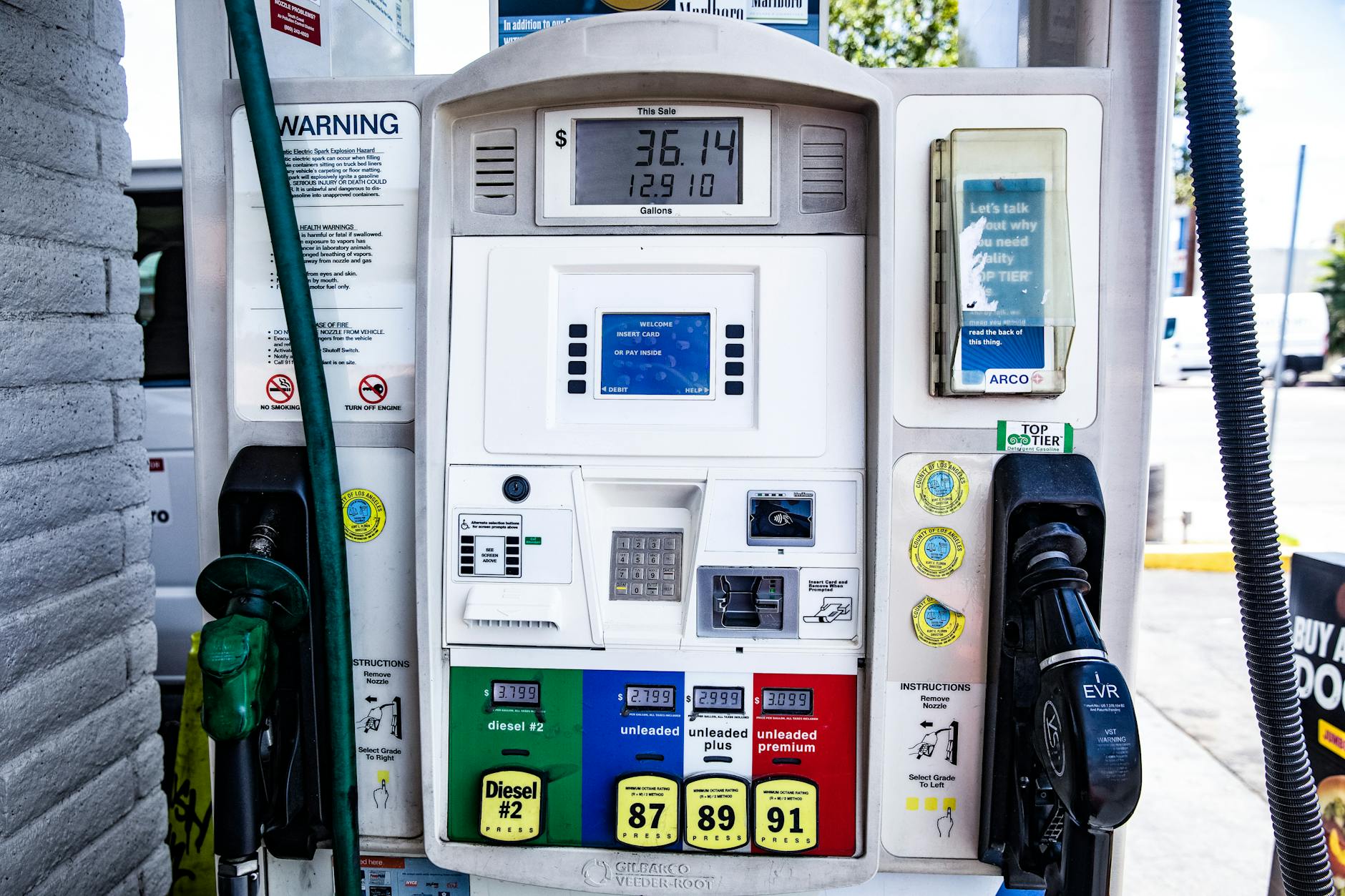
Oil and gas price shocks cascade through the entire economy in ways that often catch people off guard. Jet fuel has surged approximately 85% since the war began, which will inevitably push airline ticket prices higher in the coming weeks as carriers pass costs to passengers. This isn’t theoretical—it’s already baked into airline hedging and fuel surcharges that are now flowing into reservation systems. Fertilizer prices, which depend heavily on natural gas inputs, have climbed 35%, and this matters enormously because fertilizer costs today become grocery prices in coming months.
Farmers already locked into their purchasing for the 2026 growing season at these elevated prices will see their production costs rise, and those costs move to supermarket shelves. A specific example of this ripple effect: a family driving to the store to buy bread now pays more for fuel, and in four to six months, bread itself will likely cost more because the farm inputs that produced the wheat became more expensive. The stress on household finances becomes compounding. Shipping and logistics companies that rely on diesel fuel are already experiencing margin pressure, and many have begun or will soon announce price increases across supply chains. The 55% of Americans surveyed who say the conflict’s gas price impact has already affected their other finances aren’t exaggerating—they’re describing a real squeeze.
What Does This Mean for Inflation and Consumer Spending?
The inflation implications are substantial. The U.S. Energy Information Administration (EIA) revised its 2026 gasoline price forecast upward to $3.34 per gallon, a sharp jump from February’s projection of $2.91 per gallon. More importantly, the EIA now projects gasoline is unlikely to fall below $3 per gallon through 2027, meaning this is no temporary spike—it’s a structural shift upward in consumer energy costs. For investors watching consumer discretionary stocks, this is a direct headwind.
Every dollar a household spends on gasoline and heating is a dollar not spent on retail goods, entertainment, dining out, or other discretionary categories that drive profits for consumer-facing companies. The specific concern for stock market investors is that sustained high energy prices can reignite inflation in a way that’s difficult for the Federal Reserve to control through traditional monetary policy. Unlike inflation driven by excess demand in the economy, supply-shock inflation from geopolitical disruption forces central banks into a difficult position: raising interest rates to combat inflation while simultaneously dealing with potential economic slowdown from reduced consumer spending. This is the stagflation scenario that investors feared in the 1970s during OPEC oil embargoes. The longer the Strait of Hormuz remains closed, the more real this risk becomes.
How Long Could Elevated Prices Last?
The conflict timeline is the critical variable nobody can predict with certainty. Unlike a temporary supply disruption—a refinery fire that gets repaired in months—a geopolitical conflict could persist for years. This is why analyst price targets of $150 to $200 per barrel are being discussed seriously rather than dismissed as worst-case scaremongering. At $150 per barrel, gasoline prices at the pump would likely exceed $5 nationally, with California potentially seeing $7 or higher. At $200 per barrel, we’re in uncharted territory for the modern U.S.
economy. However, there’s an important limiting factor: prices this high would severely depress global oil demand. High prices themselves reduce consumption through demand destruction—people drive less, companies shift to efficiency, and some economic activity stops. This natural brake on prices means that $150-$200 scenarios would likely be temporary spikes rather than sustained levels, unless the conflict also triggers broader economic collapse. The EIA’s projection that prices won’t fall below $3 through 2027 suggests they expect conflict-related disruption to persist at least through next year, but a negotiated settlement or military resolution could change this dramatically in either direction.

Which Americans Face the Worst Impact?
The burden of high gas prices falls unequally across the population. Rural Americans, who must drive further to reach work, schools, and services, face a larger percentage impact on their household budgets than urban dwellers with public transportation options. A rural family spending $400 monthly on fuel (versus perhaps $150 for an urban commuter) will absorb the 80-cent-per-gallon increase far more painfully. Fixed-income seniors on What’s the Investor’s Playbook for Rising Energy Costs?
From a portfolio perspective, sustained elevated energy prices create winners and losers. Energy sector stocks—particularly integrated oil companies with strong balance sheets—benefit directly from higher crude prices. Renewable energy companies and energy-efficient businesses see increased demand as consumers seek alternatives. Healthcare stocks may outperform if consumer spending weakens and defensive sectors become attractive. Conversely, airlines, shipping companies, and other heavy fuel consumers face margin pressure. Retailers that depend on discretionary consumer spending could see earnings revisions downward. The broader market question is whether the U.S. economy can absorb a permanent 20-30% increase in energy costs without significant slowdown. Historically, the answer is mixed. The economy has proven resilient to high oil prices, but usually only for a limited time. If the Strait of Hormuz remains closed through summer 2026 and into fall, the accumulated effects on consumer spending, business investment, and inflation expectations could trigger the Fed to recalibrate interest rate policy—which would affect valuations across all asset classes. Watch the EIA weekly petroleum reports and OPEC production updates as leading indicators of whether this is truly becoming a longer-term structural issue or a temporary spike. Rising gas prices following the Middle East conflict represent more than a simple inconvenience at the pump—they signal a potential structural break in energy markets that could persist for months or longer. The closure of the Strait of Hormuz has removed roughly 20% of global crude oil from accessible markets, pushing WTI crude toward $119 per barrel and Dubai crude to record highs above $166. For American households, this translates to higher costs for transportation, food, and energy itself, with the 55% of Americans already reporting financial impact likely to grow as the effects ripple through the economy. Investors should monitor three key signals: the duration of the Strait of Hormuz closure (which determines whether this becomes a sustained supply shock or a temporary spike), inflation data over the next two quarters (to assess stagflation risk), and consumer spending reports (to identify which sectors face the worst demand destruction). The EIA’s revised forecast keeping gasoline above $3 through 2027 suggests energy costs will remain a persistent headwind to consumer finances. Whether this triggers an economic slowdown, forces policy action, or remains manageable depends on conflict developments that markets cannot predict with precision—making it the most critical uncertainty facing investors and households alike in 2026.Conclusion
You Might Also Like