
Sticky residue on plant leaves is a reliable indicator of a mealybug infestation, and for good reason. Mealybugs are the dominant sticky-bug species on houseplants and ornamental gardens because they produce large quantities of honeydew—a sugary byproduct of their feeding process—as they extract sap from plant tissues. When you find that characteristic sticky coating on leaves, stems, or soil beneath an infested plant, the culprit is almost certainly a mealybug, not one of the other sap-feeding insects. This prevalence exists because mealybugs are extremely common pests in controlled indoor environments, highly adaptable across plant species, and capable of producing massive populations rapidly.
A single potted orchid or succulent can host hundreds of mealybugs within weeks of initial infection. The stickiness itself serves as both a symptom of the pest and a clue to its identity. Unlike spider mites, which leave no visible residue, or scale insects, which may or may not produce abundant honeydew depending on species, mealybugs consistently coat plant surfaces with sticky material. This abundance of honeydew also attracts secondary pests and encourages fungal growth, making the infestation doubly damaging. Understanding why mealybugs create this sticky environment is essential for any plant owner who wants to address the problem effectively rather than misidentifying it and applying ineffective treatments.
Table of Contents
- What Makes Mealybugs the Primary Source of Sticky Plant Surfaces
- Identifying Mealybugs Behind the Sticky Coating
- How Mealybug Populations Escalate and Damage Plants
- Treating Sticky Bugs and Preventing Future Infestations
- When Sticky Residue Indicates a Larger Problem
- Mealybugs Versus Other Potential Causes of Plant Stickiness
- The Future of Mealybug Management and Prevention
- Conclusion
What Makes Mealybugs the Primary Source of Sticky Plant Surfaces
Mealybugs belong to the family Pseudococcidae and feed exclusively by piercing plant cells and consuming the nutrient-rich sap flowing through the phloem. This feeding method is the root cause of their sticky byproduct. As mealybugs extract sap, they consume far more liquid than they can utilize for their own growth, so they excrete the excess as honeydew—a clear, sticky liquid that accumulates on leaves, branches, and nearby surfaces. A single mealybug produces only tiny amounts, but an infestation with dozens or hundreds of insects creates substantial sticky coatings.
Compare this to spider mites, another common plant pest, which feed on cell contents directly and produce no honeydew at all, leaving affected plants dry rather than sticky. Mealybugs thrive specifically in the protected environment of indoor plant collections and greenhouses, which explains their prevalence over other sticky-bug species in typical plant-owner experiences. They reproduce rapidly—a female mealybug can produce hundreds of offspring in a matter of weeks—and they’re generalists that feed on a remarkably broad range of plant species, from ferns to succulents to vegetable seedlings. Their protected life stage, in which they develop inside cottony sacs on the plant, makes them both resilient and easy to overlook until populations explode. Other sap-feeders like whiteflies or scale insects are certainly capable of producing honeydew, but they’re less frequently encountered on houseplants because they require different environmental conditions or host-plant preferences.
Identifying Mealybugs Behind the Sticky Coating
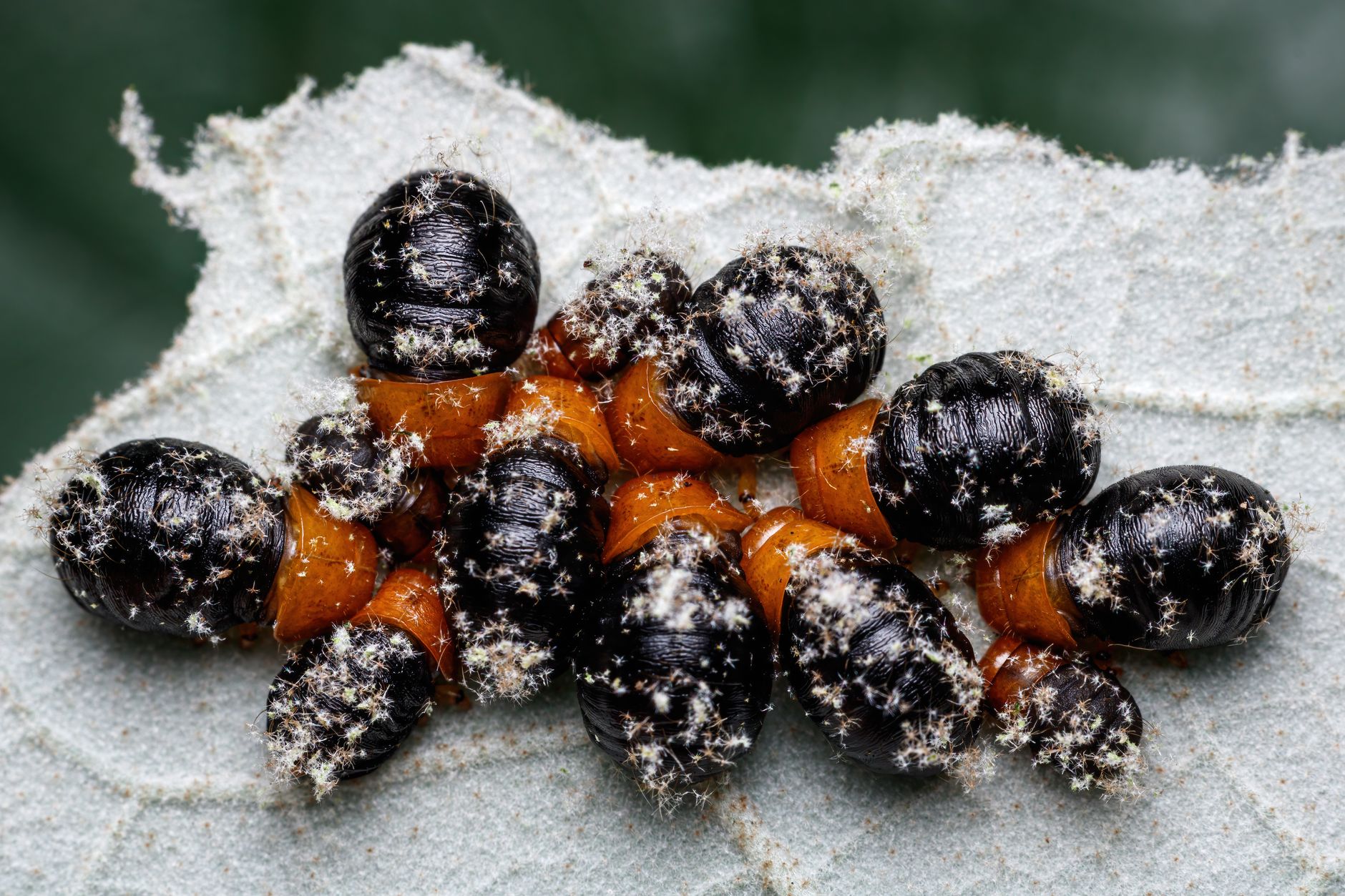
The sticky residue on a plant is only one sign of a mealybug infestation; visual inspection of the insects themselves will confirm the identification with certainty. Mealybugs appear as small, soft-bodied insects covered in a white, waxy, cottony material that gives them their common name. They cluster in the crevices where leaves meet stems, along the undersides of leaves, and in the soil at the base of the plant—exactly where sticky residue will accumulate most noticeably. A single mealybug measures only 2 to 5 millimeters long, but their white coating makes them visible to the naked eye. Severe infestations may appear as white, fuzzy patches on the plant, sometimes mistaken for mold or fungal growth.
One important limitation of relying on the sticky coating alone is that other insects can produce similar symptoms, though far less commonly on houseplants. Soft scale insects also produce honeydew, and scales can coat a plant in stickiness, but they appear quite different visually—typically brown, flattened, and without the cottony appearance. Aphids are another honeydew-producing pest, though they’re rare on indoor plants. A careful examination of the plant’s leaves, joints, and soil surface will reveal the characteristic white mealybugs and confirm the diagnosis. Without this visual confirmation, a plant owner might mistake sticky residue for dust, sap leakage, or other benign causes and fail to treat an active infestation.
How Mealybug Populations Escalate and Damage Plants
Mealybugs reproduce with alarming speed in warm, controlled indoor environments where natural predators are absent. A female mealybug can lay up to 600 eggs during her lifetime, and the eggs develop into nymphs within 7 to 10 days under typical indoor conditions. These nymphs immediately begin feeding on the plant, excreting honeydew and potentially moving to new plant tissue as they mature. A single undetected mealybug on a plant can result in hundreds of feeding insects within a month. The combination of direct feeding damage and honeydew production creates a cascading problem: the plant loses water and nutrients through the feeding punctures, becomes weakened and discolored, and simultaneously becomes colonized by sooty mold fungi that grow on the sticky honeydew layer and further reduce the plant’s ability to photosynthesize.
The sticky coating serves as a visible warning sign that should not be ignored, because once mealybug populations reach a certain size, the plant’s decline accelerates rapidly. Houseplants weakened by heavy mealybug infestations frequently die within a few weeks if left untreated, especially sensitive species like gardenias or African violets. Indoor plants also lack the natural predators—ladybugs, lacewings, parasitic wasps—that keep mealybug numbers in check outdoors. This absence of biological controls means that an indoor infestation becomes purely the plant owner’s responsibility to manage. The stickiness on the plant is actually the visible manifestation of an urgent problem, not merely a cosmetic issue.
Treating Sticky Bugs and Preventing Future Infestations
Effective mealybug treatment requires a combination of physical removal and targeted chemical or biological intervention. For small infestations, wiping down the plant with a damp cloth or a cloth soaked in rubbing alcohol can remove visible mealybugs and reduce the sticky honeydew coating significantly. The key advantage of this manual approach is that it works immediately and requires no pesticides, but it’s only practical for light infestations on plants with sturdy leaves. For severe infestations, horticultural oils or insecticidal soaps applied directly to the mealybugs are effective, as are systemic insecticides absorbed by the plant that poison the honeydew itself and kill insects as they feed. The tradeoff is that chemical treatments carry environmental and toxicity concerns, whereas manual removal is tedious and may miss hidden mealybugs in soil crevices.
Prevention is far more effective than treatment once an infestation takes hold. Quarantining new plants for two weeks before placing them near an existing collection allows time for any mealybugs to become visible before they spread. Regularly inspecting plants, particularly in high-risk locations like near windows or where humidity is high, catches early infestations when only a few sticky spots appear. Maintaining adequate air circulation and avoiding overwatering—both conditions that favor mealybug reproduction—also reduces risk significantly. Indoor plant owners who maintain this preventative discipline rarely encounter the severe sticky-coating problems that result from unchecked mealybug populations.
When Sticky Residue Indicates a Larger Problem
A sticky plant surface is not just a sign of mealybugs feeding; it’s also an open invitation for secondary pest and disease problems. The honeydew coating provides a growth medium for sooty mold fungi, which appear as black or dark gray deposits on leaves and create an additional layer of damage by blocking light from the leaf surface. Ants are attracted to honeydew and often farm mealybugs actively, protecting them from predators and moving them to new parts of the plant in exchange for access to the sweet secretion. These ant-mealybug interactions can accelerate infestation rates dramatically.
A plant treated for mealybugs but not inspected for sooty mold may appear to recover slowly, because the mold layer continues to reduce photosynthetic capacity even after the insects are eliminated. One significant warning is that sticky residue can persist on a plant for weeks even after mealybugs are successfully eliminated, because the honeydew dries and adheres stubbornly to leaf surfaces. A plant owner who treats an infestation, sees stickiness still present a week later, and assumes the treatment failed may unnecessarily retreat the plant with additional pesticides. The correct approach is to wait at least two weeks after visible mealybugs disappear before reapplying treatment, and to manually clean the sticky coating with water or rubbing alcohol to confirm that the infestation has actually been controlled. Overtreatment with pesticides carries its own risks, including phytotoxicity and the development of pesticide-resistant mealybug populations.

Mealybugs Versus Other Potential Causes of Plant Stickiness
Plant stickiness can occasionally result from sources other than insect honeydew, though these are far less common than mealybug infestations. Some plants, particularly ornamental species like crotons or certain citrus varieties, naturally secrete a sticky resin or gum as part of their normal physiology. In these cases, the stickiness appears evenly distributed rather than concentrated in specific leaf junctions or clusters, and no insects are visible on close inspection. Plant resin is also typically clear or amber-colored rather than transparent like honeydew, and it doesn’t attract sooty mold in the same way.
Distinguishing between these scenarios requires careful examination: look for visible insects, check whether the stickiness correlates with insect damage or honeydew patterns, and inspect new growth to see if the problem worsens over time. A second source of confusion is contamination from external sources—dust, debris, or residue from outdoor exposure in the case of plants temporarily placed near windows. This type of stickiness is usually isolated to specific areas and washes away easily with water. True honeydew from mealybugs, by contrast, is persistent and accumulates in concentrated deposits beneath the plant and on leaves directly beneath feeding sites. When in doubt, the safest approach is to treat the plant as if it has a mealybug infestation, because the consequences of missing an actual infestation are far more severe than the minor inconvenience of an unnecessary precautionary treatment with water and rubbing alcohol.
The Future of Mealybug Management and Prevention
Advances in pest management research continue to expand options for controlling mealybugs without relying on broad-spectrum pesticides. Biological control agents—particularly parasitic wasps that lay eggs inside mealybugs, killing them as the wasp larvae develop—are increasingly available to commercial growers and home gardeners through specialty suppliers. These natural enemies can be introduced to an indoor plant collection and, if conditions support them, can maintain mealybug populations at sustainable levels indefinitely.
As awareness of pesticide toxicity grows, biological control approaches are becoming more popular even among casual plant owners, particularly those managing large collections where repeated chemical treatment becomes impractical. The long-term trend toward integrated pest management in both commercial and home horticulture suggests that sticky-bug problems may become less prevalent simply because plant owners become more educated about early detection and prevention. Improved horticultural practices, like improved quarantine protocols for new plants and increased use of resistant plant varieties, also reduce the frequency of infestation initiation. However, as long as plants are cultivated indoors without natural predators, mealybugs will remain a risk, and sticky residue will continue to signal an active infestation requiring prompt intervention.
Conclusion
Sticky bugs on plants are almost always mealybugs because mealybugs are the most common sap-feeding insects in controlled indoor plant environments, and because they produce honeydew—a sticky byproduct—in quantities large enough to visibly coat plant surfaces. The appearance of stickiness on a houseplant should trigger immediate inspection and identification, because mealybug infestations escalate rapidly and cause severe damage if left untreated. Understanding the connection between the sticky coating and the underlying mealybug infestation is essential for effective treatment and prevention.
For plant owners facing a sticky-residue problem, the immediate steps are to visually confirm the presence of mealybugs, isolate the plant if possible to prevent spread to other specimens, and initiate treatment using the method most appropriate to the infestation severity and personal preference. Whether employing manual removal, rubbing alcohol, horticultural oils, or systemic insecticides, the key is to act promptly and follow up with inspection after two weeks to confirm that the treatment succeeded. Prevention through regular inspection, quarantine of new plants, and maintenance of appropriate growing conditions remains the most effective long-term strategy for avoiding the sticky-bug problem entirely.