
The distinctive cheese crust on French Onion Soup emerged not from a single innovation, but from the convergence of medieval French cooking practices and the resource constraints of Parisian kitchens. By the 18th century, Parisians had developed the habit of topping their onion soup with bread and melted cheese as a matter of practicality—both ingredients were affordable and abundant. The cheese crust we recognize today became standardized through the work of chefs in Paris during the 1760s and 1770s, particularly in taverns and modest restaurants where the soup was a working-class staple.
What began as a way to stretch meager ingredients transformed into a signature technique that defined the dish across centuries. The evolution of this topping reveals how economic circumstances and ingredient availability shaped one of France’s most iconic dishes. When King Louis XV famously ate French Onion Soup (soupe à l’oignon) at a hunting lodge, the cheese-crusted version was already well-established in Parisian establishments, though not yet served in aristocratic settings. The technique gained legitimacy and spread beyond the working-class cafés as wealthy diners began appreciating the depth of flavor that the browned cheese layer provided.
Table of Contents
- Why Did Parisians Start Adding Cheese and Bread to Onion Soup?
- How the Cheese Crust Became the Defining Feature of the Dish
- The Role of Gratin Techniques in Creating the Perfect Crust
- Cheese Selection and Why Emmental Became the Standard
- Common Mistakes That Undermine the Cheese Crust
- The Influence of French Onion Soup on Global Soup Traditions
- The Modern Evolution and Future of the Authentic Preparation
- Conclusion
Why Did Parisians Start Adding Cheese and Bread to Onion Soup?
The addition of bread and cheese to onion soup emerged directly from 18th-century Parisian food culture and economic necessity. Bread was the most abundant staple in Paris, produced daily and available cheaply from neighborhood bakers. Cheese, particularly aged varieties that were tougher and less suitable for eating alone, could be grated and melted into a cohesive crust. This wasn’t the refined cooking of the royal court at Versailles—it was sustenance for workers, soldiers, and the urban poor who gathered in taverns and soup houses.
The technique also solved practical problems in the kitchen. Thin slices of bread could be toasted directly in the broth, softening them while absorbing the rich, concentrated flavors of slowly caramelized onions. Cheese melted directly onto the bread, creating a barrier that held it in place and added savory depth. A comparison to modern bread-based gratins reveals the same principle: bread acts as both a thickening agent and a flavor conductor, while the cheese binds everything together and browns to create textural contrast.

How the Cheese Crust Became the Defining Feature of the Dish
The cheese crust’s ascent to iconic status happened gradually through the 19th century as chefs began serving the soup in increasingly refined establishments. What had been a humble modification of a basic broth gradually became a technique worth perfecting. Chefs experimented with different cheese types—Emmental became the standard in Paris, prized for its melting qualities and slightly sweet, nutty flavor. Gruyère later emerged as an alternative, offering a sharper taste that some considered superior.
However, the standardization of this technique came with limitations. Once the cheese-topped version became the “authentic” French Onion Soup, it actually narrowed the range of preparation methods that were considered acceptable. Earlier Parisian versions had simply used aged bread without cheese, and in some regions of France, broth-based onion soups were traditionally served without any topping at all. The cheese crust also created practical problems in fine dining settings: it could adhere too firmly to the bowl, making the soup difficult to serve elegantly, and excessive cheese could overpower the delicate caramelized onion flavor that gave the soup its depth.
The Role of Gratin Techniques in Creating the Perfect Crust
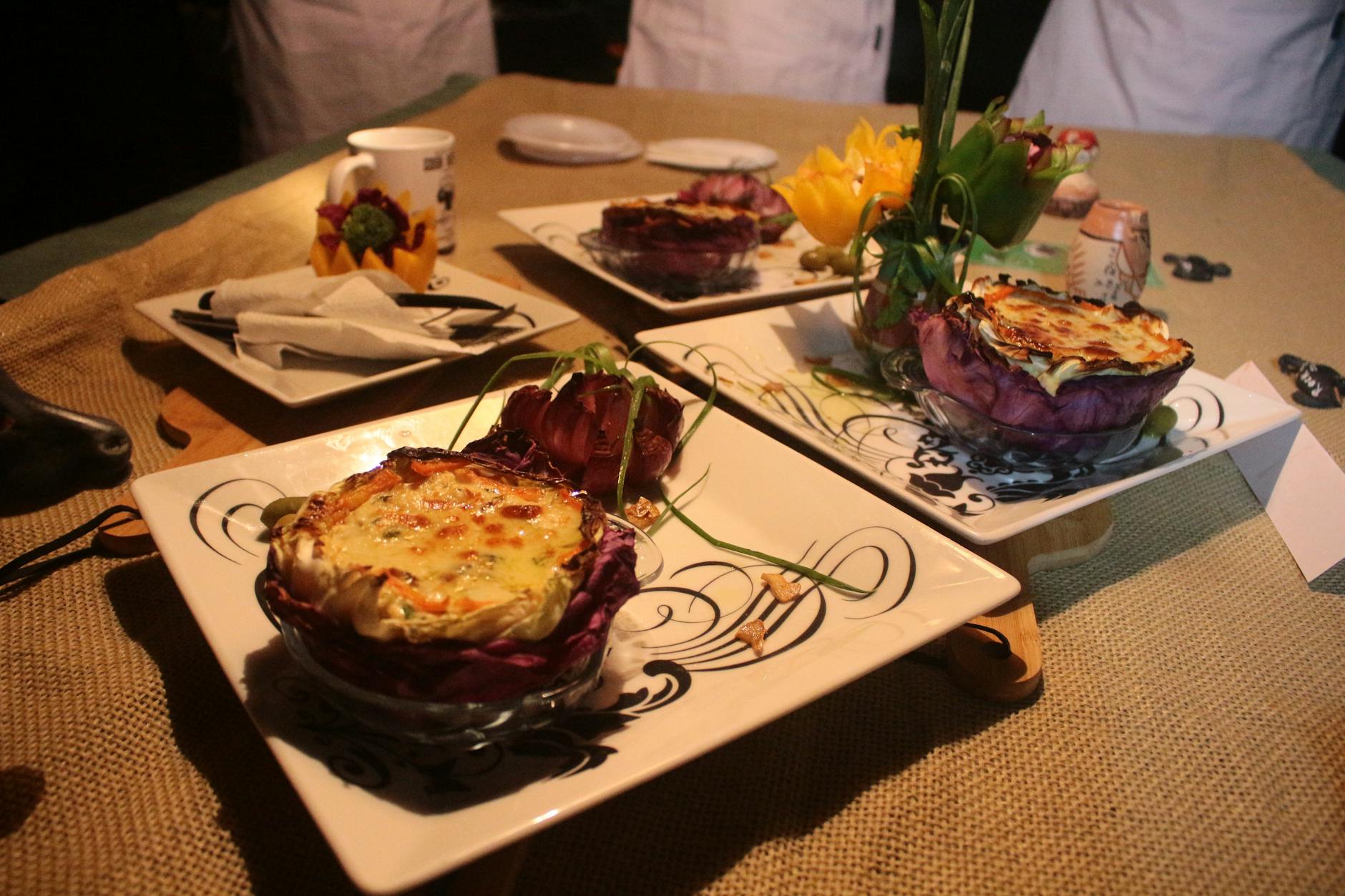
French culinary tradition had already established techniques for gratinéed dishes—vegetable gratins that were browned in the oven until the top layer crisped and darkened. French Onion Soup’s cheese crust borrowed directly from this gratin methodology. Chefs would place the filled soup bowls under a salamander (a broiler) or into a hot oven, creating intense, direct heat that melted and browned the cheese layer.
This high-heat cooking was critical—it wasn’t simply melting cheese on warm soup, but rather creating a textured, caramelized surface through the Maillard reaction. The broiler technique allowed the cheese to brown unevenly, creating darker and lighter patches that added visual appeal and flavor complexity. A comparison with modern gratinéed dishes shows that the same principles apply: gentle heat produces soft, homogeneous melting, while intense heat creates the desired browning and crust formation. Professional kitchens still use this technique today, maintaining the 18th-century methodology because it produces superior results compared to simply covering the soup with cold cheese in the bowl.
Cheese Selection and Why Emmental Became the Standard
The choice of Emmental as the primary cheese for French Onion Soup reflected both its availability in 19th-century Paris and its technical properties. Emmental—a semi-hard, cooked cheese from Switzerland and the Jura region—melts smoothly without becoming greasy, browns evenly under heat, and creates the characteristic stringy texture when pulled. Its subtle sweetness complements rather than overwhelms the deep, savory umami notes of caramelized onion broth. Alternative cheeses present different tradeoffs.
Gruyère offers a more assertive, nutty flavor that some diners prefer, but its denser structure means it browns less evenly and can become tough if overcooked. Lighter cheeses like Fontina melt too quickly and don’t develop the proper crust texture. Some French chefs add a layer of Parmesan for extra browning and sharpness, though this represents a departure from the classical preparation. The downside to experimenting with cheese types is that non-traditional choices can easily tip the flavor balance, making the cheese crust overwhelming rather than complementary.
Common Mistakes That Undermine the Cheese Crust
Many home cooks and inexperienced chefs make critical errors when attempting to recreate the authentic cheese crust. The most common mistake is grating cheese too finely—fine shreds melt too quickly and create a leathery layer rather than the desired crispy-yet-melted texture. Properly textured gratings, about the size of small peas, melt more slowly and develop the right surface. Another frequent error is using too much cheese in an attempt to create a thicker, more substantial crust, which results in an excessively rich topping that drowns out the delicate soup underneath.
Temperature control presents another significant limitation. Broilers vary enormously in intensity and distance from the heat source, making it difficult to achieve the same results consistently. Cheese placed too close to intense heat burns before it fully melts, while cheese placed too far away never browns properly. Professional kitchens solve this problem through experience and standardized equipment, but home cooks often struggle to find the correct balance. Additionally, using stale or low-quality broth undermines the entire dish—the cheese crust can only enhance a soup that already has sufficient depth of flavor and richness.

The Influence of French Onion Soup on Global Soup Traditions
French Onion Soup’s cheese-crusted format influenced how other culinary traditions approached soup-based dishes. The technique of topping soup with cheese and bread became integrated into Italian cuisine (as in some pasta e fagioli preparations) and influenced the development of gratinéed dishes across European cooking.
The dish’s success in conveying sophisticated flavor through humble ingredients demonstrated a principle that spread throughout cooking: that careful technique and time investment could elevate simple components into something extraordinary. In the United States and Britain, French Onion Soup became a restaurant staple during the mid-20th century, and its cheese-crusted version became inseparable from the dish’s identity. Diners expected and demanded the crust, sometimes to the detriment of the underlying soup, as some establishments prioritized the appearance and texture of the cheese layer over the actual quality of the broth.
The Modern Evolution and Future of the Authentic Preparation
Contemporary chefs continue to debate the proper execution of French Onion Soup, with some arguing for stricter adherence to the classical Paris preparation, while others introduce modern variations. Some Michelin-starred restaurants have experimented with removing the cheese crust entirely, returning to earlier versions of the dish to highlight the purity of slow-caramelized onion flavor.
Others have experimented with different cheeses, broiling techniques, and presentation styles, though these innovations rarely exceed the classical version in actual quality or customer satisfaction. The preservation of the cheese-crusted technique represents a case study in how culinary traditions maintain themselves through consistency and refinement rather than innovation. French Onion Soup remains virtually unchanged from the 1770s version in its essential elements, a remarkable achievement for a dish now spanning more than two centuries of continuous preparation.
Conclusion
The cheese crust on French Onion Soup represents the practical ingenuity of 18th-century Parisian kitchens, where necessity and available ingredients combined to create a lasting culinary technique. What emerged as a humble solution to stretching meager provisions became refined through centuries of repetition and standardization, transforming a working-class dish into an international classic. The technique itself—carefully browning aged cheese over hot broth—demonstrates principles of flavor development and texture creation that remain relevant to modern cooking.
Understanding the origins of this technique provides insight into how culinary traditions develop and persist. The cheese crust succeeded not because it was invented by a famous chef or dictated by culinary fashion, but because it genuinely improved the eating experience and solved practical problems in the kitchen. For anyone seeking to understand how food traditions take root and endure, French Onion Soup with its golden cheese crust offers a lesson in the power of incremental improvement and the democratization of sophisticated cooking.