
Reheated risotto never tastes the same because the rice grains, which thicken the dish through the slow release of starch during initial cooking, have already absorbed and settled into their rigid structure. When you reheat the risotto, you cannot recreate the constant stirring and gradual starch emulsification that made the original creamy and fluid. The dish becomes either gluey and dense if reheated with too much liquid, or separated and grainy if reheated with too little, because the starch molecules have already fully hydrated and cannot be “reset” to their original state.
For example, a risotto Milanese that tasted perfectly creamy and al dente on Monday evening will be noticeably thicker, more paste-like, and less delicate by Wednesday, even if stored properly in the refrigerator. The core issue is that risotto is a time-sensitive preparation that depends on continuous mechanical action and precise heat management to achieve its distinctive texture. Once the cooking process ends and the risotto cools, the starches retrograde—they realign and harden, making the dish less responsive to reheating. This is not a problem unique to risotto, but risotto’s entire identity rests on its creamy, almost fluid consistency, so any degradation in texture is immediately noticeable to anyone familiar with the dish.
Table of Contents
- What Happens to Risotto’s Starch Structure During Cooling and Storage
- The Moisture Loss Problem and Textural Collapse
- Flavor Degradation and the Aromatic Volatilization Problem
- Practical Reheating Methods and Their Trade-offs
- Common Reheating Mistakes and Advanced Warning Signs
- Storage Best Practices to Minimize Texture Degradation
- Advanced Techniques and Future Preparation Strategies
- Conclusion
- Frequently Asked Questions
What Happens to Risotto’s Starch Structure During Cooling and Storage
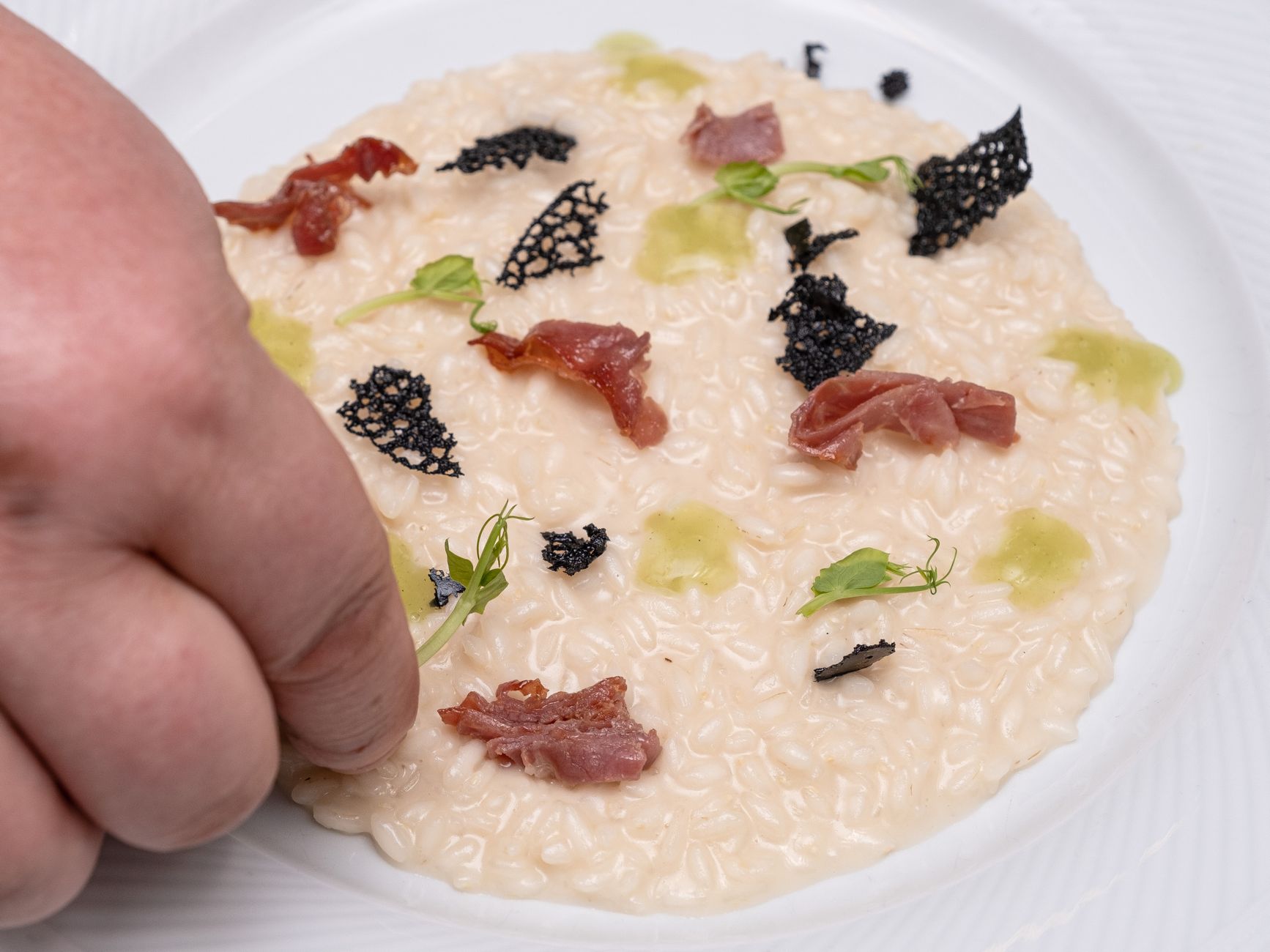
During the initial cooking of risotto, you are constantly stirring Arborio or Carnaroli rice grains in hot broth, which causes them to release starch into the liquid. This starch acts as a natural thickening agent, creating the signature creamy texture without cream or flour. The heat keeps the starch molecules in an amorphous, fluid state, and the continuous stirring keeps them evenly distributed throughout the liquid. The moment you stop cooking and the risotto cools, the starch molecules begin to retroglade—they lose moisture and reorganize into a more crystalline, rigid structure.
When risotto sits in the refrigerator overnight, this process accelerates. The rice grains continue to absorb remaining liquid, becoming firmer and more compact. The starch that was once fluid enough to coat a spoon smoothly now hardens into a cohesive mass. If you’ve ever opened a container of cold risotto, you’ve seen this firsthand: what was once a creamy sauce clinging to individual grains is now a solid block that requires significant effort to break apart. Attempts to reheat this directly over heat typically result in scorching on the bottom before the interior warms through, or alternatively, a grainy, separated texture if you add too much liquid too quickly.
The Moisture Loss Problem and Textural Collapse
Risotto relies on a careful balance of moisture throughout the cooking process, with just enough liquid to keep the rice suspended in a creamy matrix without being soupy. During storage, moisture continues to evaporate from the surface and throughout the mass, even in a sealed container, because the residual heat from cooking pushes water vapor into the air. Additionally, the rice grains continue to absorb and redistribute any remaining liquid, creating a drier overall consistency.
When you attempt to reheat risotto, you face a practical dilemma: adding enough liquid to restore creaminess often results in overshooting and creating a soup-like consistency that no longer resembles risotto, while adding minimal liquid leaves you with a gluey, pasty texture that is unappealing. The original risotto had precisely calibrated moisture levels maintained by constant stirring and heat; you cannot easily replicate this state after the rice has already cooked and cooled. A warning here is critical—many people make the mistake of reheating risotto in a microwave, which adds moisture unevenly and tends to create hot spots that further degrade the texture.
Flavor Degradation and the Aromatic Volatilization Problem
Beyond texture, the flavor of reheated risotto also suffers, though this is often overlooked in favor of discussing the texture problem. The initial cooking of risotto toasts the rice grains briefly in fat and aromatics before liquid is added, developing complex flavors through the Maillard reaction. Fresh risotto retains the vibrant, slightly nutty taste of the rice along with the fresh flavor of the broth and any additions like saffron, wine, or cheese.
Upon reheating, some of these volatile aromatic compounds have already evaporated during the first cooling, and further heating drives off more of them. Additionally, the flavors of ingredients like wine, saffron, or herbs mellow over time as they continue to diffuse into the rice and broth. A risotto Milanese reheated two days later will have a more subdued saffron flavor than it did fresh, not because the saffron has degraded chemically, but because its aromatic impact has dispersed and is no longer concentrated enough to register as boldly on the palate. If the risotto contains seafood, mushrooms, or other delicate ingredients, their flavors also tend to become muted or oxidized over time, leaving the dish tasting flat or slightly off compared to the original preparation.

Practical Reheating Methods and Their Trade-offs
The most reliable method to reheat risotto is the stovetop double-boiler approach, which involves placing the cold risotto in a heatproof bowl set over a pot of simmering water. This gentle, indirect heat warms the risotto slowly without causing the bottom to scorch or the texture to break down further. Add a small amount of warm broth or water while stirring constantly, allowing the risotto to relax and become creamy again. This method works because it mimics, albeit imperfectly, the original cooking process by providing sustained heat and stirring action.
The trade-off is that this method is time-consuming and requires active attention—most people will not bother with it after a long day at work. An alternative is to reheat risotto on the stovetop directly, over low heat with frequent stirring and the gradual addition of warm broth. This is faster than the double-boiler method but carries greater risk of scorching or unevenness. The microwave, though convenient, should be avoided because the heating is uneven and tends to further accelerate moisture loss. Some people attempt to revive risotto by adding cream or butter during reheating, which can temporarily mask the texture problem but makes the dish heavier and less true to its original character.
Common Reheating Mistakes and Advanced Warning Signs
The most destructive mistake is reheating risotto at high heat, which causes the outer portions to overheat and potentially burn while the interior remains cold. Another common error is adding room-temperature or cold liquid, which shocks the risotto and causes the starches to seize up even more dramatically. The liquid must be hot—either broth or water—and it must be added in small increments while stirring. A warning: if your risotto has been refrigerated for more than three or four days, the flavor and texture degradation becomes extreme, and no reheating method will fully restore it to its original quality.
Additionally, risotto that has been frozen presents its own challenges. Freezing causes ice crystals to form within the rice grains, which rupture the cellular structure and create an even grainier texture upon thawing and reheating. For this reason, risotto is best consumed fresh or within two days of preparation. If you must freeze risotto, defrost it slowly in the refrigerator and expect a noticeably inferior result compared to freshly made risotto.

Storage Best Practices to Minimize Texture Degradation
If you know you’ll be reheating risotto, store it in an airtight container to minimize moisture loss, and refrigerate it within two hours of cooking. Some chefs recommend spreading the risotto on a baking sheet to cool it quickly before transferring it to storage containers, as this reduces the time the risotto spends in the dangerous temperature zone where bacterial growth can occur. A specific example: risotto stored in a flat, wide container with a tight-fitting lid will maintain slightly better texture than risotto stored in a tall, narrow container, because the flatter shape allows more even heat distribution during reheating.
When you’re ready to reheat, remove the risotto from the refrigerator 15 to 20 minutes before cooking, if possible, so it’s not ice-cold when it hits the heat. This reduces the thermal shock and allows for more even reheating. If the risotto has become extremely dense or compact, you may need to break it up slightly with a fork or whisk before beginning the reheating process, which helps the liquid penetrate more evenly.
Advanced Techniques and Future Preparation Strategies
Some experienced cooks recommend intentionally undercoking risotto slightly on its initial preparation, then finishing it during reheating. The logic is that this second cooking will bring the rice to the ideal al dente state while re-emulsifying the starch. However, this approach is risky and requires skill to execute properly—you must judge the doneness very carefully to avoid raw rice in the original preparation.
This method works best for risottos that are relatively simple and made by someone with considerable experience. Another emerging approach is to cook risotto-style rice dishes in a pressure cooker or Instant Pot, which theoretically could be reheated more easily because the cooking time is shorter and more controlled. While this method produces serviceable risotto, it lacks the careful attention and gradual starch development of traditional stirred risotto, so the issue of reheating degradation becomes less relevant simply because the original dish never achieved the same level of creaminess in the first place.
Conclusion
Reheated risotto never tastes the same because the rice starch structure, which defines the dish’s creamy texture, has already undergone irreversible chemical changes during cooling and storage. The moisture content has shifted, the volatile aromatic compounds have partially evaporated, and the starch molecules have reorganized into a more rigid formation. No reheating method can fully reverse these changes or recreate the original cooking environment where constant stirring and heat management produced the ideal texture.
The practical takeaway is straightforward: risotto is best enjoyed fresh or within a day of preparation, consumed directly after cooking or reheated very gently with constant stirring and minimal added liquid. If you regularly find yourself with leftover risotto, consider preparing smaller portions or transforming leftovers into risotto cakes or arancini, which are fried and have a different textural expectation altogether. For those who insist on reheating, the stovetop double-boiler method is your best option, though it requires patience and active attention that many home cooks will not invest after a long workday.
Frequently Asked Questions
Can you freeze risotto and expect it to taste decent after reheating?
Freezing risotto is not recommended. The ice crystals that form rupture the rice grain structure, creating an even grainier texture than refrigerated risotto upon thawing and reheating. If you must freeze it, thaw it slowly in the refrigerator and expect a noticeably compromised result.
Is there any way to completely restore reheated risotto to its original texture?
No. Once risotto has cooled and the starches have retrograded, no reheating method can fully reset the rice to its original state. You can improve the texture with careful reheating, but you cannot achieve the exact quality of freshly made risotto.
What’s the best liquid to add when reheating risotto?
Use warm broth that matches the original dish—beef broth for a beef risotto, chicken broth for a chicken risotto, or vegetable broth for a vegetarian version. Water is acceptable in a pinch. Always use hot liquid, never cold, to avoid shocking the rice into an even grainier texture.
How long can risotto last in the refrigerator before it becomes inedible?
Risotto is best consumed within two days of preparation. After three or four days, the flavor and texture degradation becomes severe, and reheating becomes increasingly futile.
Is there a way to use leftover risotto without reheating it?
Yes. Transform it into risotto cakes or arancini by forming the cold risotto into patties or balls, breading them, and frying them. This completely changes the textural expectation and actually highlights the creamy filling inside a crispy exterior.
Should risotto be cooled at room temperature before refrigerating?
No. Cool risotto quickly—you can spread it on a baking sheet—then refrigerate it within two hours of cooking. Leaving it at room temperature too long increases the risk of bacterial growth and also gives the starches more time to harden in a way that makes reheating more difficult.