
JFK Airport offers more than a dozen dining destinations across its seven terminals, with Terminal 4 leading the way as the primary hub for upscale and casual dining. The airport’s restaurant landscape has evolved significantly over the past decade, transforming what was once a concession-heavy environment into a destination for actual good food.
If you’re flying out of JFK and want breakfast from Shake Shack, lunch at The Palm Bar & Grille, or dinner at Paris Café by Jean-Georges, you can stay within the airport walls and eat well. The quality varies dramatically by terminal, and choosing the right one can mean the difference between grabbing a mediocre airport sandwich and sitting down to a meal you’d actually seek out elsewhere in the city. Terminal 5, operated by OTG Experience, has become the national benchmark for in-terminal food programming and is worth timing your arrival around if possible.
Table of Contents
- What Makes JFK Restaurants Different From Other Major Airports
- The Top-Tier Restaurants Worth Seeking Out
- The Terminal 5 Advantage: Why OTG Experience Sets the Standard
- How to Choose the Right Restaurant for Your Departure Time
- When Airport Dining Falls Short and What to Avoid
- New Terminal One and the Future of JFK Dining
- The Bigger Shift in Airport Dining Standards
- Conclusion
What Makes JFK Restaurants Different From Other Major Airports
JFK’s 25-plus dining options in Terminal 4 alone include celebrity chef partnerships and global cuisine fusion that you won’t find at most other airports. This represents a deliberate shift away from generic airport food toward New York-centric establishments with real culinary standards. The difference is tangible: you’re eating at the actual restaurant brands that built reputations in Manhattan, not airport-only iterations stripped down for convenience. However, the critical limitation is availability and timing.
Just because a restaurant operates in the airport doesn’t mean it’s open during your flight window. Terminal 4’s Palm Bar & Grille, for instance, has specific operating hours that may not align with early-morning or late-night departures. You should check your terminal’s specific hours before counting on a particular spot. The OTG Experience model in Terminal 5 has reset expectations across the industry, proving that airports can offer genuinely competitive dining without sacrificing profit margins. Other airports have tried to replicate this model, but Terminal 5 remains the gold standard—a fact that matters if you have flexibility on which terminal your airline uses.
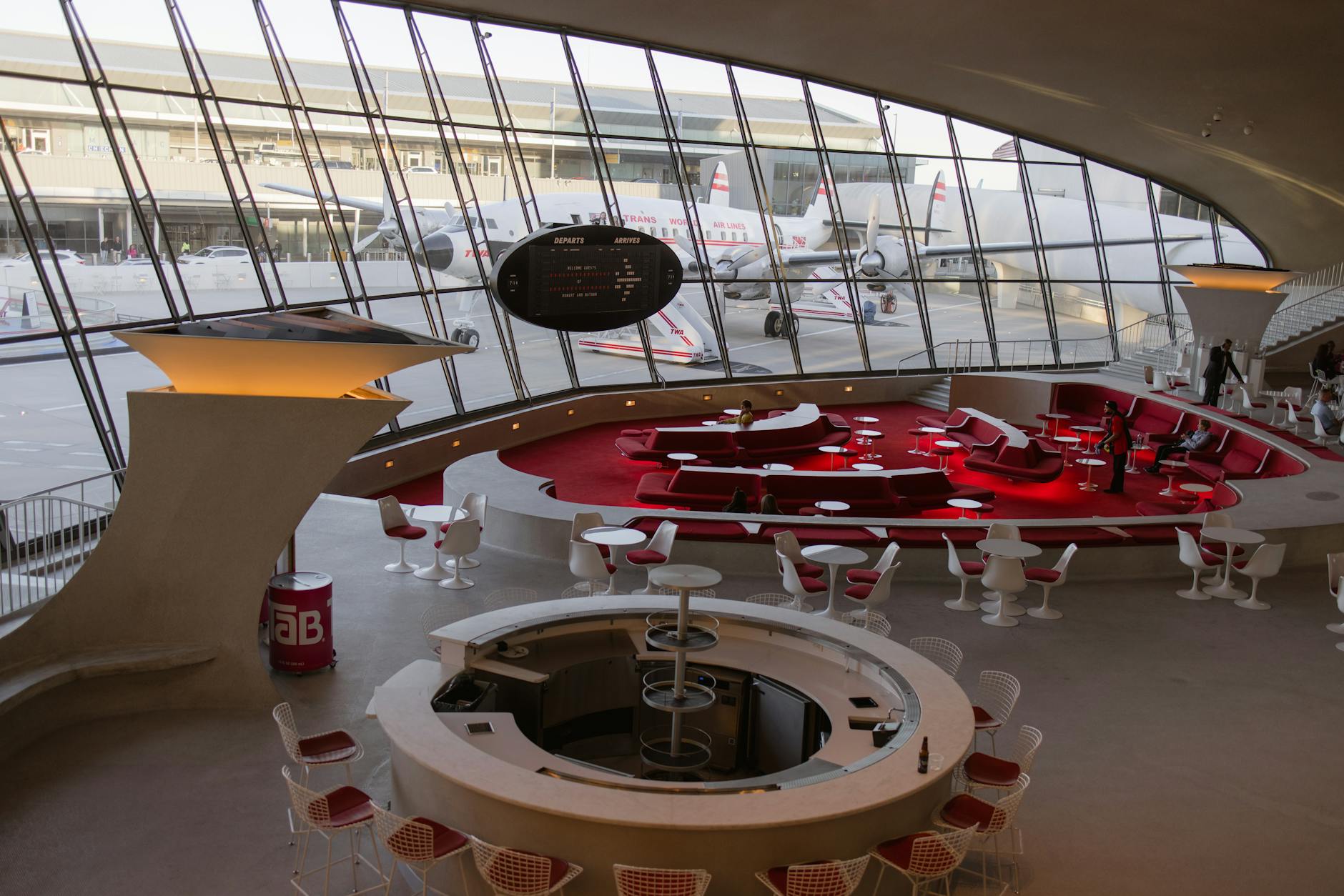
The Top-Tier Restaurants Worth Seeking Out
The most reliably excellent options include Shake Shack, Jacob’s Pickles, and The Palm Bar & Grille, each offering something distinct. Shake Shack is straightforward—it’s the same burger-and-shake operation you’d find in manhattan, packed into an airport-efficient footprint. Jacob’s Pickles brings New York Jewish deli traditions (pickles, of course, plus breakfast and lunch sandwiches), while The Palm Bar & Grille offers a more upscale dining experience with steaks and cocktails. Paris Café by Jean-Georges deserves specific mention because it represents the highest tier of airport dining—a celebrity chef collaboration that actually delivers on its promise.
This is fine dining wrapped in the efficiency of an airport setting, complete with wine and cocktail service. The price point is accordingly higher, but the experience justifies it for travelers with time to sit down. Deep Blue sushi in Terminal 5 stands apart as the best-reviewed sushi option in the airport, featuring chic blue lighting and modern decor that feels genuinely upscale rather than airport-compromised. If you’re departing Terminal 5 with time to kill and sushi is your preference, this should be your destination. The quality of fish and preparation here exceeds what you’d find in many Manhattan sushi bars, let alone other airports.
The Terminal 5 Advantage: Why OTG Experience Sets the Standard
Terminal 5’s OTG Experience operates under a completely different concession model than the rest of the airport. Instead of multiple separate vendors scattered throughout, OTG controls the entire food and beverage program, which allows for integration, consistency, and curation that traditional airport structures can’t match. This is why Artichoke Pizza, Deep Blue Sushi, and H&H Bagel all coexist in the same terminal and operate to unified quality standards. The practical advantage is that if you’re departing from Terminal 5, your dining options are meaningfully better than other terminals.
You’re not simply choosing between better and worse versions of the same mediocre airport food—you’re accessing an entirely different tier of preparation and ingredient quality. A bagel from H&H at JFK tastes like it came from the original Manhattan location because OTG maintains those standards. The limitation, however, is that this advantage only applies to departures from Terminal 5. If your airline uses a different terminal, you don’t get access to this ecosystem. American Airlines, Delta, and British Airways departures vary by terminal, so checking which one you’re assigned is crucial.

How to Choose the Right Restaurant for Your Departure Time
Timing is everything at airport dining. A 6 AM departure means you’re limited to early-opening spots like Irving Farm Coffee Roasters in Terminal 7 or basic breakfast options. A mid-day departure gives you access to the full range, while an 8 PM departure might find Terminal 4’s Shake Shack and Jacob’s Pickles still open but specialized restaurants closed. Check your airline’s terminal assignment and the specific restaurant hours before finalizing your pre-flight dining plan. Walk time matters more than it should. Terminals are sprawling, and a 30-minute layover doesn’t give you time to find The Palm Bar & Grille, sit down, and eat.
You need immediate options within walking distance of your gate. This is where Terminal 5’s advantage compounds—because OTG controls the programming, restaurants are distributed throughout the terminal with consideration for customer flow rather than random vendor placement. The comparison to eating before entering the airport is worth considering. If you have more than 90 minutes before departure, eating in the airport food hall is reasonable. If you’re under 75 minutes, grab a quality quick option—Artichoke Pizza or Shake Shack—and eat while walking to your gate. Don’t skip eating entirely because you’re gambling on being seated and served within a tight window.
When Airport Dining Falls Short and What to Avoid
Airport restaurants operate under fundamentally different constraints than street-level establishments: labor costs are higher, rent is astronomical, and ingredient selection is limited by supplier access and inventory turnover. This means that even the best airport restaurant will have higher prices and smaller portions than its Manhattan equivalent. Expect to pay 25-40% more for objectively the same item. The quality variance across terminals is severe. If you end up in a terminal without OTG’s influence, you’re likely eating something forgettable.
Van Wyck Bar & Bistro in Terminal 4 is solid, but Brooklyn Rebel in Terminal 7—while good—operates under completely different operational constraints than Deep Blue Sushi. Reading reviews specific to the terminal and restaurant is essential. Reserve judgment until you’ve compared your actual options. A 6 AM departure might have you eating an H&H Bagel thinking it’s mediocre, when in reality the limitation is your departure time, not the bagel. Similarly, arriving at Terminal 7 during a slow overnight period might mean True Burger is moving slowly not because of quality but because it’s 2 AM and most travelers are sleeping.

New Terminal One and the Future of JFK Dining
New Terminal One, opening in late 2026, will reshape the dining landscape entirely with a 2.6-million-square-foot facility specifically designed around New York flavors and fusion cuisine. The announced restaurants include Appétit Restaurant & Market and Plaza Premium lounges, signaling a deliberate strategy to differentiate from existing terminals rather than duplicate them.
This is the future of major airport dining—themed programming rather than generic concessions. The specific focus on “New York flavors” means they’re learning from Terminal 5’s success: curate restaurants around a regional identity rather than international airport-standard chains. This will give travelers a unified experience that reflects the city they’re leaving, similar to how San Francisco airports emphasize Bay Area brands and Los Angeles emphasizes California dining culture.
The Bigger Shift in Airport Dining Standards
JFK’s evolution reflects a broader change in how major airports approach food service. The old model—squeeze maximum revenue from captive passengers—has given way to a customer satisfaction model that recognizes good food drives loyalty. Airlines and airports are now competing on dining quality as a soft differentiator, not an afterthought.
This benefits travelers immediately and will accelerate as new terminals open. The practical takeaway is that airport dining quality will continue improving, making the current gap between terminals less severe. If you’re planning regular departures from JFK, checking your terminal assignment and timing your arrival around restaurant hours is still necessary, but the overall baseline of options and quality continues rising. By 2027, with New Terminal One fully operational, JFK will offer dining options genuinely competitive with Manhattan itself.
Conclusion
JFK’s restaurant options are genuinely good if you know where to look, with Terminal 4’s 25-plus options and Terminal 5’s OTG Experience setting the standard. The best restaurants—Deep Blue Sushi, Paris Café by Jean-Georges, The Palm Bar & Grille, and Shake Shack—offer real quality that justifies sitting down instead of grabbing fast food. However, quality varies dramatically by terminal, so your dining experience depends entirely on where your airline departs from.
For your next JFK trip, check your terminal assignment and restaurant hours before arrival. If you’re departing Terminal 5, prioritize sitting down rather than eating on the go—the quality justifies the time investment. For other terminals, target restaurants opening within your departure window and be realistic about walk times. With New Terminal One launching in late 2026, your options will expand further, but Terminal 5 remains the current gold standard for in-airport dining in any American airport.