
Drivers along a Thai road learned an unexpected lesson in patience on July 24, 2023, when an elephant herd decided to cross the pavement on its own terms. Rather than honking or rushing the animals, the motorists waited calmly as an entire family—including adults, younger calves, and tiny babies—made their way across the road in single file. What made this moment remarkable wasn’t just the sight of wild elephants crossing a busy thoroughfare, but what happened after: the largest elephant, apparently the matriarch or “grandmother,” paused once the herd had passed and lifted its trunk in what viewers interpreted as a gesture of gratitude toward the waiting drivers.
The moment was captured on video by a Thai TikTok user (@thanakrit8181) and quickly went viral across social media platforms, including Twitter/X where it was reshared by @buitengebieden, drawing millions of views and reigniting conversations about human-wildlife coexistence in Southeast Asia. This viral moment offers a window into a much larger and more complex problem: the collision between human infrastructure and wild animal migration patterns. While the elephant matriarch’s trunk-lift warmed hearts online, it also underscored a sobering reality—one that goes far beyond a feel-good story.
Table of Contents
- Why Do Elephant Herds Cross Roads in Southeast Asia?
- The Matriarch’s Thank You—What It Really Signifies
- When Patience Isn’t Enough—Real Incidents in Malaysia
- The Infrastructure Problem Driving the Crisis
- Warning Signs and Safety Measures—Why They Often Fail
- The Conservation and Economic Angle
- Looking Forward—Can Coexistence Scale Beyond Viral Moments?
- Conclusion
- Frequently Asked Questions
Why Do Elephant Herds Cross Roads in Southeast Asia?
The short answer is habitat loss and hunger. Malaysia’s rapid expansion of highways and development projects over the past two decades has consumed vast stretches of forest cover, fragmenting the natural corridors elephants once used to migrate seasonally in search of food and water. States like Terengganu, Perak, and Johor have seen particularly intense road construction, leaving wild elephants with fewer options than ever before.
Rather than abandon their traditional routes, these herds press forward, which increasingly means crossing busy roads that now cut through their historical territories. The irony is that the same infrastructure boom that has made these countries economically attractive to investors has made life harder for wildlife. Elephants aren’t being stubborn or aggressive by nature—they’re simply following food sources and water paths that have been cut off by development. When that path now happens to include a highway, drivers face a sudden and potentially dangerous encounter with a one-ton animal that has no concept of traffic rules.
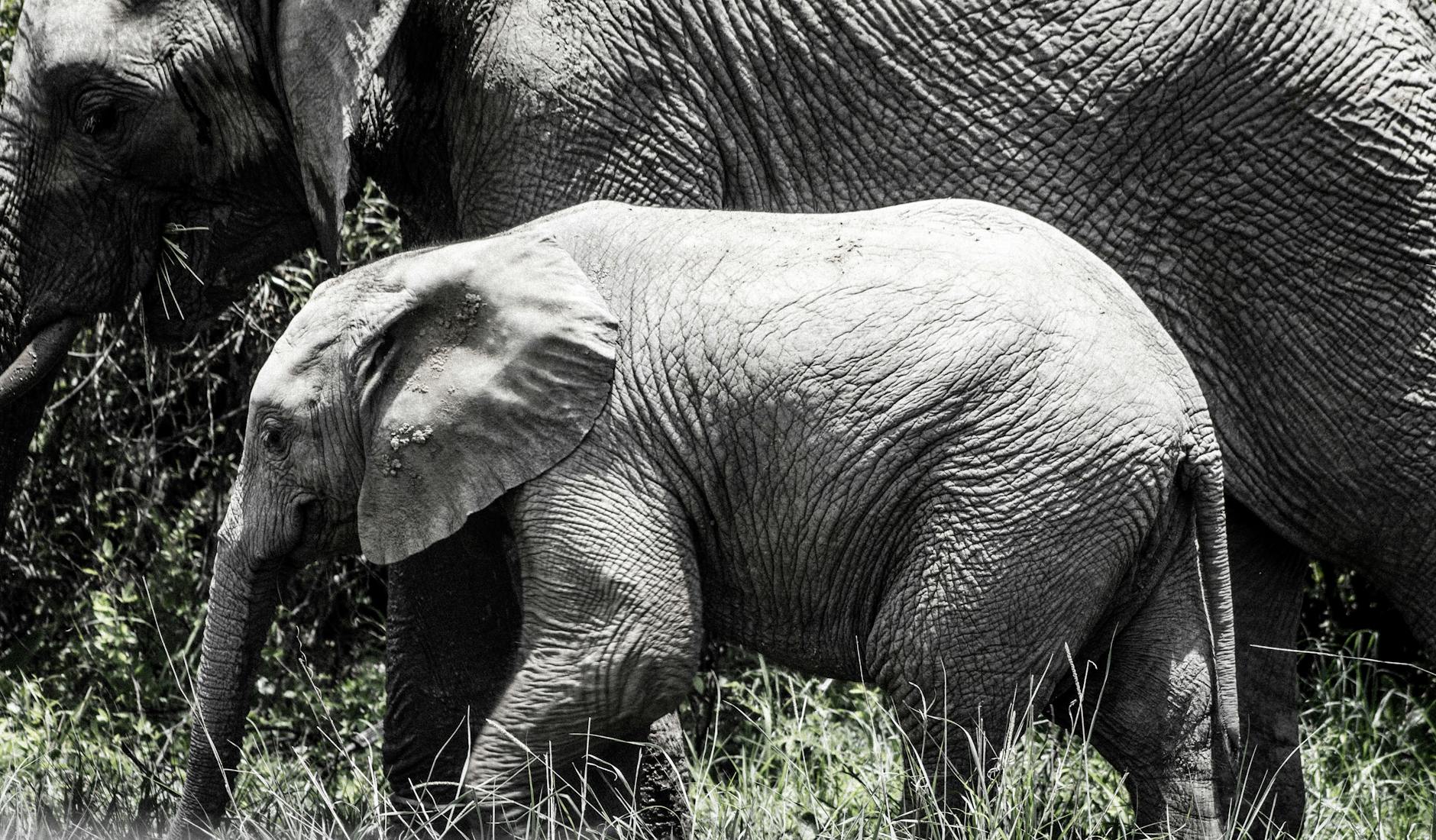
The Matriarch’s Thank You—What It Really Signifies
The trunk-lift caught viewers’ hearts, and interpretations vary. Some saw it as a deliberate “thank you,” while scientists are more cautious, noting that trunk movements can signal numerous things—curiosity, smell-detection, or simply a way to navigate unfamiliar terrain. What we can say with certainty is that the matriarch waited for the entire herd to clear before pausing, a behavior consistent with what researchers know about elephant social structures. The eldest female, known as the matriarch, typically leads the herd and makes decisions about routes and timing.
Her pause may have been a warning to oncoming vehicles, a scanning of the environment, or yes—possibly even an acknowledgment of the drivers’ restraint. However, the broader takeaway matters more than whether the elephant intended gratitude. The moment revealed something important: wild animals and humans can coexist when humans choose patience and awareness. The drivers who waited didn’t just show compassion; they avoided what could have been a fatal accident. In contrast, reports from Malaysia document cases where drivers attempted to rush elephants or pass too closely, resulting in tragic outcomes for both humans and animals.
When Patience Isn’t Enough—Real Incidents in Malaysia
The Thai video went viral precisely because the outcome was peaceful. But Malaysia’s roads tell a darker story. In November 2023, a vehicle struck an elephant calf along a Malaysian highway, and the incident escalated catastrophically. The herd, reacting to protect the injured young animal, trampled the car in retaliation. The incident resulted in significant damage and injury—a stark reminder that elephant encounters don’t always end with heartwarming viral moments.
These aren’t isolated events. Elephant crossings occur regularly along highways in Malaysia’s wildlife hotspots, particularly in the northern states where forest reserves still border major roads. Warning signs are posted in these areas, yet collisions continue. The animals face a no-win scenario: stay off roads and slowly starve as habitat shrinks, or venture onto roads and risk fatal encounters with vehicles traveling at high speeds. For drivers, the challenge is equally real—a sudden encounter with a herd offers only seconds to react, and the wrong reaction can be deadly.

The Infrastructure Problem Driving the Crisis
This isn’t simply a wildlife issue; it’s a development planning problem with economic implications. Malaysia’s government and private companies have invested heavily in highway expansion to support economic growth, but cost-benefit analyses often fail to account for long-term environmental liabilities. The immediate benefits—faster commerce, increased investment attraction, economic growth—are tangible and measurable. The costs—habitat fragmentation, human-wildlife conflict, potential ecological collapse—are diffused and often externalized.
Insurance companies and liability lawyers understand the stakes better than most. A serious elephant-vehicle collision can result in property damage, medical costs, and legal disputes. Some might argue that installing overpasses or underpasses for wildlife along high-risk stretches would cost millions upfront, but compared to the cumulative costs of accidents, loss of tourism revenue from wildlife depletion, and regulatory pressure, the investment becomes more defensible. A few countries have begun implementing such solutions, though Southeast Asia has been slower to adopt them than Europe or North America.
Warning Signs and Safety Measures—Why They Often Fail
Highways in Malaysia’s elephant hotspots feature warning signs alerting drivers to potential wildlife crossings. These signs mark areas in Terengganu, Perak, and Johor where collisions are most likely. Yet the signs alone address only part of the problem. A driver traveling at 100 kilometers per hour has minimal reaction time when an elephant suddenly appears.
Additionally, many drivers in the region are transiting through unfamiliar areas and may not recognize the significance of wildlife warning signs in the moment. More effective measures would include reduced speed limits in high-risk zones, reflective markers, and perhaps wildlife deterrents designed to keep animals off roads during peak traffic hours. However, enforcement remains weak in many areas, and the cost of comprehensive safety infrastructure deters adoption. The harsh reality is that without significant enforcement and infrastructure investment, warning signs function more as liability protection for governments than as actual safety measures.

The Conservation and Economic Angle
The viral Thai elephant video sparked interest in wildlife tourism—a sector worth billions in Southeast Asia. Elephant sanctuaries and wildlife reserves attract visitors and generate revenue for local communities. However, the paradox is that while people pay to see elephants in protected settings, the same societies continue to erode the wild habitat that elephants actually need.
The economics of conservation remain skewed: immediate development profits outweigh long-term ecological and tourism value. Some investment analysts have begun noting that companies focused on wildlife corridors and conservation technology represent an emerging sector. Solutions like wildlife passage systems, habitat restoration funding, and smart monitoring systems that alert drivers to animal presence are gaining traction in developed markets. Scaling these solutions to Southeast Asia remains a significant opportunity—one that requires investor interest and government commitment.
Looking Forward—Can Coexistence Scale Beyond Viral Moments?
The Thai elephant crossing became memorable precisely because it didn’t end in tragedy. It showed what’s possible when circumstances align: patient drivers, a well-led herd, and a moment of mutual awareness. The question now is whether these moments can inform systemic change rather than remaining as feel-good anomalies. Several Southeast Asian governments are beginning to acknowledge the problem.
Research initiatives, community education programs, and some preliminary infrastructure projects are underway. However, the pace of habitat loss continues to outstrip the pace of conservation response. For coexistence to work at scale, it will require integration of wildlife needs into development planning from the outset—not as an afterthought. Until infrastructure projects genuinely account for animal migration routes and habitat connectivity, drivers will continue to encounter unexpected obstacles, and herds will continue to face unnecessary danger. The matriarch’s trunk-lift was touching, but sustainable coexistence requires far more than gratitude; it requires planning, investment, and a willingness to see infrastructure development and wildlife preservation as interconnected problems rather than competing priorities.
Conclusion
The moment when an elephant matriarch lifted her trunk toward waiting drivers captured something real about human-animal interaction: when we choose patience and awareness, coexistence becomes possible. Yet the broader context reveals a troubling trend in Southeast Asia, where rapid development is fragmenting wildlife habitat and forcing animals into increasingly dangerous encounters with human infrastructure. The Thai video went viral because it was exceptional—a peaceful resolution to a situation that too often ends in tragedy.
Moving forward, the lesson isn’t simply to admire the patience of drivers or the dignity of elephants. It’s to recognize that individual acts of kindness, while meaningful, cannot substitute for systemic change. Governments and investors must integrate wildlife needs into infrastructure planning, implement safety measures along high-risk corridors, and acknowledge that the true cost of development includes the preservation of habitat and safe passage for the animals whose territories we continue to claim. Until that happens, more drivers will face unexpected waits, and more elephant herds will face unnecessary danger.
Frequently Asked Questions
Why do elephants cross roads if they could avoid them?
Elephants follow established migration routes and food sources that have guided their herds for generations. When development fragments these routes, elephants continue along them despite roads now occupying the path. They’re not choosing to cross roads; the roads were built through their habitat.
Was the elephant really saying thank you?
Elephant trunk movements can signal many things—awareness, smell-detection, or environmental scanning. Scientists remain cautious about attributing human-like gratitude to the gesture, though the matriarch’s pause for the herd to clear suggests leadership behavior consistent with what researchers understand about elephant hierarchy.
How often do elephant-vehicle collisions occur in Malaysia?
Exact numbers vary by region, but incidents occur regularly in Terengganu, Perak, and Johor states. A documented 2023 case resulted in significant damage when a vehicle struck a calf and the herd retaliated. The true frequency is likely underreported because not all collisions are formally documented.
What can drivers do if they encounter an elephant herd on the road?
Stop, remain in the vehicle, and wait for the herd to pass. Do not attempt to rush the animals or pass them. Keep a safe distance and avoid sudden movements or loud noises. Turn off the engine and allow the animals time to cross safely.
Are there engineering solutions to prevent collisions?
Yes, but they’re underutilized in Southeast Asia. Wildlife overpasses and underpasses, reflective markers, and reduced speed limits in high-risk zones all reduce collisions. European and North American highways increasingly use such systems. Implementation in Malaysia remains limited due to cost and political will.
Why hasn’t Malaysia implemented more wildlife safety measures?
Infrastructure projects prioritize economic benefits and speed of completion. Wildlife safety measures add cost and complexity. Additionally, the real costs of collisions—property damage, medical expenses, ecological damage—are often externalized or accepted as inevitable rather than addressed through prevention.