
The Ukraine-Russia conflict is undergoing a fundamental tactical transformation as of March 2026, with Russian forces expanding territorial control while Ukraine pivots toward large-scale technological substitution on the frontline. Russian advances beyond Pokrovsk and Mirnograd, combined with increased pressure near Kramatorsk, represent a deliberate shift in operational focus toward economically and strategically significant regions. For investors and market participants, this strategic pivot signals potential shifts in defense spending patterns, technology sector demand, and geopolitical risk premiums that could reshape portfolio positioning for the remainder of 2026.
This article examines the current frontline dynamics, Ukraine’s robotic warfare initiative, drone saturation effects on logistics, and what these developments mean for commodity markets, defense contractors, and broader market volatility. The significance of this moment extends beyond military analysis. Ukraine’s announced plan to replace approximately 30% of frontline soldiers with robotic systems represents a historically unprecedented shift in warfare that will have immediate ripple effects across technology stocks, defense budgets, and supply chain economics. Understanding these strategic movements is essential for investors tracking geopolitical risk exposure and companies positioned in defense technology sectors.
Table of Contents
- What Do Current Frontline Movements Reveal About Russian Operational Strategy?
- How Does Drone Saturation Reshape Modern Frontline Combat and Supply Chain Dynamics?
- What Is Ukraine’s Robotic Systems Initiative and Why Does It Matter Financially?
- What Are the Tactical Trade-Offs Between Drone Saturation and Offensive Initiative?
- What Are the Limitations and Risks of Robotic Warfare Deployment?
- How Does the Reconnaissance-in-Force at Minkivka Indicate Tactical Innovation?
- What Is the Outlook for Conflict Duration and Market Implications?
- Conclusion
What Do Current Frontline Movements Reveal About Russian Operational Strategy?
russian advances beyond Pokrovsk and Mirnograd indicate a deliberate strategic shift toward degrading Ukraine’s industrial and logistics capacity rather than purely territorial conquest. The pressure near Kramatorsk—a key industrial hub—suggests Russian forces are targeting economically vital regions that, if captured or destabilized, would create cascading economic disruptions affecting commodity supply chains and energy markets. These movements are not random; they follow a pattern of concentrating force where Ukrainian defenses are most strained and logistics are most vulnerable.
The Pavlivka sector remains a contested gray zone with neither side maintaining full control, which is typical of mature conflict fronts where both armies have been attritional-matched for extended periods. However, this stalemate masks significant tactical pressure. The psychological and logistical cost of maintaining contested territory drains both sides’ resources continuously. For commodity markets, this means continued supply chain uncertainty in agricultural regions (Ukraine is a major grain exporter) and energy infrastructure remains at risk, perpetuating the risk premiums in oil and agricultural futures that have persisted since early 2022.

How Does Drone Saturation Reshape Modern Frontline Combat and Supply Chain Dynamics?
Drone saturation from both Russian and Ukrainian forces has fundamentally altered the economics of frontline operations. Enemy drones actively track all movements and maintain fire control over supply lines, meaning traditional logistics—moving ammunition, fuel, and personnel across controlled territory—now faces constant harassment and interdiction. This constraint has profound implications for defense spending efficiency and industrial production rates on both sides. Ukraine’s loss of supply-line efficiency translates to higher ammunition consumption rates per unit of territory defended, a cost burden that Western military aid must increasingly absorb.
However, this same drone saturation that constrains traditional military logistics has created enormous demand for counter-drone systems, artificial intelligence-driven targeting solutions, and autonomous vehicle technology. Companies specializing in drone detection, electronic warfare, and autonomous systems are already seeing surging contract demand. The limitation here is that drone technology is rapidly evolving, meaning today’s cutting-edge counter-measures become obsolete within months—creating continuous upgrade cycles that keep defense budgets inflated and create ongoing demand for technology refresh. Investors in defense tech should expect sustained high capital intensity in this sector for the next 2-3 years, unlike traditional defense spending which tends to follow multi-year budget cycles.
What Is Ukraine’s Robotic Systems Initiative and Why Does It Matter Financially?
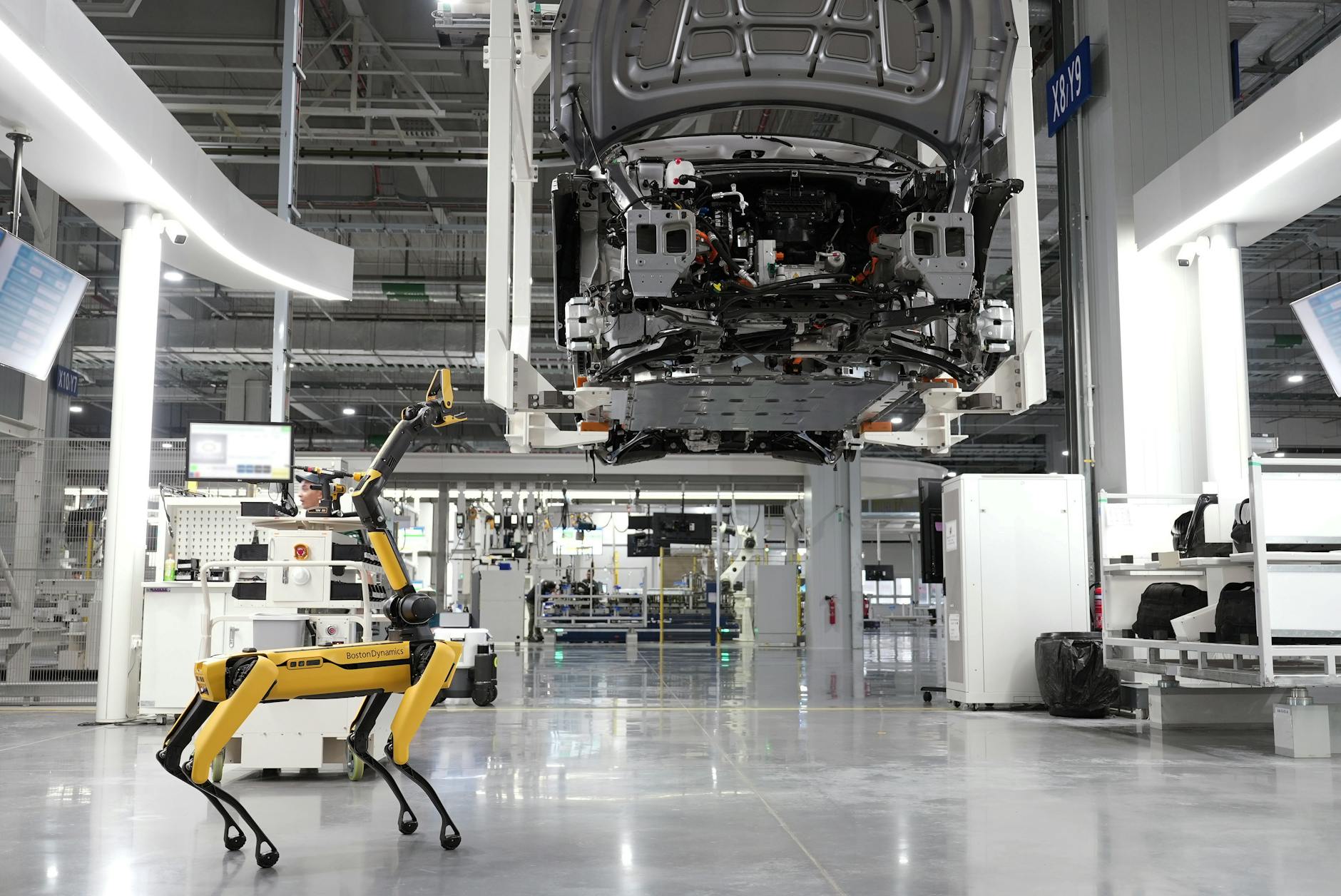
Ukraine’s strategic decision to replace approximately 30% of frontline soldiers with robotic systems by deploying robotic and autonomous warfare platforms is a watershed moment in military technology adoption. This shift addresses both a manpower shortage and a force-protection challenge—by deploying machines in the most exposed positions, Ukraine reduces casualty rates among human personnel, which has significant long-term economic implications for population recovery and workforce stability. This plan is not theoretical; it reflects Ukraine’s assessment that human-centric attrition is unsustainable and that technology substitution is now the viable path forward. For investors, this creates direct demand signals for robotics manufacturers, autonomous vehicle platforms, and AI-driven targeting systems.
Companies that can rapidly prototype and deploy robotic systems for field conditions will capture market share in what could become a multi-billion-dollar modernization program. The example here is instructive: during the early 2020s, drone manufacturers like DJI achieved valuations in the tens of billions partly because military and commercial demand aligned. Ukraine’s 30% robotic substitution goal, if executed at scale, could drive similar demand spikes for companies positioned in autonomous systems. However, the challenge is that these systems must be ruggedized, operate in contested electromagnetic environments, and integrate with existing command structures—barriers that favor large defense contractors over startups.
What Are the Tactical Trade-Offs Between Drone Saturation and Offensive Initiative?
The current frontline situation in sectors like Kostyantynivka—described as “difficult” with intense enemy artillery saturation and massive strike volumes—demonstrates the trade-off between defensive depth and offensive momentum. Drone surveillance doesn’t just defend; it actively prevents offensive operations by allowing defenders to identify and target concentrations of attacking forces. This means that while Ukraine can degrade Russian supply lines with drone strikes, Ukraine’s own offensive capability is equally suppressed. The practical result is that both sides operate under a stalemate condition where neither can achieve decisive offensive breakthroughs without accepting unsustainable casualty rates.
This trade-off has investment implications: it means prolonged conflict duration is more likely than rapid resolution. Prolonged conflict sustains defense spending, maintains elevated energy and commodity prices due to supply chain uncertainty, and creates ongoing demand for replacement hardware and ammunition. A rapid Ukrainian victory or defeat would actually reduce long-term military spending; stalemate extends it. Investors favoring energy stocks and commodity exposure benefit from this dynamic, while defense contractors benefit from sustained procurement cycles rather than one-time contract bursts.
What Are the Limitations and Risks of Robotic Warfare Deployment?
Robotic systems face significant real-world constraints that theoretical analyses often overlook. Ruggedized autonomous platforms require substantial power supplies, produce heat signatures that make them vulnerable to thermal detection, and depend on communication links that enemy forces will actively attempt to jam or intercept. The Hulyaipole sector situation—with enemy heavy armor near Hulyaipilske and contested control of supply routes—illustrates that robotic systems are most effective in structured environments with reliable supply lines. In degraded logistics conditions where communication is intermittent and power supplies are irregular, the advantages of robotic deployment shrink dramatically.
A critical warning: the failure rates and maintenance requirements of first-generation military robotics deployed at scale are likely to exceed expectations. Historical parallels include the early deployment of advanced technology in the Iraq War, where sophisticated systems required extensive field support and experienced significant reliability issues. If Ukraine’s robotic substitution program encounters similar challenges, the financial burden could exceed budget allocations, forcing difficult trade-offs between human and robotic force investments. Additionally, the geopolitical message of a major military power transitioning to robotic warfare may accelerate arms races in autonomous weapons technology globally, with unpredictable second and third-order effects on defense spending and international relations.

How Does the Reconnaissance-in-Force at Minkivka Indicate Tactical Innovation?
Ukrainian forces recently conducted a reconnaissance-in-force operation at Minkivka that resulted in prisoner captures, demonstrating that despite overall strategic pressure, Ukraine retains the capacity for limited offensive operations. The significance of this operation is that it reveals Ukrainian forces are not purely reactive; they’re testing Russian positions and gathering intelligence on force deployments and readiness. The fact that consolidation of the captured position has not yet been confirmed suggests Ukrainian forces lack the reserves to hold offensive gains, but the operation itself shows tactical flexibility and intelligence sophistication.
For investors, this signals that Ukraine retains offensive potential and that any assessment of “inevitable Russian victory” is premature. Markets tend to overweight linear extrapolations of recent trends, but military conflicts are inherently nonlinear. A successful Ukrainian counteroffensive, if achieved, would dramatically reset market expectations about conflict duration and outcomes. This uncertainty itself is valuable information—it means betting entirely on either Russian victory or Ukrainian victory carries significant tail risk, and diversified geopolitical hedge positioning remains appropriate for the foreseeable future.
What Is the Outlook for Conflict Duration and Market Implications?
The combination of Russian territorial advances, drone saturation limiting both offensive operations, and Ukraine’s pivot toward technological force substitution suggests a protracted stalemate scenario extending into 2027 and potentially beyond. This outcome—neither rapid Russian victory nor Ukrainian counteroffensive breakthrough—is economically the most destabilizing scenario because it maintains maximum supply chain uncertainty and geopolitical risk premium indefinitely.
Energy markets, agriculture commodities, and defense budgets all reflect the assumption that this conflict could persist for years. Investment positioning should anticipate sustained elevated defense spending globally (as NATO members increase military budgets in response to Russian demonstrated capability), continued energy price volatility (Russian energy remain constrained from Western markets but continue to influence global pricing), and potential technology sector outperformance in autonomous systems and defense applications. The robotic warfare initiative, if successfully scaled, could create a new category of defense spending that competes with traditional platforms, potentially disrupting historical defense contractor valuations and market share distributions.
Conclusion
The frontline movements of March 2026 represent a strategic inflection point in the Ukraine-Russia conflict, with Russian forces consolidating territorial gains while Ukraine pivots toward robotic force substitution to address manpower constraints and attrition challenges. Drone saturation on both sides has created a stalemate condition where supply lines are the primary battleground, and traditional offensive operations become economically unsustainable.
For investors, these developments signal prolonged conflict duration, sustained defense spending, elevated commodity risk premiums, and accelerating demand for autonomous systems and defense technology. The most actionable insight is that this conflict appears positioned to extend significantly beyond 2026, meaning investors should maintain hedges against geopolitical volatility, overweight defense and technology sectors positioned in autonomous systems, and remain diversified across commodity exposure to hedge supply chain disruption risks. The transition to robotic warfare is historically unprecedented at scale, making it a source of both technological opportunity and execution risk—situations where patient capital and scenario-based positioning outperform concentrated bets on binary outcomes.