
You can absolutely start a podcast with zero budget and no existing audience—and you won’t be alone in the attempt. The podcast market is booming: 619.2 million listeners globally in 2026, with 55% of the US population 12 and older now consuming podcasts monthly. The market itself is worth $49.03 billion in 2026 and growing to $62.71 billion by 2027. The barrier to entry has collapsed. Free hosting platforms like Spotify for Creators, RSS.com, and RedCircle require no payment, no credit card, and no upfront investment.
Your smartphone’s built-in microphone technically works; a used USB microphone costs $70. This article covers the exact free and low-cost tools you need, the strategy to build an audience from nothing, what equipment actually matters, and realistic expectations for growth in a market with 4.58 million competing podcasts. The hardest part isn’t technical—it’s consistency and finding your angle in a saturated space. But the infrastructure to publish professionally costs nothing, and the listening audience is larger than it’s ever been. If you have a perspective worth sharing on investing, finance, markets, or business, the platform exists and waits.
Table of Contents
- Which Free Podcast Hosting Platform Should You Choose?
- What Equipment Do You Actually Need to Record?
- How Should You Structure Your Content Without an Audience?
- How Do You Distribute Your Podcast Across Platforms?
- When Will Your Podcast Actually Grow, and What Stops Most Shows?
- Should You Monetize from Day One?
- Why Now Is the Right Time to Start
- Conclusion
Which Free Podcast Hosting Platform Should You Choose?
Three platforms stand out for zero-cost entry: Spotify for Creators, RSS.com, and RedCircle. Spotify for Creators is completely free with no limitations on episodes, storage, or monetization setup—you can publish as much as you want and add ads later if you qualify. RSS.com offers a free tier with no credit card required and simplifies the technical work of distributing your podcast across directories. RedCircle is equally free with no limitations; the service sustains itself by showing light ads to listeners, but this doesn’t affect your publishing or earnings potential. The practical difference between them is thin at the free tier. Spotify for Creators gives you direct access to Spotify’s analytics and audience insights, which matters for understanding listener behavior. RSS.com and RedCircle both handle distribution to Apple Podcasts, Spotify, and youtube automatically, removing friction.
Choose based on where you want the smoothest dashboard experience: Spotify if you’re analytics-focused, RedCircle if you want the simplest setup. The wrong choice here costs you nothing and takes five minutes to switch away from later. However, none of these platforms should be your only distribution channel. Podcasts discover new listeners through multiple platforms—Apple Podcasts, Spotify, YouTube, and third-party directories. Whichever hosting platform you pick, your RSS feed will syndicate to dozens of directories automatically. Don’t overthink the hosting choice. Pick one and move on.
What Equipment Do You Actually Need to Record?
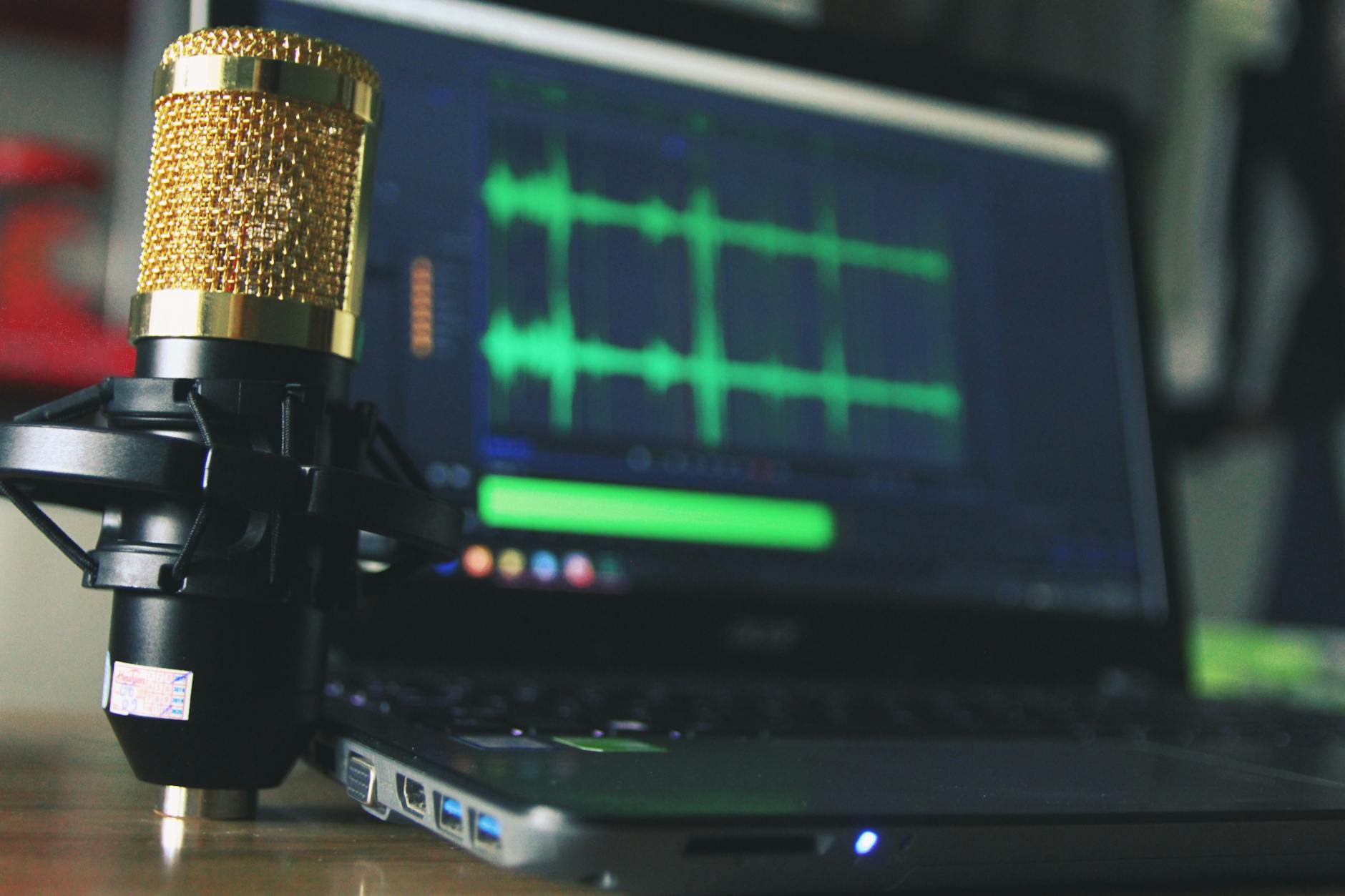
You can start with whatever audio recording device you own right now. iPhone or Android earbuds with a microphone work. A basic USB microphone like the Samson Q2U costs around $70 and includes a mic stand, windscreen, and cables—all the essentials for under $150 total. This is the beginner sweet spot: better than earbuds, affordable enough not to hurt, and good enough that your audio won’t become the barrier to people listening. The catch is room noise. A microphone doesn’t just pick up your voice; it picks up everything—your keyboard clicks, your air conditioning, traffic outside, your dog. A quiet room matters more than an expensive microphone. If you’re recording in an open office or noisy home, even a $500 microphone sounds bad.
If you’re in a quiet bedroom or study, a $70 microphone sounds professional. Before you buy anything, record a test episode using what you already own and listen to it in a car or through headphones. If the room noise is tolerable, you’re ready to go. If it’s distracting, add a cheap foam pad behind your mic or record at a quieter time of day—before trying a new microphone. For software, use Audacity (free, open-source) or the free tier of Zencastr (which records locally and in the cloud). Both are genuinely free. You don’t need Adobe Audition, Descript’s paid tier, or anything subscription-based. Audacity has a learning curve, but hundreds of tutorials exist. The free tier exists specifically to let you prove podcasting is worth your time before you spend money.
How Should You Structure Your Content Without an Audience?
Record and publish 3-4 complete episodes before launch. This signals to podcast directories and algorithms that you’re a real show worth recommending, not a one-off experiment. It also gives early listeners something to binge instead of waiting weeks for episode two. For an investing-focused podcast with no audience, this might be four deep dives on investment principles, market trends, or financial literacy—substantive episodes that answer questions someone might actually search for. Solo episodes are viable and preferable when you’re starting. You don’t need guests. Solo shows eliminate scheduling friction, require no coordination, and are less production work.
They’re also flexible: you can record spontaneously when you have energy, edit on your own schedule, and maintain complete creative control. Guests add variety, but they also add complexity, and at launch you have nothing to trade for a guest’s time. Build an audience first; add guests later when you have listeners to justify their effort. The strategy is to pick a niche and own it obsessively. Don’t create a general investing podcast competing with CNBC. Create a podcast for one specific audience: “How young professionals can build wealth,” “Dividend investing for retirees,” “Understanding meme stocks,” or “ESG investing for skeptics.” Narrow your focus ruthlessly. This makes content easier to research (fewer angles to cover), easier to name (easier to search for), and easier to grow (you’re the clear expert in a specific corner, not a generalist in a crowded space). An investing show with no audience needs to be more specific, not broader.

How Do You Distribute Your Podcast Across Platforms?
Your hosting platform’s job is to create an RSS feed and distribute that feed to directories. This happens automatically. When you upload an episode to Spotify for Creators, RSS.com, or RedCircle, their system sends it to Apple Podcasts, Spotify, Google Podcasts, Amazon Music, and dozens of other platforms. You don’t manually upload anywhere. You upload once, and it appears everywhere within 24 to 48 hours. This wide distribution is critical for discovery. Spotify might have 35% of podcast listeners; Apple has another significant share; YouTube is growing fast. You need to be in all three. Your hosting platform handles this. The tradeoff is that you lose some direct relationship with listeners—Apple Podcasts listeners see Apple’s interface, not yours.
But for a brand-new podcast with no audience, distribution to every platform matters far more than owning the experience. You’re trying to be discoverable, not to build a direct relationship yet. Set up your podcast profile once with a clear, descriptive title and a cover image. The title should communicate what the podcast is about. “The Dividend Deep Dive” is clear. “The Money Podcast” is not. Write a short description that says exactly who this podcast is for and what they’ll learn. Directories use this text for search results. If you’re making a podcast for long-term dividend investors, say that in the description. Make it searchable, not clever.
When Will Your Podcast Actually Grow, and What Stops Most Shows?
The brutal reality: most podcasts never find an audience. Without promotion, a new podcast gets a handful of listens per week—sometimes zero. The people who find it are strangers who searched for your specific topic or accidentally clicked it. Growth is slow. This discourages most people into quitting. However, slow early growth doesn’t mean the show is failing. If you’re getting 10 listeners per week and they’re engaged (they listen to full episodes), you have proof of concept. With consistency, that grows to 50, then 200, then maybe 1,000 monthly listeners after a year. This is not spectacular by podcast standards, but it’s real.
The catch is that you need 12 months of consistency to find out. One person committed to publishing bi-weekly for a year will have a real audience; someone publishing sporadically for three months has nothing to show for it. The second killer is poor audio quality or unclear value. If your audio is unintelligible or your episode rambles with no payoff, people quit. If your episode promises insights on dividend investing but you just talk about your personal portfolio, you’ve wasted their time. The barrier to listeners is high because 4.58 million podcasts exist and most are free. Listeners are ruthless about unsubscribing. Provide clear, useful content, record it cleanly, and publish regularly. Everything else is secondary.

Should You Monetize from Day One?
Don’t. Your podcast needs at least a few thousand monthly listeners before monetization becomes relevant. CPM rates (cost per thousand impressions) in podcasting range from $18 to $50 depending on audience quality, so even with 5,000 monthly listeners, you’re earning maybe $100 a month. Spotify for Creators, RSS.com, and RedCircle all support ads and sponsorships, but these require applying and being approved. You won’t qualify until you have metrics to show. Instead, focus on building trust and identifying your most engaged listeners.
Ask them what topics they want. Read comments. Track which episodes get downloaded the most. This data is far more valuable than pennies from ads. An invested community of 500 listeners is more valuable long-term than passive monetization with 50,000 disengaged listeners. Build the asset first. Monetize later when you have leverage—either an audience size that attracts sponsors or an audience engaged enough to support you directly through Patreon.
Why Now Is the Right Time to Start
The podcast landscape has normalized. It’s no longer a novelty. 619.2 million people listen, and the growth rate is steady (6.83% year-over-year from 2025 to 2026). The tools are free and better than they were five years ago. Spotify for Creators, RedCircle, and Audacity didn’t exist or were much clunkier a decade ago. The infrastructure for a zero-budget podcast is mature.
The market is also saturated, which sounds bad but is actually good for positioning. There are 4.58 million podcasts, so competition is fierce for generic content. But this means if you have a specific perspective—on dividend investing, market inefficiencies, behavioral finance, or wealth-building—you can own a niche that generic shows ignore. The saturation creates opportunity for specialists. If you’ve been thinking about starting a show, waiting for better timing, better equipment, or a bigger audience first is the trap. Start now with what you have. The infrastructure is already here.
Conclusion
Starting a podcast with zero budget and no audience is entirely feasible. Use Spotify for Creators, RSS.com, or RedCircle (all free), record on a $70 USB microphone or whatever you own, and publish 3-4 episodes before launch. Narrow your focus to a specific niche within investing, record consistently, and expect slow growth for the first year. Audio quality and clear value matter far more than equipment or promotion. Monetization is irrelevant until you have thousands of listeners; focus instead on building an engaged community.
The barrier is gone. The excuse is gone. 619.2 million podcast listeners exist. If you have insights worth sharing about investing, finance, or markets, the platform is free and the distribution is automatic. Start with the episodes you’d want to listen to, publish them, and see if others agree. The infrastructure supports it completely.