
Tesla is losing ground on nearly every front that matters to investors. Global deliveries fell roughly 9% in 2025 to about 1.64 million vehicles, marking the second straight year of declining sales, while BYD surged past it with 2.26 million battery-electric vehicles sold — a 28% jump that officially dethroned Tesla as the world’s largest EV maker. The stock, trading around $406.62 in early February 2026, is down about 9.6% year-to-date, and the bruising sales numbers out of Europe and even California suggest the bleeding has not stopped. The trouble is not confined to one region or one competitor.
Tesla’s U.S. market share slipped from 48.7% to 46% over the course of 2025, its European registrations cratered nearly 28%, and legacy automakers from GM to Hyundai are fielding compelling electric lineups at lower price points. Meanwhile, Elon Musk’s increasingly polarizing public profile has driven a measurable customer backlash, particularly overseas. This article breaks down how Tesla lost its sales crown, what is happening in each major market, whether the stock’s lofty valuation still makes sense, and what the company’s pivot toward AI and robotics means for shareholders going forward.
Table of Contents
- Why Is Tesla Dropping as EV Competition Intensifies Globally?
- How Bad Is Tesla’s Sales Collapse in Europe?
- BYD’s Rise and What It Means for Tesla Investors
- What Should Investors Watch in Tesla’s Stock Going Forward?
- Tesla’s Product Strategy Shift and Its Risks
- The Musk Factor and Brand Perception
- Where Does Tesla Go From Here?
- Conclusion
- Frequently Asked Questions
Why Is Tesla Dropping as EV Competition Intensifies Globally?
The simplest explanation is that tesla is no longer the only serious option for buyers who want an electric vehicle. Five years ago, choosing an EV in the United States essentially meant choosing a Tesla. Today, GM commands 13% of the U.S. EV market and Ford holds 7%, with both companies rolling out electric SUVs and trucks that compete directly with the Model Y and Cybertruck on price and features. Hyundai, Kia, and Volkswagen have expanded their own lineups, and several of their models undercut Tesla in the compact SUV and midsize sedan segments that drive the most volume. When a buyer can get a well-reviewed electric SUV for thousands less, the Tesla badge carries less automatic weight. Overseas, the pressure is even more severe.
BYD has beaten Tesla head-to-head in Germany, Mexico, Thailand, and Australia — markets where Tesla once had a significant first-mover advantage. Chinese EV manufacturers broadly have pushed into export markets with vehicles that pair competitive pricing with increasingly sophisticated technology, including advanced driver-assistance features and battery chemistry that delivers longer range per dollar. For Tesla, the result is a global delivery number that shrank while the overall EV market continued to grow. The competitive dynamics are compounded by factors unique to Tesla. Expiring U.S. federal tax credits reduced the effective price advantage Tesla had enjoyed, and customer backlash tied to Musk’s political activities has been documented in surveys and registration data alike. In California, one of the world’s largest EV markets, Tesla’s share of all registered vehicles dropped from 11.6% in 2024 to 9.9% in 2025. That kind of erosion in your home market is a red flag no amount of Cybertruck buzz can paper over.
How Bad Is Tesla’s Sales Collapse in Europe?
The European numbers are the most alarming data point in Tesla’s recent results. Registrations across the continent dropped 27.8% in 2025, falling to just 235,000 units from 326,000 the year before. This was not a one-year blip — it was the third consecutive year of decline in a market that is broadly adopting EVs at an accelerating rate. Germany, Europe’s largest auto market, saw Tesla registrations plummet 48%. France was down 38%. These are not rounding errors; they represent a structural loss of market position. january 2026 painted an even bleaker picture. In Norway, historically one of Tesla’s strongest European markets and one of the most EV-friendly countries on earth, sales crashed 88% in a single month.
In France, Tesla moved just 661 cars for the entire month of January. To put that in perspective, BYD and several European legacy brands each sold multiples of that figure in the same period. The scale of the decline suggests that European consumers are actively choosing alternatives, not simply waiting for a refresh cycle. However, there is a caveat investors should weigh before extrapolating January numbers across the full year. Tesla has historically been lumpy with its European deliveries, shipping in waves that create jagged month-to-month comparisons. The company also launched the refreshed 2026 Model Y, which Consumer Reports named Best EV of 2026 on February 8. If that vehicle gains traction in Europe through the spring, the year-over-year comps could improve. But even a strong Model Y refresh may only slow the bleeding rather than reverse it, given how deeply competitors have entrenched themselves.
BYD’s Rise and What It Means for Tesla Investors
BYD’s ascent from regional Chinese automaker to the world’s largest EV manufacturer is the single most important competitive story in the industry. The company sold 2.26 million battery-electric vehicles in 2025, a nearly 28% increase over the prior year, and it accomplished this growth while Tesla was shrinking. BYD did not win by competing in a vacuum — it won in direct confrontations in markets like Germany, Mexico, Thailand, and Australia, where both companies sell comparable vehicles. What makes BYD especially dangerous as a competitor is its vertical integration. The company manufactures its own batteries, chips, and many of its key components, giving it cost advantages that most rivals cannot match. Its Blade Battery technology and newer models have earned strong reviews for safety and range.
For investors who bought Tesla partly on the thesis that it would dominate global EV sales the way it dominated the early U.S. market, BYD’s overtaking is a direct challenge to that narrative. Tesla is no longer the volume king, and regaining that title would require a level of sales growth the company has not demonstrated in two years. The broader implication is that the EV market is normalizing. It is becoming a competitive auto market rather than a one-company story. That is not necessarily catastrophic for Tesla — Toyota did not collapse when Honda and Hyundai gained share — but it does undermine the argument that Tesla deserves a valuation multiple far above traditional automakers based on vehicle sales alone.
What Should Investors Watch in Tesla’s Stock Going Forward?
Tesla’s stock tells a split-personality story. Shares hit an all-time high of $489.88 on December 16, 2025, even as the company was in the middle of its worst sales year in recent memory. The reason: a significant portion of Tesla’s investor base is not buying a car company. They are buying a bet on autonomous driving, robotaxis, and humanoid robotics — businesses that do not yet generate meaningful revenue but that could, in theory, be worth trillions if they pan out. This creates an unusual risk profile. On one hand, analysts who focus on the automotive business see a company whose core product line is losing share in every major market.
Some have said bluntly that the car business is “falling apart.” On the other hand, analysts who model Tesla as the biggest leader “in physical AI” arrive at price targets that assume the vehicle business is almost beside the point. For investors, the practical question is which thesis they believe and on what timeline. If autonomous driving reaches commercial scale within three to five years, the current stock price may look cheap. If it takes a decade, the eroding car business could drag shares considerably lower in the interim. The tradeoff is essentially this: you can buy Tesla at a premium to every other automaker on earth, but only if you believe the non-auto businesses will generate the revenue to justify it. The 2025 sales decline and early 2026 data make it harder to argue that vehicle sales alone support the valuation. Investors who are purely car-business focused may find better value elsewhere in the EV space.
Tesla’s Product Strategy Shift and Its Risks
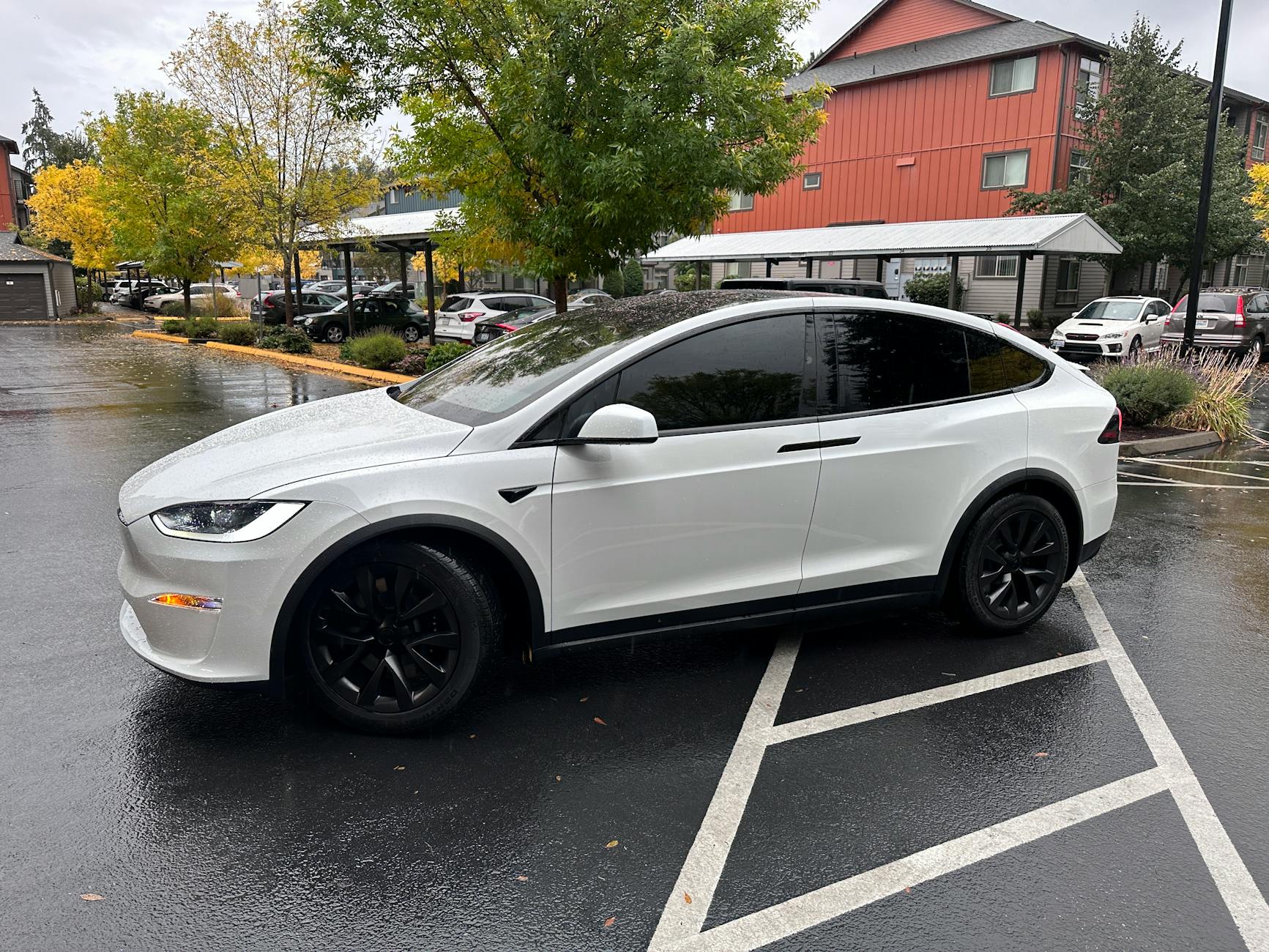
Tesla announced on January 28, 2026, that it is killing off the Model S and Model X, its original flagship sedan and SUV. The move signals a company that is pruning lower-volume, higher-cost vehicles to focus resources on the mass-market Model 3 and Model Y, as well as future platforms. It also reflects the reality that the luxury EV sedan segment is now crowded with strong competitors from Mercedes, BMW, and Lucid, making the aging Model S harder to justify. The refreshed 2026 Model Y, named Best EV of 2026 by Consumer Reports, is now the linchpin of Tesla’s vehicle strategy. The Model Y has been the best-selling car in the world — not just the best-selling EV — and its refresh addresses complaints about interior quality and technology that had accumulated over the previous generation.
If the new Model Y can recapture buyers who drifted to competitors, it could stabilize Tesla’s volume numbers. But there is a warning here for long-term investors. Relying so heavily on a single model is a vulnerability. If the Model Y refresh underperforms, or if competitors like BYD’s Atto 3 and the Hyundai Ioniq 5 continue to gain share in the compact SUV segment, Tesla does not have a deep bench of alternative models to absorb the blow. The decision to discontinue the S and X makes the product lineup thinner at the exact moment the market is getting more crowded.

The Musk Factor and Brand Perception
One dimension of Tesla’s struggles that cannot be captured in product specs or pricing spreadsheets is the Musk effect. Multiple surveys and analyst reports have linked Tesla’s declining sales in Europe and parts of the U.S. to customer backlash over Elon Musk’s political activities and public statements.
In Germany, where Tesla sales fell 48%, protest movements specifically targeting the brand have gained traction. In California, anecdotal and registration data both point to progressive-leaning buyers — once Tesla’s core demographic — choosing alternatives. This is a risk that is difficult to quantify and nearly impossible for Tesla to manage, since Musk shows no indication of moderating his public profile. For investors, it functions as an ongoing headwind that could worsen or ease unpredictably, making sales forecasts harder to model with confidence.
Where Does Tesla Go From Here?
Tesla’s path forward depends almost entirely on execution in two areas: making the refreshed Model Y a global hit and proving that its AI and robotics investments can generate real revenue within a reasonable timeframe. The company still has significant advantages — its Supercharger network, brand recognition among tech-forward buyers, and manufacturing scale — but those advantages are eroding as competitors build out their own charging infrastructure and refine their EV platforms.
The next twelve months will be telling. If European sales stabilize behind the new Model Y, if the autonomous driving program hits regulatory milestones, and if Musk-related backlash fades, the stock’s premium valuation could hold. If sales continue to slide and the AI narrative stays theoretical, the gap between Tesla’s stock price and its automotive fundamentals will become increasingly difficult for even the most bullish analysts to defend.
Conclusion
Tesla’s position in early 2026 is a study in contradictions. The company that created the modern EV market is now losing market share on three continents, watching BYD claim the global sales crown, and discontinuing the vehicles that built its reputation. Its stock, despite a 9.6% decline to start the year, still trades at a valuation that only makes sense if you believe Tesla will dominate industries — autonomous driving, robotics — that barely exist yet in commercial form.
For investors, the key takeaway is that Tesla can no longer be evaluated as a pure EV growth story. The vehicle business is maturing and facing real competitive pressure from both Chinese manufacturers and legacy automakers. The bull case now rests almost entirely on Tesla’s technology bets, which carry enormous upside but also enormous uncertainty. Anyone holding or considering Tesla shares should be clear-eyed about which thesis they are buying — and honest about the timeline they are willing to wait for it to play out.
Frequently Asked Questions
Did BYD actually outsell Tesla in 2025?
Yes. BYD sold approximately 2.26 million battery-electric vehicles in 2025, compared to Tesla’s roughly 1.64 million, making BYD the world’s largest EV manufacturer by volume for the first time.
How much has Tesla’s stock dropped in 2026?
As of early February 2026, Tesla shares were trading around $406.62, representing a year-to-date decline of approximately 9.6%. This followed an all-time high of $489.88 reached in December 2025.
Why are Tesla’s European sales falling so sharply?
European registrations dropped 27.8% in 2025 due to a combination of intensifying competition from BYD and European automakers, customer backlash related to Elon Musk’s political activities, and the availability of competitively priced alternatives. Germany saw a 48% decline and France fell 38%.
Is Tesla still the market leader in the United States?
Tesla remains the largest EV seller in the U.S. with a 46% market share in 2025, but that figure is down from 48.7% in 2024. GM holds 13% and Ford 7%, and both are gaining ground.
Why did Tesla discontinue the Model S and Model X?
Tesla announced on January 28, 2026, that it would kill off both models, likely due to declining sales volumes in the luxury segment and a strategic decision to focus resources on the mass-market Model 3 and Model Y, along with future AI and robotics initiatives.
Is the 2026 Model Y any good?
Consumer Reports named the refreshed 2026 Model Y the Best EV of 2026 on February 8, 2026, citing improvements in interior quality and technology. Whether it can reverse Tesla’s broader sales decline remains to be seen.