
A sweeping, month-long economic boycott targeting the biggest names in technology launched on February 2, 2026, organized by NYU Stern marketing professor Scott Galloway under the banner “Resist and Unsubscribe.” The campaign urges consumers to cancel paid subscriptions to ten major tech companies — including Microsoft, Apple, Amazon, Google, Meta, OpenAI, Netflix, Paramount+, Uber, and X — while also targeting a secondary list of firms that hold direct contracts with U.S. Immigration and Customs Enforcement. Galloway’s central thesis is blunt: “The most radical action in a capitalist society is non-participation. The Trump administration doesn’t respond to outrage; it responds to economic signals.” The boycott was triggered by growing anger over the Trump administration’s immigration enforcement, particularly a January 2026 incident in Minneapolis in which federal immigration officers shot and killed two U.S. citizens.
Both Apple CEO Tim Cook and OpenAI CEO Sam Altman released internal memos expressing concern over ICE’s actions, though neither directly criticized the president. For Galloway, those memos were not enough — and neither were the cozy appearances by tech executives at White House events. By Wednesday, February 5, his website had generated roughly 250,000 unique page views, and he reported receiving thousands of emails with screenshots of consumers documenting their cancellations. For investors, this is not just a political sideshow. Seven technology companies now represent more than a third of the S&P 500’s total market capitalization, meaning any sustained consumer pullback — however unlikely — would ripple through virtually every index fund and retirement account in America. This article breaks down which companies are in the crosshairs, how much money ties Big Tech to ICE, why experts are skeptical about the boycott’s staying power, and what the real financial risk looks like for shareholders.
Table of Contents
- Which Companies Are Being Targeted in the Tech Boycott Over Immigration?
- How Deep Are the Financial Ties Between Big Tech and ICE?
- Why Tech Executives’ White House Ties Are Fueling the Backlash
- What Investors Should Actually Watch For in the Weeks Ahead
- Why Most Boycotts Fail to Dent Profits — and When They Don’t
- The Parallel Tesla Revolt and What It Signals
- Where This Goes From Here
- Conclusion
Which Companies Are Being Targeted in the Tech Boycott Over Immigration?
Galloway divided his targets into two tiers. The first, which he calls “Ground Zero,” consists of ten subscription-based companies where consumers have the most direct economic leverage. The ask is straightforward: cancel Amazon Prime, Uber One, ChatGPT Plus, Microsoft Office, YouTube Premium, and similar recurring subscriptions. Refrain from purchasing Apple hardware until March. Delete Meta’s platforms entirely. The logic is that subscription revenue is the easiest spending for consumers to pause without dramatically altering their daily lives — though, as we will see, experts dispute just how painless that really is. The second tier, labeled the “Blast Zone,” targets companies that directly enable ICE operations through government contracts. AT&T holds a $90 million IT and tech support contract with ICE dating to 2021.
Palantir built a $30 million surveillance platform for the agency. Comcast provides cable service at five ICE “regional wire rooms” and internet connectivity for ICE in Seattle. FedEx ships for ICE under a $2.3 million contract. Marriott made headlines when a Louisiana hotel was used to hold people facing deportation, despite the company’s 2019 pledge not to cooperate with ICE. Charter Communications, Dell, UPS, Home Depot, Lowe’s, and Spotify also appear on the expanded list. One notable absence is Tesla. While the electric vehicle maker is not on Galloway’s official list, Tesla owners have separately begun selling their vehicles to protest ceo Elon Musk’s role in the administration. The distinction matters for investors tracking sentiment: the boycott’s formal scope is already broad, but the informal orbit of consumer backlash extends even further.

How Deep Are the Financial Ties Between Big Tech and ICE?
The dollar amounts connecting technology firms to federal immigration enforcement are significant enough to warrant attention, though they remain a small fraction of these companies’ total revenue. According to Forbes, ice and Customs and Border Protection spent $140 million on cloud services from Amazon and Microsoft under the Trump administration. Amazon Web Services accounted for $64 million of that total in 2025 alone, while Microsoft supplied $76 million in software between March and November 2025. These are not trivial contracts, but for companies generating hundreds of billions in annual revenue, they represent rounding errors on the income statement. However, if the boycott’s real damage comes not from contract cancellations but from consumer subscription losses and reputational harm, the math changes. Galloway offers a pointed example: canceling a $20-per-month ChatGPT Plus subscription — $240 per year — could translate to roughly $10,000 in market capitalization loss for OpenAI at its current 40x revenue valuation.
That multiplier effect is what makes subscription-based businesses particularly vulnerable to boycotts, at least in theory. Each lost subscriber does not just reduce this quarter’s revenue; it compresses the forward revenue estimates that drive valuation models. The limitation here is scale. OpenAI, Amazon, and Microsoft each serve tens of millions of paying subscribers. Even thousands of cancellations, while symbolically powerful and useful for generating headlines, would need to reach into the hundreds of thousands or millions to register in quarterly earnings. Investors should watch for any mention of subscriber churn in upcoming earnings calls, but they should also resist the temptation to extrapolate from anecdotal screenshots on social media to material financial impact.
Why Tech Executives’ White House Ties Are Fueling the Backlash
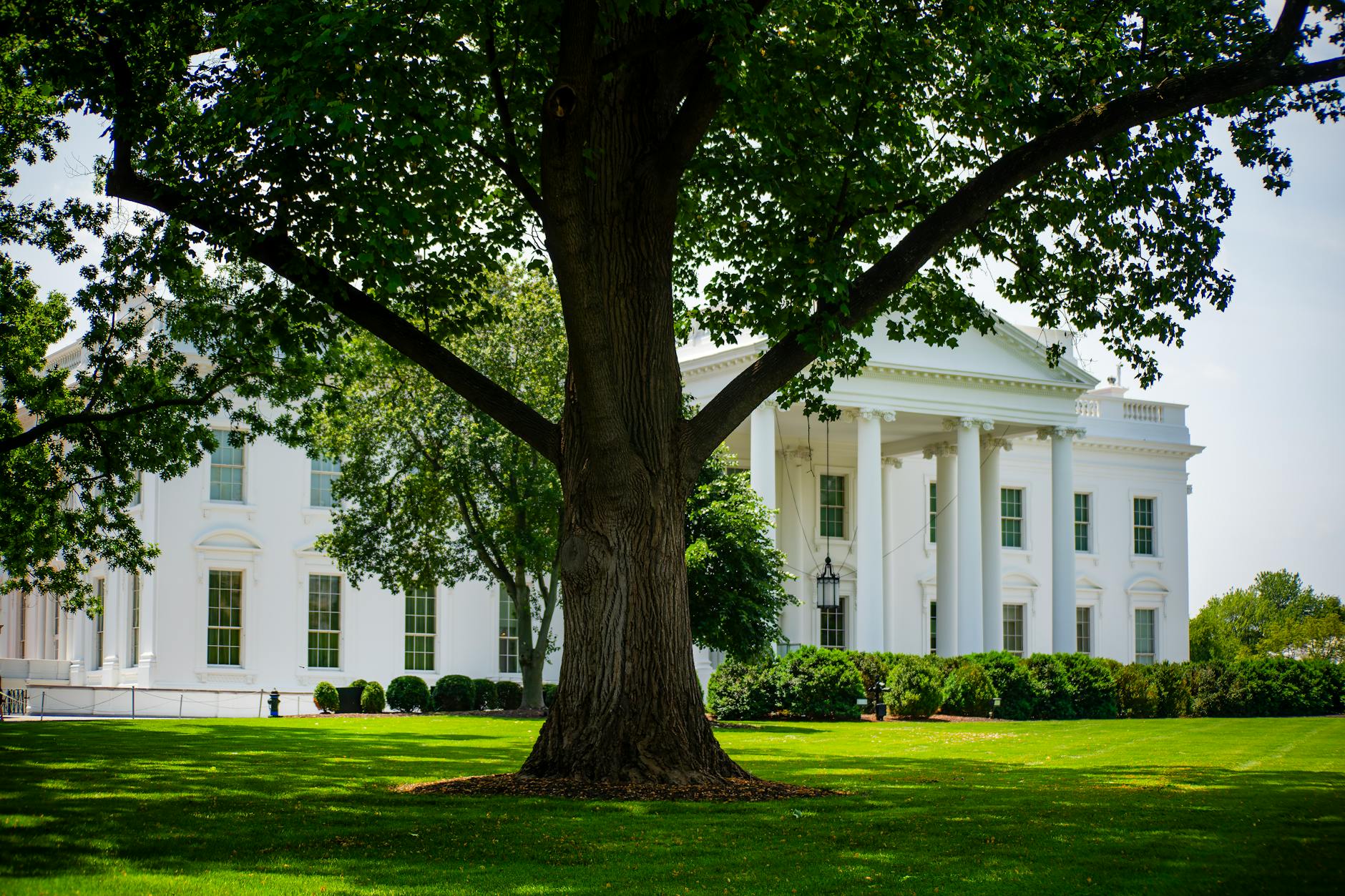
Part of what distinguishes this boycott from generic consumer activism is the specific grievance that tech leadership has been cozying up to the administration while simultaneously expressing private concern about its policies. Apple CEO Tim Cook and Amazon CEO Andy Jassy attended the white house premiere of the Amazon MGM Studios documentary *Melania* on January 25. OpenAI’s Sam Altman and Meta’s Mark Zuckerberg joined a White House dinner with President Trump in September 2025. For boycott organizers, these appearances undercut any claim that Silicon Valley is troubled by the administration’s immigration enforcement. The internal memos from Cook and Altman following the Minneapolis shooting illustrate the tightrope these executives are walking.
Both expressed disapproval and concern over ICE’s actions, but neither directly named the president or threatened to sever government relationships. For employees, that gap between private sentiment and public action has become increasingly untenable. More than 450 tech workers have publicly urged their company leadership to cut ties with ICE in recent months, adding internal pressure to the external consumer campaign. For investors, executive credibility is a real if difficult-to-quantify risk factor. Companies that appear to be playing both sides — sympathizing with employees and customers while maintaining lucrative government contracts and White House access — face the possibility that neither constituency fully trusts them. That erosion of trust can manifest in talent retention problems, consumer brand damage, or both.
What Investors Should Actually Watch For in the Weeks Ahead
The practical question for anyone holding Big Tech positions is whether this boycott will produce measurable financial consequences or whether it will fade into the background noise of perpetual online outrage. History offers mixed guidance. Lucy Atkinson, a professor at the University of Texas at Austin who studies consumer activism, told NPR that the campaign is “far more ambitious” than typical boycotts. But she also flagged the core difficulty: “Asking people to opt out of Big Tech could be really hard because Big Tech is baked into so many of our day-to-day activities.” That observation cuts to the heart of the tradeoff facing participants. Canceling Netflix or Paramount+ is relatively painless — people survived before streaming. Canceling Amazon Prime in a household that relies on two-day shipping for everything from diapers to dog food is a different proposition.
Deleting Meta platforms means losing access to Marketplace, community groups, and the primary communication channel for millions of families. Giving up Microsoft Office or Google Workspace in a professional context is essentially a non-starter for most knowledge workers. The boycott’s design acknowledges this implicitly by framing itself as a one-month campaign rather than a permanent lifestyle change, but even 28 days without these services will test participants’ resolve. Retail analysts told Axios that general strikes tend to struggle sustaining participation over multiple days, let alone weeks. The metric to watch is not whether people cancel in the first week of February — the 250,000 page views and thousands of documented unsubscriptions suggest early enthusiasm is real — but whether those cancellations hold through February 28 and, more importantly, whether subscribers reactivate in March. A brief dip followed by full recovery would be noise. A sustained shift in subscriber behavior, even among a small percentage of users, would be signal.
Why Most Boycotts Fail to Dent Profits — and When They Don’t
Atkinson’s research points to an underappreciated dynamic: for most boycotts, the biggest detrimental impact comes from damaged reputation rather than short-term profit hits. This is important for investors to internalize. Even if the “Resist and Unsubscribe” campaign fails to produce a visible dip in Q1 2026 subscriber numbers, it could still inflict lasting brand damage that manifests in harder-to-measure ways — weaker pricing power, slower customer acquisition, or a less favorable regulatory environment as politicians take note of public sentiment. The warning for bulls is that dismissing the boycott entirely because it probably will not move the revenue needle this quarter misses the longer-term risk.
The warning for bears is equally important: boycotts that target essential infrastructure almost always underperform expectations. People did not stop using gasoline during oil boycotts, and they are unlikely to stop using cloud-based email and search engines now. The companies on Galloway’s list are not luxury goods; they are utilities in all but name. That quasi-utility status is precisely what makes them such dominant investments — and precisely what insulates them from consumer protest. White House spokesperson Abigail Jackson declined to comment on the boycott directly, instead blaming anti-ICE rhetoric for a “sharp increase in assaults on immigration officers.” That non-response is itself instructive: the administration appears content to let the boycott play out without engaging it on economic terms, suggesting confidence that it will not produce meaningful pressure.

The Parallel Tesla Revolt and What It Signals
Though Tesla does not appear on the official boycott list, the parallel movement of Tesla owners selling their vehicles to protest Elon Musk’s political role deserves attention as a separate data point. Unlike canceling a $15 streaming subscription, selling a car is a high-friction, high-commitment financial decision.
The fact that some owners are willing to take that step — absorbing depreciation, transaction costs, and the inconvenience of finding a replacement — suggests a tier of consumer anger that goes beyond performative activism. For investors in the broader EV and auto sector, the Tesla situation is worth monitoring independently of the Galloway-led boycott. Brand loyalty has been one of Tesla’s most valuable intangible assets, and any sustained erosion among its core customer base could affect demand forecasts in ways that traditional advertising cannot easily repair.
Where This Goes From Here
The “Resist and Unsubscribe” campaign is scheduled to run through the end of February 2026, and its legacy will likely be determined not by whether it collapses Big Tech earnings but by whether it establishes a replicable template for economic activism against the technology sector. If Galloway’s framework — targeted, time-limited, subscription-focused — produces even modest measurable results, expect it to be deployed again on future issues, from AI regulation to data privacy to labor practices.
For long-term investors, the deeper takeaway may be that the political risk premium for Big Tech holdings is rising. Companies that derive a third of the S&P 500’s total market capitalization can no longer operate as if their government relationships and political positioning are irrelevant to shareholders. Whether this particular boycott succeeds or fizzles, the infrastructure for organizing consumer economic pressure against tech giants is being built in real time — and that infrastructure does not disappear when February ends.
Conclusion
The “Resist and Unsubscribe” boycott represents the most organized attempt yet to translate political frustration over immigration enforcement into direct economic pressure on the technology sector. With ten “Ground Zero” subscription targets, a secondary list of ICE contractors including AT&T, Palantir, and Comcast, and early traction measured in hundreds of thousands of page views and documented cancellations, the campaign has at minimum succeeded in forcing a public conversation about the financial ties between Big Tech and federal immigration agencies. Galloway’s multiplier math — $240 in lost subscription revenue potentially translating to $10,000 in market cap destruction — illustrates why even modest participation rates could theoretically matter at scale.
Whether it will matter in practice remains the open question. History, infrastructure dependency, and the sheer difficulty of living without these services for a full month all argue against a material financial impact. But investors who dismiss consumer activism entirely are ignoring the reputational dimension that Atkinson and other researchers identify as the real vector of long-term damage. The prudent approach is neither panic nor complacency: monitor subscriber metrics in upcoming earnings reports, watch for any executive commentary on the boycott’s effects, and recognize that the political entanglement of Big Tech is now a permanent feature of the investment landscape, not a temporary headline.