
Sequoia National Park attracts approximately 1.1 million visitors annually, while Yosemite draws nearly 3.2 million—despite Sequoia hosting Earth’s largest trees by volume and some of the most awe-inspiring giant sequoias on the planet. The primary reason for this disparity isn’t the trees themselves, but rather accessibility, transportation convenience, and decades of established tourism infrastructure favoring Yosemite. Sequoia’s location in the southern Sierra Nevada, combined with longer driving times from major population centers and limited highway access compared to Yosemite’s proximity to San Francisco and Los Angeles, creates a natural barrier that filters out casual day-trippers and creates a more dispersed visitor experience. The second critical factor is cultural dominance and visibility.
Yosemite has been featured in photography, film, and popular media for over 150 years, making it the default destination for most travelers planning a California national park visit. Sequoia, by contrast, lacks this cultural cachet despite having the General Sherman tree—literally the world’s largest living organism. Most visitors who hear “giant trees” immediately think of Yosemite’s granite cliffs and waterfalls, not Sequoia’s groves. This perception gap, combined with intentionally limited roadway development in Sequoia to preserve the backcountry, means fewer people even consider visiting, and those who do face a more contemplative, less commercialized experience.
Table of Contents
- Why Does Yosemite Attract Three Times More Visitors Despite Sequoia’s Larger Trees?
- Brand Recognition and Cultural Visibility—The Overlooked Factor in Tourism Distribution
- Geographic Barriers and Access Routes
- The Visitor Experience Trade-off—Solitude Versus Convenience
- Common Misconceptions About Tree Size and Visitor Appeal
- Economic Implications for Gateway Communities
- Future Trends and Sustainability Outlook
- Conclusion
Why Does Yosemite Attract Three Times More Visitors Despite Sequoia’s Larger Trees?
Accessibility plays the dominant role in visitor distribution across California’s national parks. Yosemite Valley, the primary tourist hub, sits roughly 3.5 hours from the San Francisco Bay Area and 4.5 hours from Los Angeles. Sequoia’s General Sherman Grove and main attractions require a 5-hour drive from Los Angeles or 6+ hours from the Bay Area, placing it firmly in “weekend destination” territory rather than a day-trip option. This difference compounds: a family in Sacramento can drive to Yosemite, spend a day, and return home. The same family visiting Sequoia requires an overnight commitment, instantly reducing demand from price-sensitive and time-constrained visitors.
The infrastructure difference is equally significant. Yosemite has 1,200 hotel rooms within the park or immediately adjacent, plus thousands of additional beds in gateway communities like Mariposa and Oakhurst. Sequoia operates just three small lodges totaling roughly 300 rooms, creating a natural capacity constraint. Visitors must either book months in advance or stay 45 minutes away in Three Rivers—a friction point that Yosemite eliminated decades ago through aggressive development. One visitor noted that finding a September weekend reservation at Yosemite’s valley hotels required planning just a few weeks ahead, while Sequoia’s limited options meant committing a full season in advance or finding alternatives outside the park.
Brand Recognition and Cultural Visibility—The Overlooked Factor in Tourism Distribution
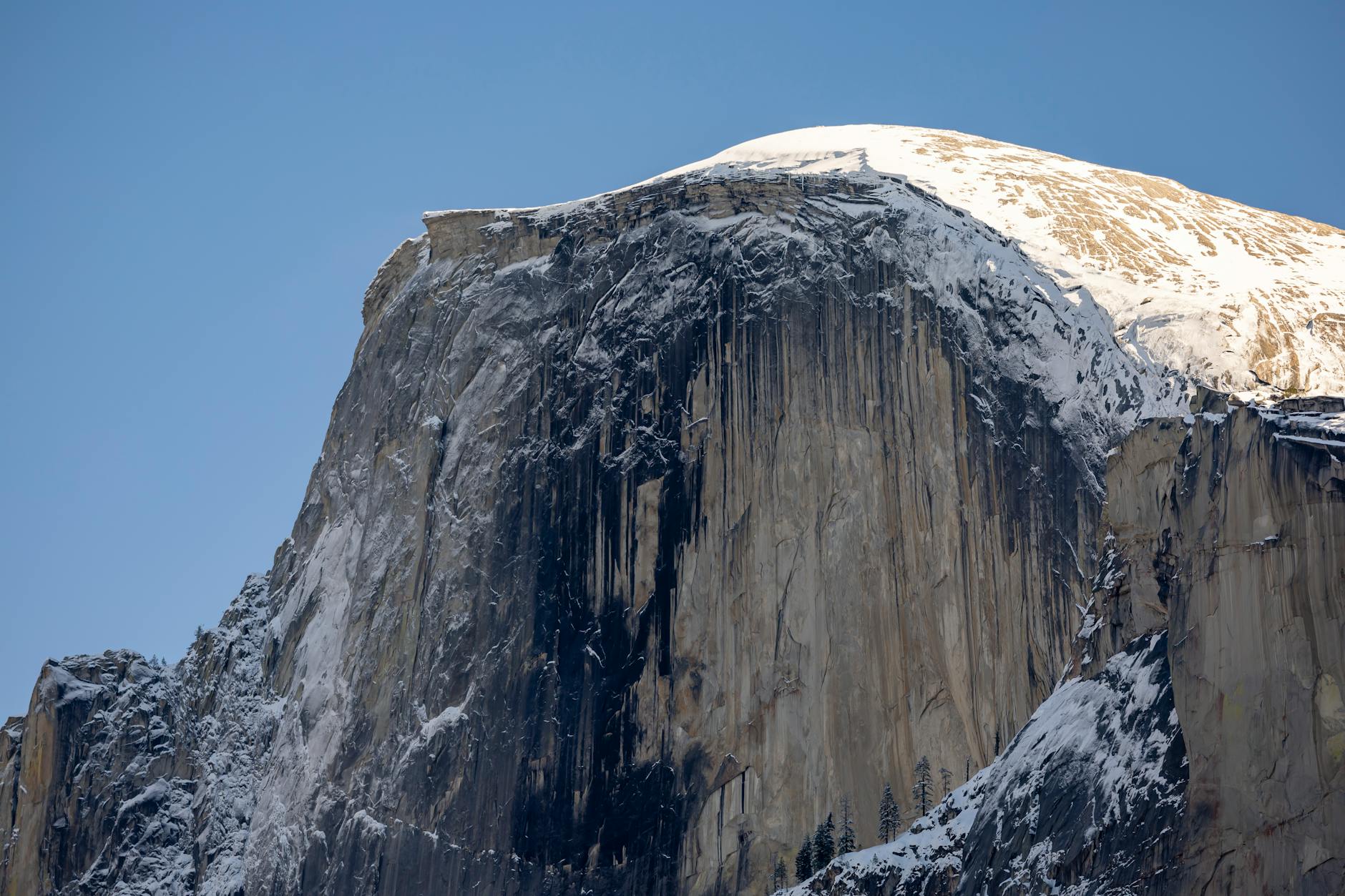
Yosemite’s cultural dominance originated in the 1860s when photographer Ansel Adams immortalized Half Dome and El Capitan, establishing visual associations that persist today. Modern visitors see Yosemite referenced in Apple’s operating system, national tourism campaigns, and mainstream media far more frequently than Sequoia appears. When planning a national park trip, most travelers ask “which park should I visit?” rather than “which parks have the largest trees?” This starting assumption funnels demand toward the known quantity. Sequoia’s marketing challenge is fundamental: the General Sherman tree, at 52,500 cubic feet, is scientifically the largest organism ever measured, yet most people cannot name it or visualize why that matters. The limitation here is real and worth acknowledging: no amount of internal marketing by the National Park Service can overcome decades of cultural entrenchment.
Yosemite has benefited from nearly two centuries of continuous promotion through art, photography, and media, while Sequoia remained relatively obscure outside the hiking community. Additionally, Yosemite’s visual drama—sheer granite cliffs, plunging waterfalls, dramatic alpine scenery—photographs better and translates to social media more effectively than a grove of impossibly large trees. A visitor to Yosemite Valley sees dramatic changes in elevation and light throughout the day. A visitor to General Sherman’s grove spends 30 minutes with an extremely tall tree, then leaves. The experience is profound but less immediately gratifying than Yosemite’s architectural landscape.
Geographic Barriers and Access Routes
Sequoia’s position in the remote southern Sierra creates natural geographic constraints that don’t affect Yosemite. The park sits at the end of three different highway corridors, each requiring significant driving through rural land with limited services. Visitors approaching from the west use California Highway 198, a narrow two-lane road that climbs 4,000 feet and becomes treacherous in winter conditions. From the east, Highway 395 approaches the Inyo National Forest, adding another hour of distance. Yosemite, by contrast, sits along Highway 120, a major east-west corridor that connects Modesto to Lee Vining—a route many travelers use regardless of their park destination. The winter closure creates an additional barrier.
Sequoia’s main attractions remain snow-free only eight months annually, while Yosemite’s valley floor stays accessible year-round. A visitor planning a February trip to California eliminates Sequoia from consideration automatically, but Yosemite remains viable. Over a decade, this seasonality prevents hundreds of thousands of potential visits. Furthermore, Sequoia’s internal roads remain narrow and undeveloped by design. The road to General Sherman Grove requires stopping at a ranger station and then hiking 2.2 miles on a moderate trail—essential for preservation but not convenient for the casual visitor looking for an hour-long distraction. Yosemite’s valley roads allow drive-up viewpoints that require minimal effort, making visits accessible to elderly travelers, people with mobility limitations, and visitors with young children.
The Visitor Experience Trade-off—Solitude Versus Convenience
This disparity creates a paradoxical opportunity for investors and economic analysts: Sequoia offers a superior experience to visitors specifically because it remains less crowded, but that superiority directly causes it to remain less crowded. A visitor walking through General Sherman Grove encounters perhaps a dozen other people on a summer day, compared to thousands at Yosemite’s most popular viewpoints. The solitude comes with trade-offs, though. You sacrifice the opportunity to observe crowd dynamics, engage in spontaneous social experiences, or participate in the cultural moment that Yosemite represents. A family wanting to photograph themselves at an iconic location with peers nearby gets that experience at Yosemite. A visitor seeking quiet contemplation and minimal human contact chooses Sequoia.
The practical implication is that Sequoia serves a different market segment, not an underserved version of the same market. Yosemite attracts families, couples, casual tourists, and international visitors—the broadest possible demographic. Sequoia attracts experienced hikers, photographers, environmentalists, and visitors explicitly seeking to avoid crowds. These are smaller populations, but they’re more committed, spend more time in the park, and tend to be more knowledgeable about the specific attractions. A visitor driving six hours to Sequoia is motivated by genuine interest, not obligation or default choice. This self-selection process actually protects Sequoia’s natural resources and visitor experience, though it limits economic activity within the park itself.
Common Misconceptions About Tree Size and Visitor Appeal
A widespread assumption is that visitors choose national parks based on natural superlatives. The General Sherman tree is objectively larger than any organism on Earth, yet this fact alone drives minimal visitation. The misconception arises from underestimating how much human decision-making depends on cultural narratives rather than scientific facts. Most visitors cannot deeply comprehend the difference between a 3,000-year-old tree and a 1,000-year-old tree, or between 52,000 cubic feet and 35,000 cubic feet.
The numbers are too abstract. What they can comprehend is “that’s where everyone goes” or “I’ve seen pictures of that place my whole life.” A limitation worth emphasizing: Sequoia’s less-crowded status makes it a better destination for experienced outdoor enthusiasts but a worse choice for visitors seeking confirmation of widely-known icons. If your motivation is to see the world’s most famous waterfalls or most recognizable granite peaks, Sequoia cannot compete, despite having equally impressive geological features. The parks serve different psychological purposes, and pretending that more information about Sequoia’s superlatives would shift visitor preferences ignores the fundamental human tendency to seek out culturally validated experiences. Additionally, reaching Sequoia’s best attractions requires genuine hiking—the nearest tree groves sit 2-5 miles from accessible parking, rather than the quarter-mile walks that characterize Yosemite’s valley floor.
Economic Implications for Gateway Communities
The visitor distribution affects regional economies differently than many assume. Three Rivers, California, the primary gateway to Sequoia, remains a small community of roughly 2,500 year-round residents, with seasonal businesses dependent on the estimated 1.1 million annual park visitors. Oakhurst and Mariposa, gateway communities to Yosemite, support larger populations and more diversified economies because the higher visitation creates sufficient economic density for permanent businesses beyond tourism. Three Rivers supports one primary hotel, a handful of restaurants, and limited services, while Mariposa hosts multiple hotels, restaurants, and retail establishments. The economic multiplier from Yosemite’s three million annual visitors is substantially larger than Sequoia’s 1.1 million.
However, this economic gap reflects visitor choice and accessibility rather than Sequoia’s inherent limitations. If road access were improved and in-park lodging capacity doubled, Sequoia would likely absorb additional visitors. The question for stakeholders becomes whether that economic growth justifies the environmental cost. Current policy implicitly answers no—the National Park Service has chosen to limit development in Sequoia specifically to preserve the wilderness character that makes it distinctive. This policy supports the argument that Sequoia’s lower visitation isn’t a failure but a deliberate outcome of preservation priorities that differ from Yosemite’s approach.
Future Trends and Sustainability Outlook
Climate change presents an emerging dynamic that could shift visitor patterns over the coming decades. Yosemite’s popularity during summer months is partially driven by visitors escaping heat in adjacent valleys and coastal regions. If Sierra Nevada summers become consistently hotter and drier, some potential visitors might be deterred, while others might prefer the higher elevations and cooler temperatures Sequoia offers. Additionally, the extended dry seasons increasing wildfire risk could eventually limit summer access to Yosemite more frequently than Sequoia, though both parks face these threats.
The relative attractiveness could shift simply through environmental changes beyond either park’s control. The long-term outlook for Sequoia’s visitation likely remains stable unless active marketing efforts or infrastructure development change. International tourism, particularly from Asia and Europe, represents growth potential—visitors unfamiliar with American cultural narratives might research and choose based on factual superlatives like “world’s largest tree” rather than media familiarity. However, this requires intentional promotion and infrastructure investment that current policy does not support. The status quo preserves Sequoia as a destination for deliberate visitors rather than incidental tourism, maintaining its wilderness character at the cost of economic opportunity for gateway communities.
Conclusion
Sequoia National Park remains less crowded than Yosemite not because its trees are less impressive—they’re objectively larger—but because historical circumstance, cultural dominance, and geographic accessibility have created a self-reinforcing system favoring Yosemite. The disparity reflects differences in infrastructure, brand recognition, and park management philosophy rather than visitor preference based on natural features. Sequoia’s lower visitation is partially a deliberate policy outcome, designed to preserve the park’s wilderness character and prevent the infrastructure expansion that might increase capacity.
For investors, ecosystem analysts, and tourism stakeholders, this dynamic illustrates a broader principle: market leadership in travel and leisure markets depends as much on perception and convenience as on objective quality. Understanding these mechanisms helps explain why similar natural resources attract vastly different visitor volumes, and why attempts to increase one destination’s appeal often require addressing access and cultural narratives rather than promoting the destination’s inherent features. Sequoia’s future visitor numbers will depend less on discovering new superlatives and more on whether stakeholders decide the economic and social benefits of increased tourism outweigh the costs to the park’s wilderness integrity.