
Inflation eats cash savings by quietly reducing purchasing power year after year, regardless of how much money you have sitting in the bank. When you earn just 0.38% in a savings account but inflation runs at 3.8% annually, your money is losing real value at nearly 3.5% per year. That $10,000 you thought was safely tucked away is actually worth about $350 less in today’s buying power by the end of just one year—and the losses compound decade after decade. The gap between what you earn on savings and the actual rate of inflation has become one of the most overlooked threats to personal wealth. Your bank account balance might stay the same, but what that balance can actually purchase shrinks steadily. The average American savings account yields 0.38%, while current inflation stands at 3.8% (the rate for the 12 months ending April 2026, up from 3.3% previously, according to data released May 12, 2026 by the U.S.
Labor Department). This gap is the cost of keeping your money in cash—a hidden tax on your savings that most people never notice until years of erosion have already occurred. What makes this particularly troubling is that inflation isn’t the only problem. Consumer behavior is shifting in ways that compound the damage. The personal savings rate declined to 3.6% in March 2026, down from 4.5% in January, as Americans spend more despite rising incomes. This means people are saving less while their existing savings lose value faster—a dangerous combination for long-term financial security.
Table of Contents
- THE MATH BEHIND PURCHASING POWER LOSS
- HOW INFLATION COMPOUNDS OVER DECADES
- THE REAL-WORLD PRICE EXPLOSION: GROCERIES AND ESSENTIALS
- THE ENERGY CRISIS AND BROADER INFLATION PRESSURE
- THE AMERICAN SAVINGS CRISIS AND EMERGENCY FUND COLLAPSE
- WHY TRADITIONAL BANKING STRATEGIES NO LONGER WORK
- INFLATION OUTLOOK AND STRATEGIC PLANNING AHEAD
- Conclusion
THE MATH BEHIND PURCHASING POWER LOSS
The mathematics of inflation on savings is unforgiving. To simply maintain your purchasing power—not grow wealth, just preserve it—you need to earn at least as much as the inflation rate. With current inflation at 3.8%, any savings account paying less than 3.8% annually is a losing proposition. At the national average rate of 0.38%, you’re actually losing ground at roughly 3.4% per year in real terms. Consider a concrete scenario: if you keep $10,000 in a savings account earning 1% while inflation averages 3%, you’re losing 2% of purchasing power annually. Over 20 years, that $10,000 would shrink to just $5,537 in buying power.
You’d still have the $10,000 in your account, but it would only buy what $5,537 could purchase today. The balance never changes; your ability to use that money diminishes steadily. The Federal Reserve’s target inflation rate is 2%, which is supposed to represent stable, manageable price growth. The current 3.8% rate is nearly double that target, and core inflation (which strips out volatile food and energy prices) sits at 2.8%. Even at what many consider acceptable inflation levels, traditional savings accounts provide almost no protection. The math is brutal for savers: you’re being slowly robbed by the gap between what banks pay and what prices grow.

HOW INFLATION COMPOUNDS OVER DECADES
The true danger of inflation emerges when you track it across years and decades. Small percentage losses each year add up to staggering purchasing power reduction over time. This compounding effect transforms a seemingly modest inflation rate into a wealth killer for anyone storing significant assets in cash. Over 30 years at just 3% annual inflation, a dollar loses about 74% of its purchasing power. An expense that costs $100 today would cost roughly $240 in today’s dollars in 2056. This isn’t speculation—it’s historical fact.
Someone who saved aggressively in the 1990s and locked money into low-yield accounts watched inflation erode decades of discipline. A young person starting their career today who keeps savings in a 0.38% account for the next 40 years until retirement will see inflation reduce that cash to about 28% of its current purchasing power. The limitation of traditional savings accounts becomes painfully clear when you project forward. Banks market savings accounts as “safe” and “secure,” which they are in terms of federal insurance and account access. But they offer no protection against inflation risk, which is arguably the greatest threat to long-term savers. A savings account is secure in the sense that your balance won’t disappear, but it’s terribly unsafe in the sense that inflation will steadily consume what that balance represents.
THE REAL-WORLD PRICE EXPLOSION: GROCERIES AND ESSENTIALS
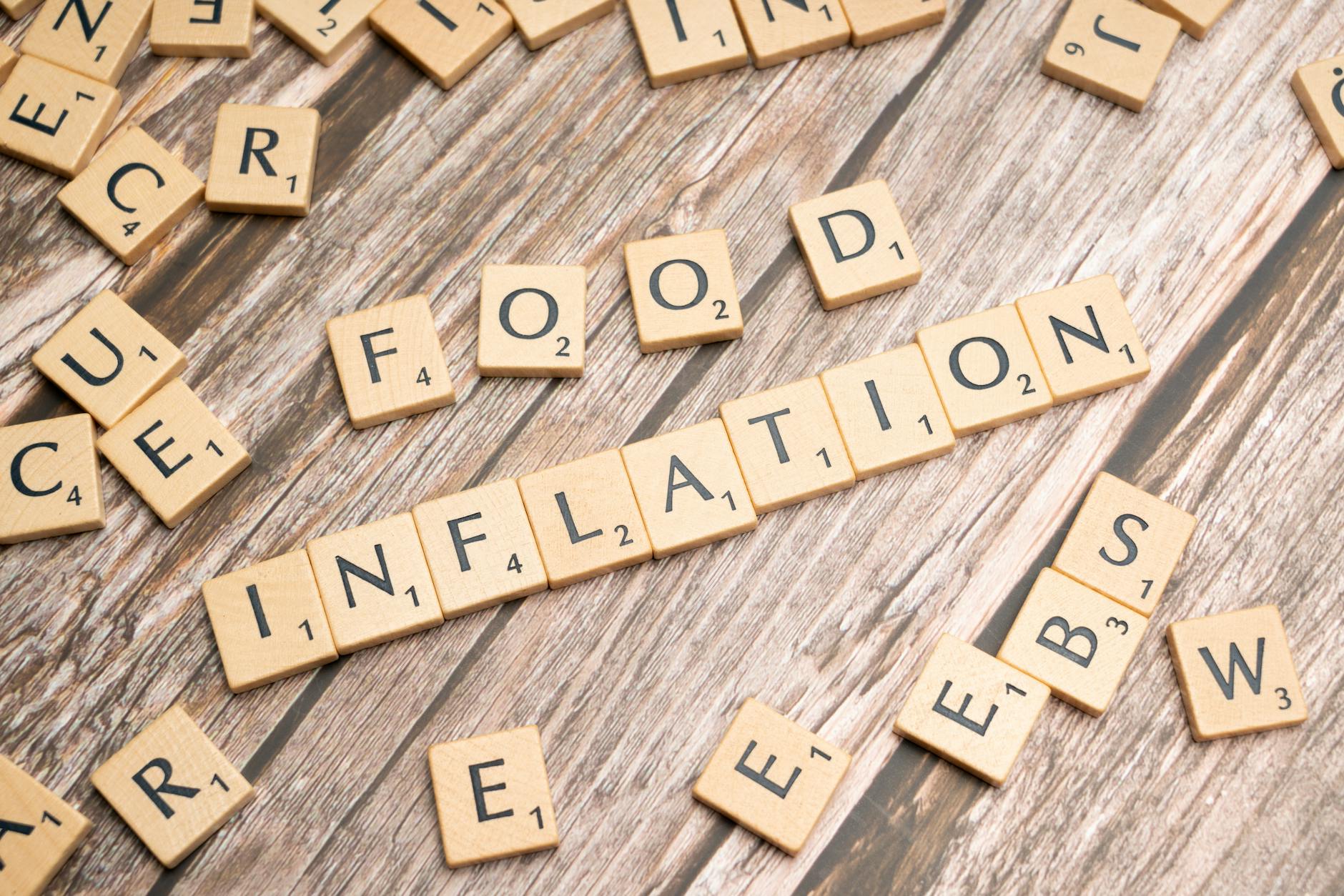
The impact of inflation becomes visceral when you look at what actual people pay for everyday items. Groceries provide perhaps the most relatable example: items that cost $300 per month in 2020 now cost approximately $358 per month in 2026. That’s an additional $696 per year for the exact same food, assuming someone’s diet hasn’t changed and quality hasn’t degraded. For a household on a tight budget, that $696 annual increase is substantial. It forces choices: buy less food, buy lower-quality products, or reallocate money from other parts of the budget. Someone with $20,000 in savings earning 0.38% makes roughly $76 in interest annually.
That wouldn’t even cover a third of the annual grocery inflation increase. The person is working backward—the interest they earn from their savings is meaningless against the backdrop of rising costs for basics. Energy prices present an even sharper example of how inflation can accelerate. Gasoline experienced a year-over-year increase of 28.4% as of April 2026 (up from 18.9% in March), driven by war-related oil shocks from the Iran conflict. Fuel oil surged 54.3% year-over-year. These aren’t moderate increases—they’re the kinds of price spikes that hit household budgets immediately and force real-time adjustments to spending. Someone relying on cash savings feels this squeeze acutely, because the purchasing power of their emergency fund is declining precisely when they might need it most.
THE ENERGY CRISIS AND BROADER INFLATION PRESSURE
The recent spike in energy costs reveals how inflation works in practice and why it matters beyond theoretical numbers. When oil-related geopolitical events create supply shocks, energy prices can double or triple in percentage terms faster than the overall inflation rate can adjust. For a family with a 30-minute commute or someone who heats a larger home, the 28% surge in gasoline or 54% surge in fuel oil translates to hundreds of additional dollars monthly. These energy spikes are particularly damaging because they’re unpredictable and affect essential costs. You can’t easily cut your commute or stop heating your house in winter. You have to absorb the price increase.
If your savings account was counting on that 0.38% to build wealth, an energy cost surge wipes out three to six months of interest within weeks. The purchasing power loss accelerates rapidly during these periods, and savings accounts offer zero protection. The limitation here is important: even people who understand inflation intellectually often underestimate how it manifests in their monthly bills. A 3.8% inflation rate doesn’t hit all categories equally. Energy, groceries, and housing can spike much faster, while other categories might lag. This uneven inflation means that people who spend higher percentages of their income on energy and food (typically lower-income households) experience inflation as a much more severe real loss than statistical averages suggest.
THE AMERICAN SAVINGS CRISIS AND EMERGENCY FUND COLLAPSE
The inflation problem collides with a deteriorating savings situation among ordinary Americans. The personal savings rate dropped to 3.6% in March 2026, representing three consecutive months of decline despite rising incomes. This is the paradox of modern inflation: even as people earn more nominal dollars, they’re able to save less of them because prices rise faster. More alarming: only 47% of Americans have $1,000 available for emergencies. That means the majority of the population has virtually no financial buffer against unexpected costs. When someone has no emergency savings to begin with, inflation becomes irrelevant—there’s nothing to erode.
What matters is that they’re sliding backward financially each month, forced to use credit or reduce spending to accommodate higher prices. For the 53% without $1,000 in emergency reserves, inflation isn’t an investment problem; it’s an immediate survival problem. This reveals the warning at the heart of the inflation crisis: it’s not just that savings accounts don’t beat inflation. It’s that most Americans aren’t saving at all, which means they’re experiencing inflation as an immediate reduction in living standards. They have to earn more income just to maintain the same standard of living, and many aren’t earning more fast enough. The purchasing power loss becomes instantaneous and painful, not a slow compound erosion measured over decades.

WHY TRADITIONAL BANKING STRATEGIES NO LONGER WORK
The traditional advice of keeping several months of emergency savings in a bank account remains sound from a liquidity perspective. You need to be able to access cash quickly for genuine emergencies. The problem is that this advice was sound when savings accounts paid 4-5% and inflation averaged 2%. In the current environment, where savings accounts pay 0.38% and inflation runs at 3.8%, the traditional strategy creates a false sense of security. You have your six months of emergency savings sitting safely in a bank account—safe from a default perspective, but not safe from inflation. That safety becomes illusory over time. Someone might build a $15,000 emergency fund earning 0.38%, feeling secure.
In five years, assuming 3.8% average inflation and no changes to income or expenses, that $15,000 would represent only about $12,300 in current purchasing power. The fund hasn’t grown; it’s shrunk. The person feels secure because the account balance is still $15,000, but their actual financial cushion has eroded by thousands of dollars. The tradeoff is uncomfortable: you could move savings into assets with higher returns, but those assets might not be liquid in an emergency. You could keep everything in savings accounts and accept the purchasing power loss. Or you could try a hybrid approach—keep three months of expenses in a savings account and invest the remainder elsewhere. But even this hybrid approach is difficult for people who lack investment knowledge or are risk-averse. The system has created a situation where the safest approach (savings accounts) is financially harmful, and the potentially beneficial approach (investing) requires expertise and carries risk.
INFLATION OUTLOOK AND STRATEGIC PLANNING AHEAD
Looking forward, inflation will likely remain above the Federal Reserve’s 2% target for the foreseeable future. The current 3.8% rate is down from higher peaks earlier in the decade, suggesting some progress toward the Fed’s goals. However, geopolitical tensions (including the Iran conflict affecting oil) and persistent structural inflation pressures suggest that inflation in the 3-4% range may persist. This outlook suggests that the inflation-savings problem will continue to erode purchasing power for years to come.
Anyone making financial decisions should plan assuming that inflation will exceed traditional savings returns. This might mean reviewing whether the strategy of holding large cash reserves makes sense, or whether a different allocation is appropriate. For investors, it suggests that avoiding inflation through growth-oriented assets isn’t optional—it’s mathematically necessary. The alternative, leaving money in cash, guarantees a loss of purchasing power. It’s not a risk; it’s a certainty, measured against inflation’s relentless advance.
Conclusion
Inflation eats cash savings by degrading purchasing power through a persistent gap between inflation rates (currently 3.8%) and savings account returns (currently 0.38%). This gap represents a 3.4% annual loss in real value, a rate at which $10,000 shrinks to $5,537 in buying power over just 20 years. The effect compounds relentlessly, and recent economic data shows Americans are simultaneously saving less, meaning fewer people have financial protection against this erosion.
The practical reality is stark: if you keep significant assets in traditional savings accounts, inflation will reduce what those assets can purchase, year after year. You cannot avoid this outcome by “being careful with money” or budgeting better—the erosion happens automatically through rising prices. The only effective response is to either accept this loss consciously as the cost of liquidity and safety, or to seek returns that actually exceed inflation through other means. Ignoring the inflation-savings gap is essentially choosing the loss passively, which is why understanding this mechanism is essential for anyone managing personal finances in an inflationary environment.