
GeForce Now filled a critical gap in the gaming market by making triple-A games accessible to players who couldn’t afford or didn’t want to invest thousands of dollars in high-end PC hardware. Instead of requiring a $1,500 to $3,000 gaming rig, NVIDIA’s cloud gaming service lets players stream games they already own from Steam, Epic Games, Ubisoft+, and other platforms to nearly any device—from budget laptops and tablets to non-gaming machines.
This democratization of gaming access proved compelling enough to attract over 25 million users by January 2022 and drive 1 billion cumulative hours of streamed gameplay, making it one of the few cloud gaming platforms to achieve meaningful market adoption. The service targets a specific but enormous audience: casual gamers who want occasional access to AAA titles, international players in regions where PC gaming hardware costs are prohibitively high, and budget-conscious consumers who view gaming as entertainment rather than identity. For a gaming enthusiast with a 5-year-old laptop and no desire to upgrade, GeForce Now represents a workaround to the hardware requirement problem that has traditionally segmented the gaming market by income level.
Table of Contents
- Can You Really Play Major Games Without Owning Expensive Hardware?
- What’s Included and What Isn’t—Understanding the Service Limitations
- Device Accessibility—How Mainstream GeForce Now Has Become
- Pricing and Business Model—How Does This Make Money?
- Internet Infrastructure as a Hidden Barrier to Growth
- The Hardware Investment That Started It All
- Growth Trajectory and Market Outlook
- Conclusion
Can You Really Play Major Games Without Owning Expensive Hardware?
Yes, and the library supporting this claim is substantial. GeForce Now provides access to over 4,500 games as of late 2025, with 16 new titles added in May 2026 alone. These aren’t low-tier indie games—the catalog includes AAA releases from major publishers like Activision, Ubisoft, EA, and others.
Importantly, players don’t repurchase games; they stream titles they already own on Steam or other storefronts, making adoption a simple upgrade path rather than a financial commitment. A concrete example illustrates the value proposition: a player who owns Cyberpunk 2077 on Steam can stream it to a $200 Chromebook without needing the RTX 4090 and 32GB RAM that smooth performance at high settings typically requires. The September 2025 upgrade to NVIDIA’s Blackwell RTX 5080 servers enabled up to 5K resolution at 120fps or 360fps at 1080p, bringing streaming quality to a point where PC Gamer reviewers noted games felt “indistinguishable from local play under optimal conditions.” This marks a significant technical achievement, as cloud gaming was previously dismissed by hardcore players for latency and compression artifacts.

What’s Included and What Isn’t—Understanding the Service Limitations
GeForce Now operates on a tiered model where a free tier offers limited concurrent play sessions (typically 1 hour per session), while the $19.99 premium tier unlocks extended sessions on RTX 4080 servers and faster performance. However, a January 2026 change introduced a 100-hour monthly playtime cap for non-Founders members, affecting approximately 6% of the user base. For casual players streaming 5-10 hours per week, this limit poses no problem, but it signals NVIDIA is managing infrastructure costs as the platform scales—a warning sign for anyone considering the service as a primary gaming solution.
The limitation that matters most is internet quality. GeForce Now requires a minimum 15 Mbps connection for 1080p at 60fps and 35 Mbps for 4K streaming. In 2025, US broadband infrastructure improvements expanded accessible regions, but rural areas, developing markets, and international users with unstable connections may experience lag, stuttering, and input delay that makes competitive or fast-paced games unplayable. This infrastructure dependency means GeForce Now’s reach is ultimately capped by global broadband penetration rather than pure software innovation.
Device Accessibility—How Mainstream GeForce Now Has Become
One of NVIDIA’s smartest strategic moves was removing the “gaming platform” label and positioning GeForce Now as compatible with nearly any connected screen. The service runs on old Macs, iPad tablets, low-end Windows PCs, Linux systems, and Amazon Fire TV sticks—devices that would struggle to run modern games locally. A January 2026 CES announcement confirmed Fire TV stick support, extending reach into living rooms and casual entertainment contexts beyond traditional gaming.
The platform even entered virtual reality, adding 90fps VR streaming capability through headset support. This expansion matters because it transforms GeForce Now from a “PC gaming alternative” into infrastructure for entertainment consumption across devices. An investor evaluating NVIDIA’s broader position would note that this compatibility strategy creates switching costs—once a player’s library and gaming habits are anchored to GeForce Now, the friction to migrate to Xbox Cloud Gaming or Amazon Luna increases.
Pricing and Business Model—How Does This Make Money?
NVIDIA’s premium tier at $19.99 monthly sits between Xbox Game Pass’s $9.99 (which includes only first-party Microsoft games) and high-end gaming PC ownership costs of $1,500+. For a consumer perspective, the pricing is accessible; for NVIDIA’s perspective, it represents a sustainable revenue stream per active user, plus the infrastructure margin on server utilization. Unlike subscription games services, GeForce Now generates revenue from performance tiers rather than exclusive content, aligning its incentive with platform capability rather than game development.
The Founders membership—early adopters who paid higher upfront fees in exchange for grandfathered benefits and higher concurrent hours—creates a two-tier revenue model. While offering founders special treatment is expensive in the short term, it signals to venture investors and analysts that NVIDIA has an engaged, committed user base willing to pay premium prices. The 100-hour monthly cap for regular premium members, by contrast, suggests NVIDIA is optimizing for profitability per user once the cost of infrastructure is accounted for. This pricing maneuver also encourages higher-value users to pay more for unlimited access, should NVIDIA introduce a higher tier.
Internet Infrastructure as a Hidden Barrier to Growth
While GeForce Now’s hardware requirements are low, its bandwidth requirements are non-negotiable. The 15-35 Mbps range for 1080p-to-4K streaming is available in many US and European urban areas but remains inaccessible in significant portions of Africa, South Asia, and rural North America. This creates a ceiling on addressable market that is invisible in earnings reports but real on the ground.
Latency also matters more than raw bandwidth. Even with sufficient speed, a high-ping connection causes input lag that ruins competitive games. A player in Southeast Asia streaming to servers located in the US will experience 150-200ms delays, making fast-paced shooters or fighting games nearly impossible to play seriously. NVIDIA has partially addressed this by expanding data center locations, but geopolitical and infrastructure limitations mean comprehensive global coverage is years away, if ever achievable.

The Hardware Investment That Started It All
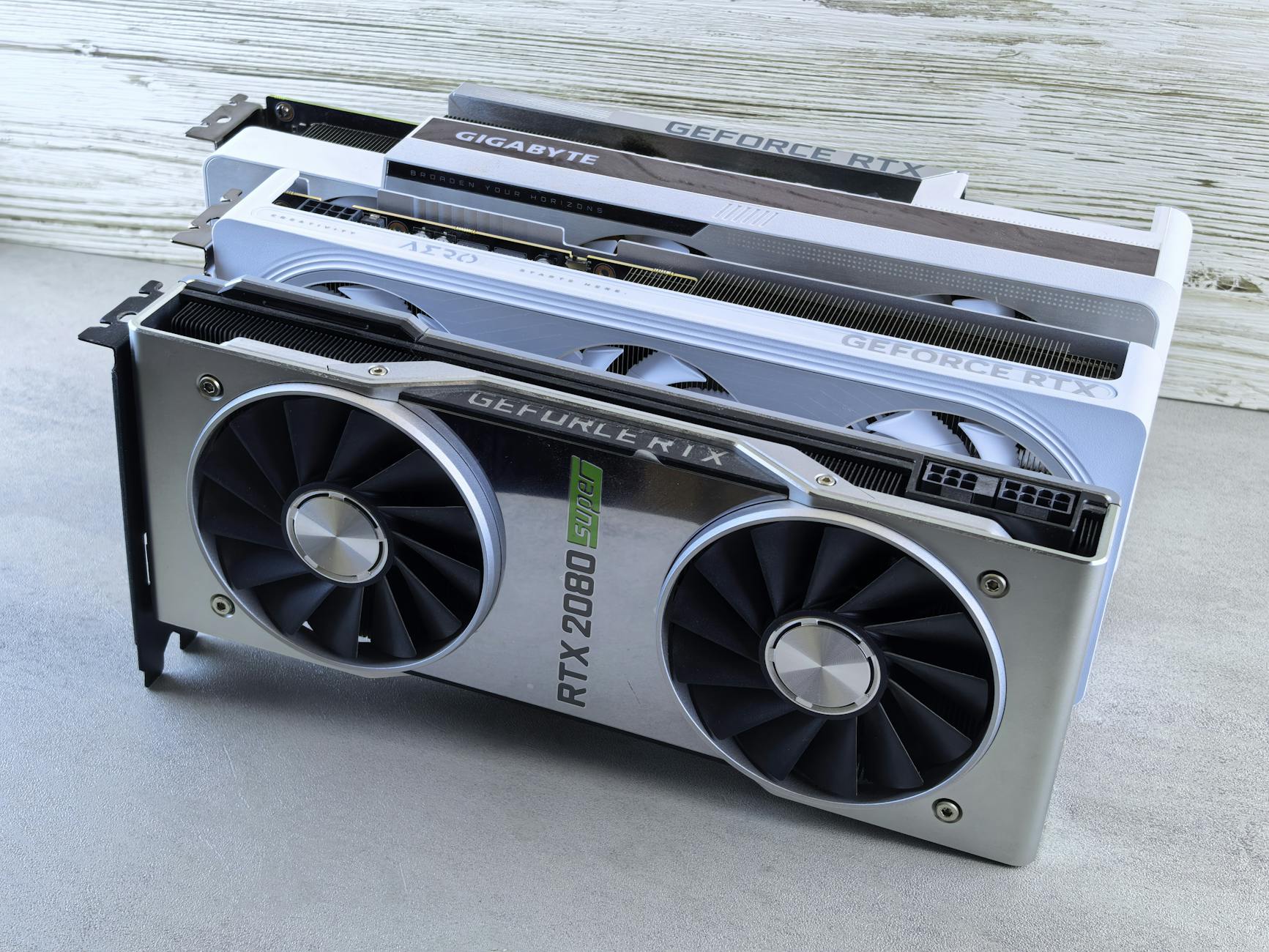
GeForce Now’s technical foundation—NVIDIA’s RTX GPUs running in data centers and streamed to end-user devices—represents a hardware-as-a-service model that wasn’t feasible before RTX era GPUs achieved high efficiency. The September 2025 upgrade to Blackwell RTX 5080 servers was necessary not out of obsolescence but because game developers were shipping titles that couldn’t be played smoothly on older GPU generations.
This reinforces the principle that cloud gaming is perpetually chasing local gaming’s hardware envelope; NVIDIA must continuously upgrade expensive server infrastructure to maintain parity with what new AAA games demand. The investment implication is subtle: NVIDIA’s GeForce Now success depends entirely on NVIDIA’s ability to manufacture and deploy new high-performance GPUs faster than game developers can push the performance envelope. Disruptions in NVIDIA’s supply chain, semiconductor manufacturing capacity, or competition from other GPU makers (AMD, Intel Arc) could jeopardize GeForce Now’s technical advantage.
Growth Trajectory and Market Outlook
The 25 million users accumulated by January 2022 represented meaningful scale, but the platform remained dwarfed by console gaming (PlayStation 5 sold 40+ million units in similar timeframe) and PC gaming overall. The May 2026 game additions and CES 2026 Fire TV integration suggest NVIDIA is actively investing in growth, signaling confidence that cloud gaming will eventually become mainstream rather than remain a niche.
Going forward, GeForce Now’s competitive position hinges on exclusive features—like the VR streaming capability—and maintaining quality advantages over Xbox Cloud Gaming and PlayStation Plus Premium. For investors tracking NVIDIA, GeForce Now is valuable less as a revenue generator today and more as a foothold in the entertainment and gaming infrastructure market of the future, where content delivery might eventually be decoupled from hardware entirely.
Conclusion
GeForce Now filled the niche of affordable, hardware-agnostic gaming access by making existing game libraries playable on any internet-connected device. With over 25 million users, 1 billion streamed hours, and support for 4,500+ games, the platform proved that cloud gaming could achieve mainstream adoption when priced reasonably and executed with adequate infrastructure investment. The move from gamers as a primary customer to consumers generally—through Fire TV, tablet, and VR support—expands the addressable market beyond traditional enthusiasts.
The service remains limited by internet infrastructure quality, monthly playtime caps, and the need for continuous GPU hardware upgrades to stay competitive. For investors, GeForce Now represents NVIDIA’s strategic positioning in entertainment streaming and infrastructure markets, even if the current revenue contribution is modest compared to GPU sales. As broadband networks improve globally and game streaming technology matures, platforms like GeForce Now may eventually render high-end gaming PC hardware optional rather than essential.