
Queens, New York offers some of the most authentic and affordable street food in the entire United States, with vendors and food carts serving everything from Dominican empanadas to Vietnamese banh mi, Indian samosas to Thai pad thai. The borough’s diverse immigrant communities—particularly in neighborhoods like Flushing, Jackson Heights, and Astoria—have established well-established street food scenes where locals and visitors can eat genuinely good food for $5 to $12 per meal. Unlike the trendy food halls of Manhattan, Queens street food remains rooted in authenticity and value, with vendors often operating from carts or small storefronts, many of whom have built their businesses over decades and maintain loyal followings based on consistent quality and tradition.
The variety available is genuinely staggering. On a single block in Flushing, you might find a cart selling freshly made Sichuan noodles, another offering Malaysian roti canai, and a third serving Korean tteokbokki. What makes Queens street food work as a category is not novelty or fusion—it’s the presence of large enough communities with specific food traditions to support authentic vendors who cook according to the recipes of their home countries. The economics are straightforward: low overhead costs, high volume, and ingredients sourced from nearby ethnic markets mean these vendors can sell quality food at prices that chain restaurants cannot match.
Table of Contents
- What Makes Queens Street Food Authentic Compared to Other NYC Boroughs?
- Where to Find Queens Street Food: Neighborhoods and Their Specialties
- Signature Street Foods That Define Queens
- Practical Guidance for Eating Queens Street Food
- Common Issues and Realistic Limitations
- Beyond Carts: Permanent Storefronts and Small Restaurants
- The Future of Queens Street Food in a Changing City
- Conclusion
What Makes Queens Street Food Authentic Compared to Other NYC Boroughs?
Authenticity in street food depends on several factors: the cultural density of a neighborhood, the presence of ethnic grocery stores that supply proper ingredients, and critically, the presence of customers who grew up eating the food and will immediately notice if something is wrong. Queens has all three in abundance, which Manhattan, Brooklyn, and the Bronx often lack at the same scale. Flushing’s street food scene, for instance, is driven by a population that is over 30 percent Asian, creating demand for Sichuan, Cantonese, Korean, and Vietnamese food prepared by people who learned to cook in those countries. When a vendor’s entire customer base includes people who ate this food daily as children, the standard is set by memory and authenticity, not by what looks good on social media.
The comparison to other boroughs is instructive. In Manhattan, street food carts tend toward either high-end niches (Korean tacos, gourmet hot dogs) or standardized chains. In Brooklyn, gentrification has accelerated the replacement of immigrant food vendors with trendy alternatives. Queens has resisted this pattern partly through demographics and partly through food culture’s economic value to the community—street food represents real income for thousands of small operators and their families, so the city and community have stronger incentives to protect these vendors. The result is that you can eat better, more authentic food in Queens for less money, with lower risk of the “Instagram-fication” that often kills the appeal of traditionally excellent food.

Where to Find Queens Street Food: Neighborhoods and Their Specialties
Flushing has the highest concentration of street food options in Queens, with most vendors concentrated around the intersection of Main Street and Roosevelt Avenue. You’ll find carts and small shops selling congee, dim sum, hand-pulled noodles, and Chinese crepes within a two-block radius. The limitation here is organization—there are no menus, no guaranteed hours, and vendors come and go based on foot traffic and weather. On a rainy Tuesday afternoon in February, some carts simply won’t be operating. This unpredictability is part of the authentic appeal but can also be frustrating if you’re planning a meal.
Jackson Heights, Queens’ second major street food hub, specializes in Latin American and indian food. Roosevelt Avenue stretches for blocks with Colombian empanada vendors, Mexican taquerías, Indian samosa stands, and Thai noodle carts operating side by side. The advantage Jackson Heights has over Flushing is slightly better signage and more permanent storefronts mixed in with the carts, making it easier to know what you’re getting. However, the same vendors have been in their spots for years, which means popular locations during lunch hours can have genuine lines forming by noon. Astoria, particularly around Ditmars Boulevard, offers Greek and eastern European street food alongside newer immigration patterns—Turkish kebab vendors, Albanian fried cheese, and Brazilian churrascarias operating as both carts and small restaurants. The Astoria scene is slightly more organized than Flushing but less diverse, so your options are more limited if you want variety in a single walk.
Signature Street Foods That Define Queens
The most reliable recommendation is banh mi from Vietnamese vendors, primarily found in Flushing and Jackson Heights. A proper banh mi costs $3 to $5 and includes grilled pork, pickled vegetables, cilantro, and Vietnamese mayo on a crispy baguette. The specific value comes from the fact that banh mi is a complete meal—balanced, filling, and technically sophisticated despite the low price. Many of the banh mi carts and small shops in Queens have been operating in the same locations for 10+ years, suggesting consistent quality that has retained customers through multiple economic cycles.
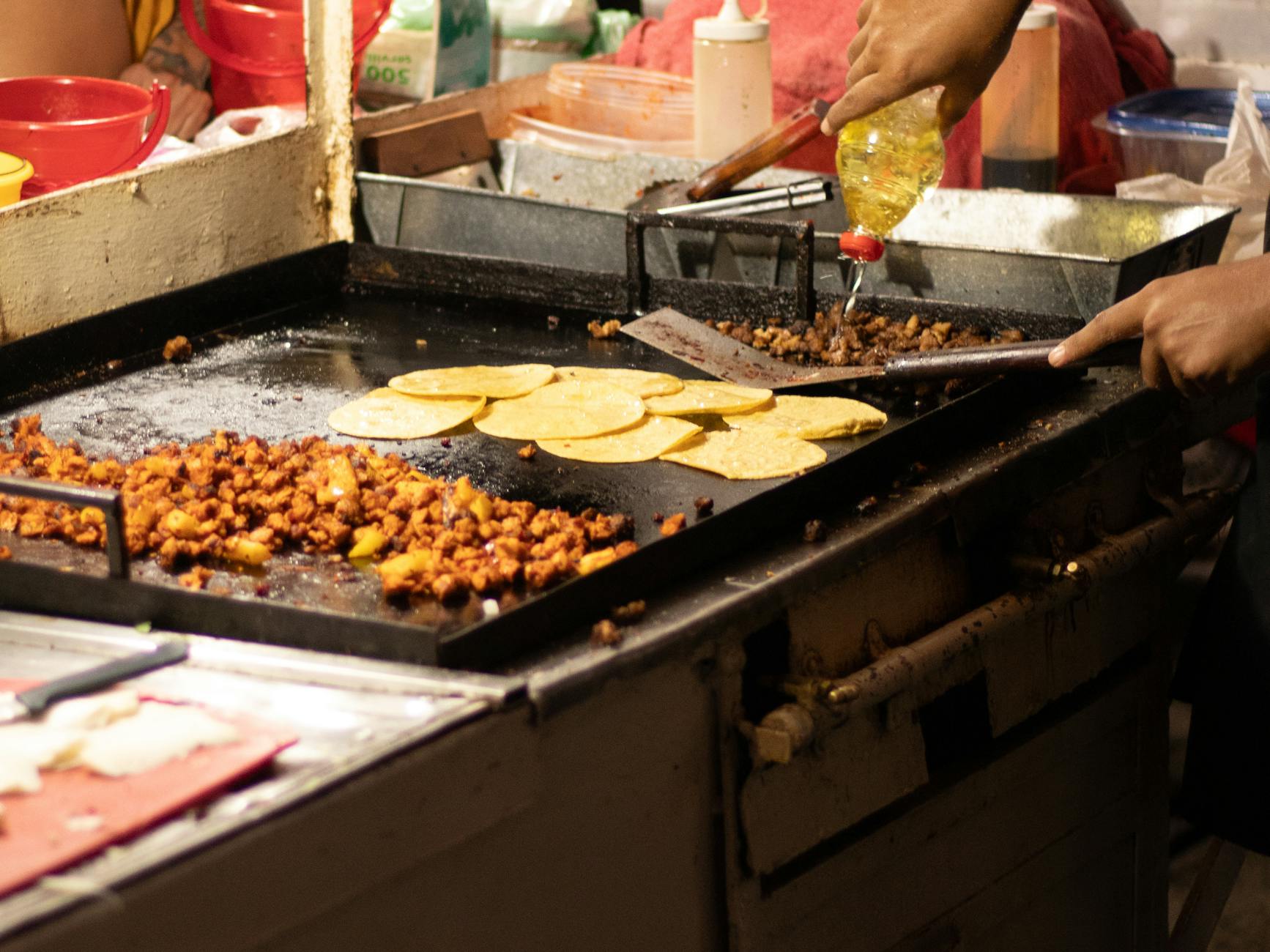
Empanadas from Jackson Heights represent a different approach to value. Colombian vendors sell empanadas filled with cheese, meat, or corn for $1.50 to $3 each, and they’re often cooked fresh in front of you. One specific example is a cart operator on Roosevelt Avenue near 82nd Street who has been frying empanadas from the same spot for at least 15 years and attracts lines during lunch hours. The tradeoff is that empanadas are portable but heavy—two or three constitutes a full meal, and the oil used for frying means they’re best eaten immediately rather than taken back to an office to eat later.
Practical Guidance for Eating Queens Street Food
The most important tradeoff when eating from street food carts is between food safety and price. Licensed vendors operating from permanent carts or small storefronts are required to meet health department standards, though enforcement is uneven. The practical approach is to observe: Is the cart clean? Are the ingredients stored properly? Is there a visible stream of customers? The most popular carts are popular because the food is good and the operator has survived long enough to build a reputation. A cart that’s been in the same spot for five years has implicitly passed a test that a new cart hasn’t taken yet.
Pay attention to timing. Most street food vendors operate on predictable schedules tied to lunch hours (11am-2pm) and dinner (5pm-8pm), and availability can depend on whether the vendor sold out rather than whether they stopped working. If you arrive at 2:30pm expecting to find noodles, you might find the vendor is done for the day. The best strategy is to explore during obvious meal times and take note of which vendors operate every day versus which ones are occasional, and what their typical sold-out time is.
Common Issues and Realistic Limitations
Language barriers exist at many street food carts, particularly in Flushing where vendors may speak Cantonese, Mandarin, or Fukienese rather than English. This is not a bug—it’s part of what makes the food authentic—but it can be a genuine limitation if you don’t speak the language or can’t read the menu (which may be written entirely in Chinese characters). The practical solution is to point at what other customers are eating or to arrive with a Chinese speaker if you want specific menu explanations.
The second limitation is consistency within a vendor. Street food carts operate with variable ingredients, which means the version of a dish you had last month might taste slightly different depending on where the vendor sourced ingredients that day. This is completely different from a chain restaurant where every location serves an identical product. If you order chicken banh mi and the chicken tastes noticeably different from your last order, this can be disappointing, though it’s not a sign the vendor is doing anything wrong—it’s simply how small-scale food operations work.

Beyond Carts: Permanent Storefronts and Small Restaurants
Many of the best street food vendors have evolved into actual restaurants, particularly in Jackson Heights and Astoria. These operations often maintain the same recipes and approach as their cart versions but with seating, more organized payment systems, and slightly higher prices.
The tradeoff is that the convenience of eating at a table and not worrying about weather comes at a cost of maybe 30 percent more money—a dish that costs $5 from a cart might cost $6.50 in a restaurant. However, the inventory of restaurants specializing in street food traditions is smaller and less constantly refreshed than the cart system, so the cart option often represents the true cutting edge of what’s available.
The Future of Queens Street Food in a Changing City
Queens street food has survived decades of NYC economic changes partly because it’s deeply embedded in immigrant economies where vendors operate efficiently with low overhead. However, rising rents, increased enforcement of permit systems, and the gentrification of neighborhoods like Jackson Heights pose real threats to the vendor base. Some long-operating carts have disappeared in the past five years as their sidewalk space was claimed for new development or as vendors retired with no successors willing to take on the labor-intensive work.
The vendors who remain tend to be those in neighborhoods with still-affordable real estate or in tight cultural communities where the next generation is already trained in the family business. Flushing remains the safest bet for street food consistency because the Flushing neighborhood is still actively populated with people who grew up eating Sichuan, Cantonese, and Vietnamese food and continue to demand it. These network effects have proven surprisingly durable, and as long as those demographic patterns hold, the street food scene should remain accessible.
Conclusion
The best street food in Queens is real: specific vendors in specific neighborhoods serving authentic dishes at prices that represent genuine value. The appeal is not trend-driven or temporary—these vendors have built decades-long reputations by serving the same communities that created the demand for their food in the first place. The practical reality is that finding it requires some exploration, tolerating minor language barriers, and understanding that quality can vary based on ingredient sourcing and time of day, but the return on this small investment of effort is access to food that is nearly impossible to find elsewhere in the United States at these price points.
If you want reliable, authentic street food at low prices, focus first on Flushing for Asian cuisines and Jackson Heights for Latin American and Indian food. Arrive during lunch or dinner hours when vendors are actively cooking, observe the quality and cleanliness of the operation, and don’t hesitate to ask other customers what they’re eating. The carts and vendors that have survived the longest are the ones that have solved the problem of making good food consistently, and they’re unlikely to disappoint.