
Brooklyn has emerged as one of New York City’s premier destinations for authentic Haitian cuisine, with a concentrated cluster of restaurants spanning from Prospect Lefferts Gardens to Nostrand Avenue that serve everything from traditional griot to innovative plantain-based dishes. The best Haitian food in Brooklyn isn’t limited to a single restaurant—instead, the borough offers multiple standout options where you can experience both traditional recipes and contemporary interpretations of Haitian cooking. A visit to Djon Djon in Prospect Lefferts Gardens, for example, provides an entry point into gourmet Haitian dining with expertly crafted cocktails and refined preparations that demonstrate how the cuisine has evolved in Brooklyn’s diverse food landscape.
The Haitian food scene in Brooklyn reflects the broader Caribbean diaspora community that has made the borough home for generations. Unlike restaurants that primarily serve tourists or dilute flavors for mass appeal, Brooklyn’s Haitian establishments range from casual eateries to upscale dining experiences, each serving communities that know the cuisine intimately. This means quality and authenticity are non-negotiable in most establishments—restaurants compete on reputation within tight-knit networks where word-of-mouth matters more than marketing.
Table of Contents
- Which Haitian Restaurants Should You Visit First in Brooklyn?
- Authentic Traditional Haitian Dishes Worth Seeking Out
- Understanding Brooklyn’s Haitian Food Landscape
- How to Navigate Haitian Restaurant Options by Style and Budget
- Important Considerations When Exploring Haitian Brooklyn Restaurants
- Delivery versus Dining In for Haitian Food
- The Evolving Brooklyn Haitian Food Scene
- Conclusion
Which Haitian Restaurants Should You Visit First in Brooklyn?
Start your exploration at Lakou Cafe, a Haitian-American fusion restaurant founded in May 2018 by Weeksville resident Cassandre Davilmar that bridges traditional Haitian cooking with contemporary cafe culture. Lakou distinguishes itself by offering plant-based options alongside classic meat dishes, making it accessible to diners with different dietary preferences. This approach reflects how Brooklyn’s restaurants increasingly balance cultural authenticity with modern dining expectations—a tradeoff that works when executed thoughtfully.
BunNan occupies a different niche entirely, having become NYC’s most famous plantain eatery with a viral social media presence that draws crowds seeking creative plantain-based dishes. The restaurant’s specialization in plantain sandwiches, tacos, lasagna, and waffles demonstrates how a single ingredient can anchor an entire menu when preparations are varied and thoughtful. However, the viral popularity means expect crowds during peak hours, and the social media attention occasionally attracts diners more interested in the experience than the food itself—a common dynamic in Brooklyn’s trendier food establishments.

Authentic Traditional Haitian Dishes Worth Seeking Out
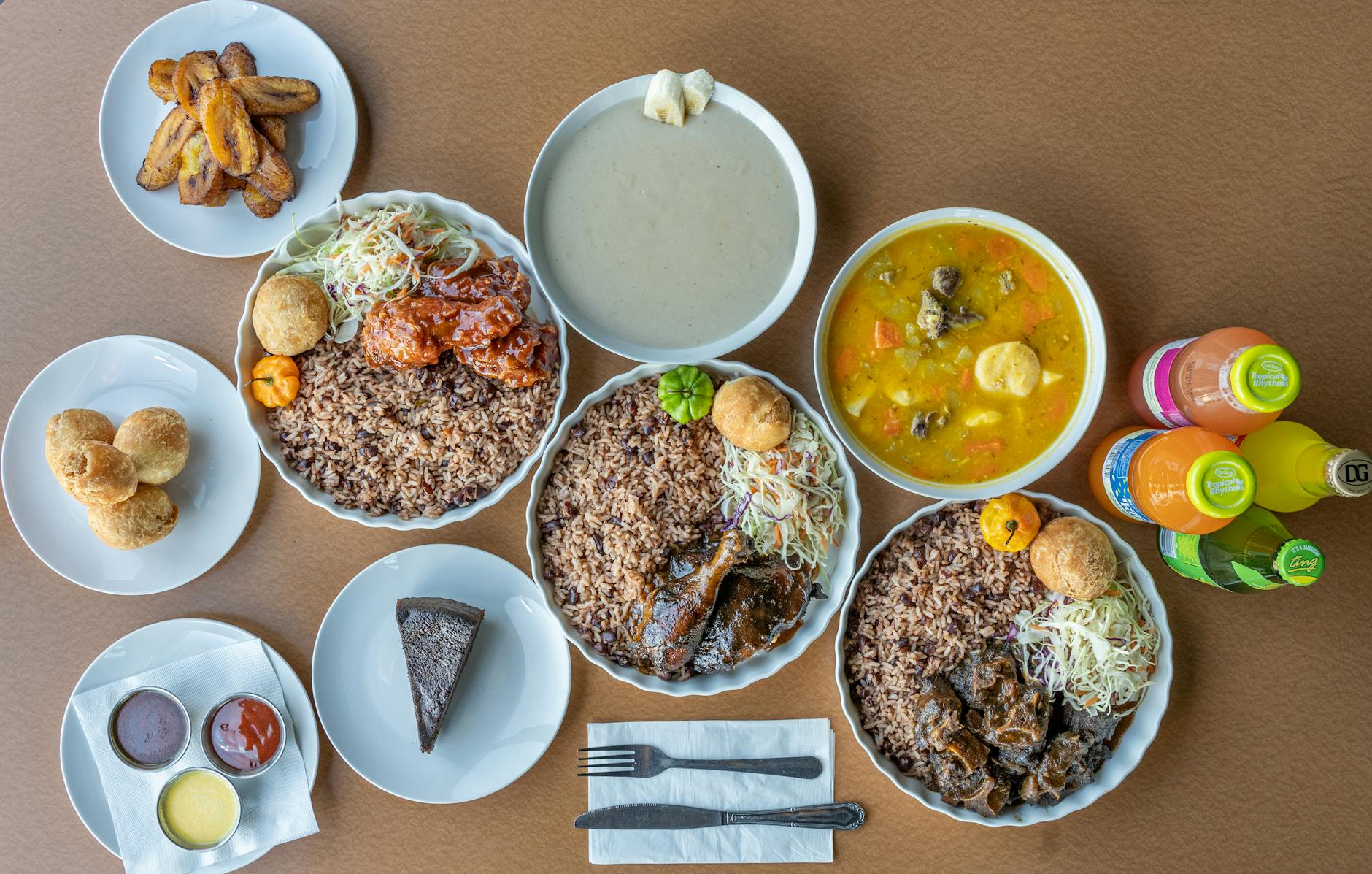
Blueline Fry Plantain on Nostrand Avenue represents the more traditional end of Brooklyn’s Haitian restaurant spectrum, serving authentic dishes like griot (fried marinated meat), black rice with fried goat, and their signature fried plantains. These aren’t reimagined or modernized dishes—they’re preparations that reflect how Haitian families have cooked for generations. The limitation here is that traditional Haitian cooking requires time-intensive preparation methods that some modern diners find slow compared to faster-casual restaurant expectations.
The emphasis on griot and fried goat at establishments like Blueline reflects the rural Caribbean cooking traditions that prioritize offal and less-expensive cuts of meat, transforming them through proper seasoning and technique. This represents a significant cultural and culinary distinction from American-style restaurant cooking, where these preparations would be considered specialty items rather than foundational menu staples. For diners accustomed to mainstream American cuisine, the intensity of flavors and the different cuts of meat require an open-minded approach to fully appreciate.
Understanding Brooklyn’s Haitian Food Landscape
brooklyn now hosts 10 or more highly-rated Haitian restaurants with active reviews and posted hours, making it possible to explore different styles and preparation methods across multiple visits. This concentration reflects both the historical settlement patterns of Haitian immigrants in Brooklyn and the borough’s broader emergence as a culinary destination. Yelp’s current listings show that Haitian restaurants now rank among Brooklyn’s recognized ethnic cuisines, with enough density to support casual dining, upscale options, and specialized concepts like BunNan’s plantain-focused approach.
The availability of Haitian food delivery through UberEats, with 10 or more options available as of 2026, indicates how the cuisine has moved from neighborhood-specific to borough-wide accessibility. This expansion means you can experience Haitian food without traveling to specific neighborhoods, though restaurant quality and delivery consistency can vary significantly. The convenience factor introduces a tradeoff—delivery-friendly dishes often travel better than more delicate preparations, potentially altering the dining experience compared to eating in the restaurant itself.
How to Navigate Haitian Restaurant Options by Style and Budget
Budget-conscious diners should focus on casual establishments like Blueline Fry Plantain, which specializes in affordable, satisfying portions of traditional dishes. These restaurants often operate with minimal overhead and pass savings to customers while maintaining quality. Contrast this with Djon Djon’s gourmet approach, which incorporates craft cocktails, refined plating, and ingredient sourcing that justifies higher price points.
The choice between casual and upscale Haitian dining often comes down to occasion rather than cuisine—both styles can offer authenticity, though they target different dining contexts. When selecting where to eat, consider whether you’re seeking breadth (trying many dishes across different restaurants) or depth (returning repeatedly to develop preferences at specific establishments). Lakou Cafe’s hybrid positioning—offering both traditional and plant-based options in a relaxed setting—works well for diners seeking variety without the formality of fine dining. For plantain devotees, BunNan’s focus eliminates menu-browsing uncertainty but limits options if plantains aren’t your primary interest.
Important Considerations When Exploring Haitian Brooklyn Restaurants
Restaurant availability and hours can shift in Brooklyn’s food scene more rapidly than in established ethnic neighborhoods, so verifying current hours before visiting prevents disappointment. This risk is especially relevant for smaller establishments that may operate reduced schedules seasonally or adjust based on community demand. Online reservation systems and phone confirmations protect against discovering a restaurant is closed when you arrive expecting to dine.
Another consideration involves flavor intensity—Haitian seasoning approaches differ substantially from mainstream American restaurant cooking, with heavier use of garlic, Scotch bonnet peppers, and aromatic spices. Diners unaccustomed to these preparations should start with milder options or ask restaurants for recommendations if you prefer less intense flavoring. Additionally, some dishes involve ingredients and preparation methods (like fried goat or pork organs) that require cultural knowledge to appreciate fully—approaching these with curiosity rather than skepticism enhances the experience.

Delivery versus Dining In for Haitian Food
Haitian fried dishes travel reasonably well via delivery, making items like plantain chips, fried chicken, and griot relatively delivery-friendly. However, stewed dishes and soups lose textural quality and flavor concentration during delivery processes that involve packaging and temperature fluctuation. If possible, reserve delivery for heartier dishes and reserve sitting down at restaurants for preparations that benefit from immediate consumption.
The social element of Haitian dining also differs between restaurant and delivery contexts. Brooklyn’s Haitian restaurants often function as gathering spaces for community members, and eating in restaurants allows you to observe how residents interact with these spaces. Lakou Cafe, in particular, has cultivated a cafe culture where people linger beyond the meal, reflecting how food spaces serve purposes beyond pure nutrition.
The Evolving Brooklyn Haitian Food Scene
Brooklyn’s Haitian restaurant ecosystem continues developing as younger chefs balance diaspora traditions with Brooklyn’s competitive food culture. The emergence of fusion concepts like Lakou Cafe and specialty restaurants like BunNan suggests the cuisine will continue diversifying rather than narrowing to traditional-only offerings. This evolution mirrors broader patterns across immigrant cuisines in New York, where authenticity and innovation coexist rather than compete.
Looking forward, the combination of established cultural communities and Brooklyn’s status as a culinary destination suggests that Haitian restaurants will become increasingly visible in broader food media and recommendations. This exposure brings both benefits (investment, broader customer bases) and risks (gentrification, pressure to dilute authentic flavors). Current diners have the advantage of accessing these restaurants during a period where authenticity remains paramount but innovation is welcomed.
Conclusion
The best Haitian food in Brooklyn is readily accessible across multiple neighborhoods and price points, from casual eateries like Blueline Fry Plantain to upscale experiences like Djon Djon. Whether you’re seeking traditional dishes, creative innovations, or delivery convenience, Brooklyn’s concentration of Haitian restaurants provides options that serve both long-term residents and curious newcomers.
The cuisine’s presence across 10 or more restaurants and multiple delivery platforms means you can build meaningful food experiences rather than settle for isolated meals. Start by visiting one restaurant that matches your dining preferences—casual, fine dining, or specialized—and let that experience guide your subsequent exploration. The community that supports these restaurants has spent decades building these establishments, and approaching them with genuine curiosity rather than casual tourism enriches both your dining experience and your understanding of Brooklyn’s ongoing cultural landscape.