
When countries prioritize military and economic power over negotiation, global markets lose the stability that rules-based systems provide. The result is measurable and immediate: supply chains fracture, inflation spikes, and volatility spreads across equities, bonds, and commodities. We are seeing this unfold in 2026 as geopolitical pressure shifts away from traditional diplomatic frameworks toward tariffs, export controls, and industrial policy—tools designed to coerce rather than persuade.
The Ukraine-Russia war, now in its fourth year, has reached catastrophic casualty levels that dwarf any mediation attempt, while simultaneous crises in the Middle East (Israel-Iran escalation, threats to the Strait of Hormuz) demonstrate that when countries bet on their ability to impose outcomes through force rather than negotiation, the cost to global markets is severe and immediate. This article examines what happens to investors, supply chains, and markets when the world shifts from diplomacy-first to power-first competition. We’ll look at how this dynamic plays out in real conflicts, why traditional institutions fail to stop escalation, what sectors face disruption, and why 2026 represents a critical inflection point for portfolio risk.
Table of Contents
- How Power-Based Competition Replaces Negotiation
- Supply Chain Disruption and Market Volatility
- Ukraine and the Middle East—Diplomacy’s Failure Points
- How Geopolitical Risk Feeds Market Volatility and Sector Rotation
- The Collapse of Global Institutions and Rule-Based Order
- Middle East as the Next Major Flashpoint
- 2026 as a Critical Year for Geopolitical Realignment
- Conclusion
How Power-Based Competition Replaces Negotiation
The shift from diplomacy to coercion is not abstract—it shows up in how countries actually exercise influence. In 2026, geopolitical pressure is exercised less through international forums and negotiation frameworks and more through tariffs, export controls, industrial policy, and financial tools. The October 2025 truce between the U.S. and China on tariffs did not resolve the fundamental friction points: U.S. technology restrictions on Chinese chips, American support for Taiwan, and divergent industrial policy goals. These are non-negotiables from both sides, which means the truce is a pause, not a settlement. What happens in the next eighteen months will determine whether major policy breaks occur and reset U.S.-China relations for years. This matters for markets because coercion-based competition is inherently unstable. When countries pursue power through tariffs and sanctions rather than treaties, there are no agreed-upon stopping points. The U.S. can apply pressure until China capitulates on Taiwan or semiconductor policy—an unlikely scenario.
China can retaliate by disrupting rare earth exports or technology supply chains. Neither side has incentive to negotiate if they believe they can win unilaterally. Investors watching this dynamic should note that every escalation round brings new tariffs, new supply chain disruptions, and new hedging costs into equity prices. The difference between power-based and negotiation-based competition is speed of escalation. When countries have diplomatic channels, face-saving mechanisms, and shared institutions, conflict can be managed. When they don’t, conflicts accelerate. A tariff announcement triggers an immediate counter-tariff. Export controls prompt investment in domestic alternatives. trade partners shift suppliers. Volatility compounds. This is the market environment in 2026.

Supply Chain Disruption and Market Volatility
Power-based competition makes supply chains less reliable and markets more volatile. Nearly 20% of the world’s oil passes through the Strait of Hormuz, a chokepoint that has become a military flashpoint with multiple threats to commercial shipping. If Iran, the U.S., Israel, or any regional actor escalates in ways that threaten shipping, the price of crude could spike 20-30% in a matter of days. This isn’t theoretical—it’s happened repeatedly. Energy markets are already factoring in elevated geopolitical risk premiums; any actual blockade or attack would trigger a re-pricing that spills into inflation, equity multiples, and bond yields. Beyond energy, the supply chain risks cut across semiconductors, rare earths, agricultural commodities, and pharmaceuticals. A quarter of the world’s semiconductors are manufactured in Taiwan, which sits at the center of U.S.-China tensions.
A quarter of rare earths come from China, which has already shown willingness to weaponize exports during trade disputes. If power-based competition escalates to actual supply disruptions—not just tariffs—manufacturing sectors, tech companies, and consumer goods producers will face margin compression and production delays simultaneously. This is a scenario where diversification helps but does not eliminate risk. The limitation of hedging in this environment is that multiple conflicts happening simultaneously can create correlations that break historical models. When Ukraine, the Middle East, and Taiwan tensions spike at the same time, bonds, equities, and commodities don’t move independently anymore. Investors assuming that safe havens like U.S. Treasuries will provide ballast during geopolitical crises may find that flight-to-safety flows are overwhelmed by inflation-driven selling if multiple supply chains are disrupted. The 2026 environment requires scenario-based planning rather than single-factor risk models.
Ukraine and the Middle East—Diplomacy’s Failure Points
The Ukraine-Russia war serves as the clearest example of what happens when countries reject diplomacy. Military casualties reached catastrophic levels by early 2026, making this one of Europe’s deadliest wars since World War II. Numerous mediation efforts have failed. No diplomatic framework, ceasefire agreement, or settlement proposal has taken hold because neither Russia nor Ukraine can claim victory in a way that satisfies domestic constituencies and the other side simultaneously. As long as both believe they can still win militarily, negotiations remain non-starters. The human cost is in the hundreds of thousands; the economic cost includes disrupted grain exports, elevated energy prices, and weapons spending that diverts capital from productive investment across NATO and Eastern Europe. The Middle East shows a similar pattern of escalation. The Israel-Iran crisis escalated following airstrikes on Iranian facilities in 2025, with Iran responding with missile and drone attacks. The U.S.
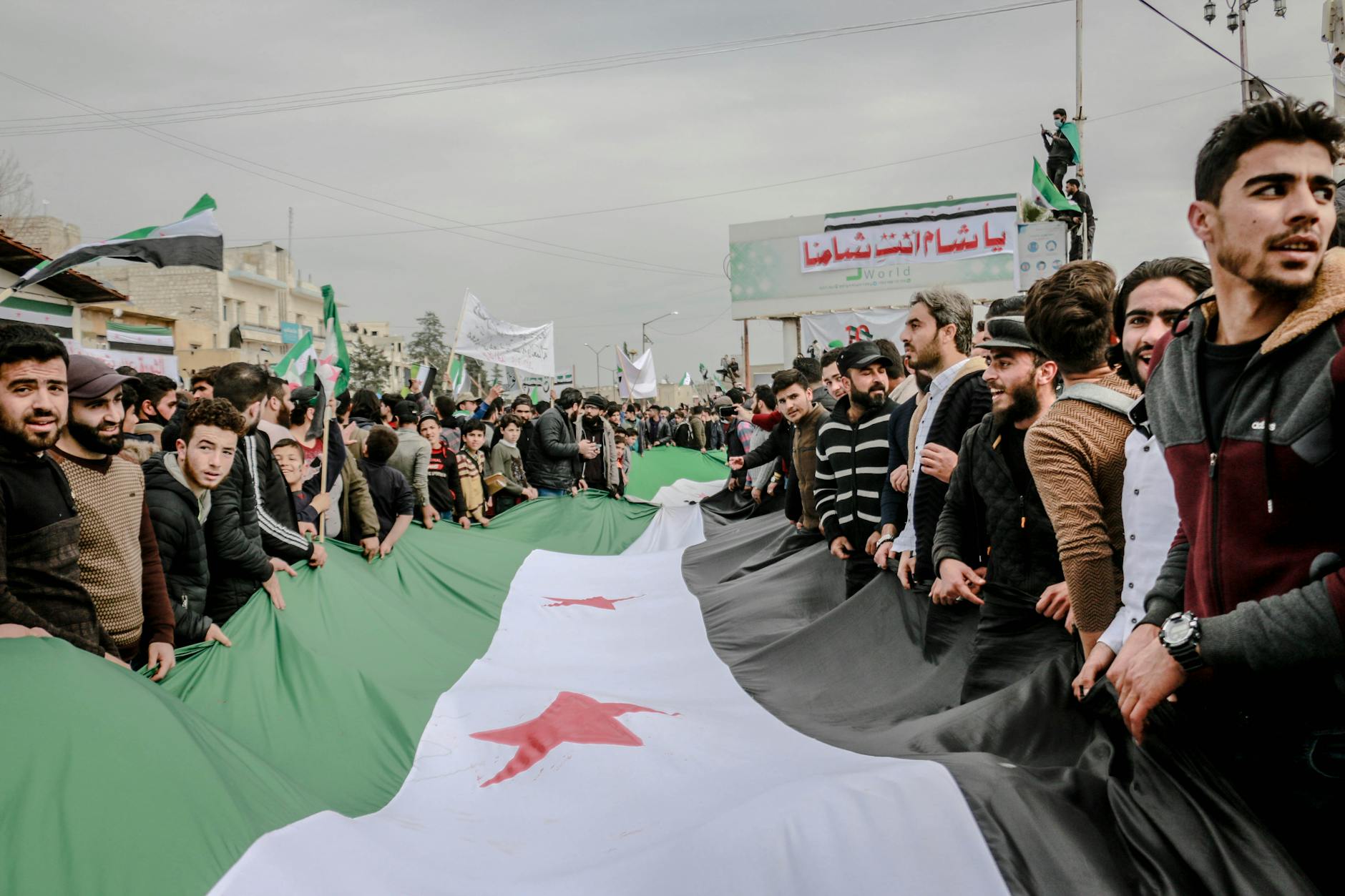
responded by expanding naval presence in the Persian Gulf—a show of force, not a negotiating position. This escalation dynamic, where each side responds with stronger military moves rather than concessions, suggests that the Iran-Israel cycle is likely to continue cycling upward through 2026. Beyond direct conflict, the risks include potential Lebanon civil war, Israel-Lebanon escalation, intensified fighting in Iraq, and Yemen escalation. Each of these is a separate conflict, but together they create a Middle East that is increasingly unstable and volatile. For investors, the key insight is that the absence of diplomatic resolution means conflicts don’t end—they freeze or escalate. The Ukraine war has been “frozen” in terms of territorial control but remains hot militarily and economically. The Middle East conflicts are actively escalating. Both situations mean elevated geopolitical risk premiums will persist and potentially widen as new incidents occur. Unlike crises that resolve through negotiation or decisive military victory, perpetual power-based conflicts create perpetual uncertainty.
How Geopolitical Risk Feeds Market Volatility and Sector Rotation
Geopolitical risk in a power-based environment translates directly into sector rotation and valuation pressure. Defensive sectors (utilities, consumer staples, healthcare) typically outperform during periods of geopolitical uncertainty, while cyclical sectors (industrials, transportation, discretionary) underperform. However, in a power-based geopolitical environment, the normal trade-off between growth and safety breaks down. If supply chains are disrupted, inflation spikes unexpectedly, and central banks tighten policy, defensive sectors don’t actually provide ballast—they get caught in the same selling pressure as cyclicals when real yields rise or corporate profitability declines. Energy and defense contractors benefit from geopolitical tension (higher oil prices, higher defense spending), but this comes at the cost of volatility and regulatory risk. A company making semiconductors for civilian use faces supply chain disruption risk; a company making weapons systems faces geopolitical pressure to reduce deliveries or rethink relationships with allies. Technology companies with supply chains routed through China or Taiwan face tariff and disruption risk.
The tradeoff for investors is between sectors that benefit from conflict (energy, defense) and sectors that suffer from it (tech, industrial, consumer), but overall market volatility increases regardless of sector selection. One limitation of this analysis is that geopolitical crises sometimes create unexpected winners. The Ukraine war has dramatically increased defense spending in Europe, benefiting European defense contractors and creating entirely new supply chains. The Israel-Iran tensions have elevated oil prices, benefiting energy companies and certain commodity traders. These are genuine upside opportunities within a negative geopolitical environment. However, they come with execution risk—a sudden diplomatic breakthrough or de-escalation could reverse these gains quickly. Investors betting on perpetual conflict for sector outperformance are exposed to binary geopolitical tail risks in both directions.
The Collapse of Global Institutions and Rule-Based Order
The UN Security Council dysfunction is a microcosm of why power-based competition is replacing diplomacy. The Global South is excluded from permanent UNSC membership, which means decisions on conflicts affecting those regions are made without input from affected countries. This creates an unequal rule-based system that incentivizes countries to reject the system entirely and pursue power-based solutions instead. If India, Brazil, Nigeria, or Indonesia have no voice in the institution that governs global security, why would they agree to its rules? This institutional breakdown has direct market implications. The “rules-based international order” was supposed to reduce uncertainty by establishing shared frameworks for dispute resolution and commerce. When that order collapses, countries revert to bilateral power dynamics.
A European company navigating trade rules with the U.S., China, and India faces three different sets of expectations and regulatory frameworks, all of which can shift based on geopolitical leverage rather than rule consistency. This increases compliance costs, forces redundancy in supply chains, and creates arbitrage opportunities for companies that can navigate the fragmentation—but at the cost of lower overall market efficiency and higher systemic risk. The warning here is that institutional collapse is gradual and then sudden. The rules-based order has been fraying for years, but 2026 represents a point where multiple conflicts happening simultaneously are making the rules irrelevant. Countries are making security and economic decisions based on power calculations, not institutional frameworks. This accelerates defection from multilateral agreements and accelerates the race toward unilateral advantage-seeking. For long-term investors, this suggests that geopolitical fragmentation and supply chain fragmentation will persist for at least another 5-10 years, even if individual conflicts resolve.

Middle East as the Next Major Flashpoint
Beyond Ukraine and U.S.-China tensions, the Middle East represents the highest-probability zone for major escalation in 2026. The specific risks include potential Lebanon civil war, Israel-Lebanon escalation, intensified Iraq fighting, Yemen escalation, and a possible second round of direct Iran-Israel confrontation. Each of these scenarios would disrupt energy markets, create refugee flows that affect regional stability, and potentially draw in great powers (U.S., Russia, China) as proxy participants. The critical variable is whether the U.S., Israel, and Iran can establish any de-escalation mechanism or whether mutual escalation becomes the default. The October 2025 tariff truce between the U.S.
and China shows that truces are possible but fragile. The Middle East lacks even that framework. If Iran believes it can respond to airstrikes with missile attacks without triggering further escalation, it will. If Israel believes it must respond to Iranian attacks preemptively, it will. Neither side has strong incentive to show restraint in an environment where power, not negotiation, determines outcomes. For energy investors and companies with Middle East exposure, 2026 should be treated as a high-probability year for a significant disruption event.
2026 as a Critical Year for Geopolitical Realignment
The year 2026 represents a critical inflection point because multiple unresolved geopolitical tensions are reaching decision points simultaneously. The U.S.-China October 2025 tariff truce will either hold and evolve toward a negotiated framework, or break down into escalating trade war and technology decoupling. Ukraine could see territorial settlement attempts or continued stalemate with mounting casualties. The Middle East could escalate into a multi-country conflict or establish some form of de-escalation mechanism.
These outcomes will determine the shape of geopolitical competition for the next five years. From an investor perspective, 2026 is a year where geopolitical outcomes matter more than traditional economic variables like interest rates and earnings growth. A major conflict escalation could drive commodity prices, bond yields, and equity volatility to levels that overwhelm corporate earnings improvements. A sudden diplomatic breakthrough on Ukraine and Iran could reduce uncertainty and support a risk-on market rally. The asymmetry of outcomes in 2026 suggests that portfolio positioning should emphasize flexibility and downside protection over the conventional long-bias allocation.
Conclusion
When countries prioritize power over diplomacy, global markets lose the stability that rules provide. Conflicts escalate, supply chains fragment, volatility rises, and uncertainty becomes the default state. The evidence is clear in the Ukraine war (catastrophic casualties despite mediation attempts), the Israel-Iran crisis (escalating cycle of military responses), and the U.S.-China relationship (unresolved tensions beneath a fragile tariff truce). Investors should expect this environment to persist through 2026 and beyond, with elevated geopolitical risk premiums across equities, commodities, and bonds.
The practical implication is that traditional diversification strategies and historical volatility models are insufficient for a power-based geopolitical environment. Scenario-based planning, reduced beta exposure, and tactical flexibility become more valuable than long-term buy-and-hold positioning. Monitor the key decision points in 2026: the U.S.-China tariff framework, Ukraine settlement negotiations, and Middle East escalation risks. These outcomes will determine whether geopolitical risk moderates or intensifies for the remainder of the decade.