
On March 10, 2026, a chain-reaction collision at the intersection of Avenue S and West 11th Street in Brooklyn’s Gravesend section resulted in one death and eleven injuries, demonstrating both the fragility of urban traffic safety and the complexity of emergency response coordination. The incident involved four vehicles—an FDNY fire truck responding to an emergency call, a commercial van, an Access-A-Ride transit vehicle, and a Lexus SUV—and required coordinated hospital transport across multiple facilities in New York City.
For investors monitoring insurance carriers, municipal service providers, and public safety infrastructure companies, this type of incident raises important questions about liability exposure, emergency services efficiency, and the costs associated with maintaining rapid-response capabilities in dense urban environments. This article examines the details of the Brooklyn crash, explores the operational and financial implications of emergency response failures, considers the insurance and liability landscape affected by such collisions, and reviews what this incident reveals about coordination challenges within New York City’s complex transit ecosystem. Understanding these factors provides insight into ongoing investment considerations for healthcare providers, municipal bond issuers, and liability insurance carriers operating in major metropolitan areas.
Table of Contents
- What Caused the Gravesend Multi-Vehicle Collision and Why Was Emergency Response Critical?
- Casualty Profile and Hospital System Impact
- Emergency Services Involvement and Operational Complexity
- Insurance and Liability Implications for Multiple Parties
- Public Safety Infrastructure and Urban Traffic Coordination Challenges
- Access-A-Ride Service Provider Accountability and Specialized Transit Risk
- Systemic Lessons and Future Investment Implications
- Conclusion
What Caused the Gravesend Multi-Vehicle Collision and Why Was Emergency Response Critical?
The crash occurred at approximately 6:45 p.m. when a commercial van traveling north on West 11th Street struck the FDNY fire truck traveling east on Avenue S. The fire truck was responding to an emergency call with lights activated, meaning it was operating under emergency protocols and had the right-of-way. The initial impact between the van and fire truck triggered a chain-reaction collision, with the Lexus SUV and Access-A-Ride van becoming involved in the secondary impacts. While the fire truck was conducting its duty to respond to an emergency—arguably one of the most necessary functions in urban infrastructure—it also illustrates how emergency vehicles themselves become risk factors in congested urban environments.
The intersection is a major traffic corridor in one of Brooklyn’s most densely populated neighborhoods, and the timing at 6:45 p.m. represents peak evening traffic hours when response times are slower and collision risks are elevated. What makes this incident particularly significant from an operational standpoint is that the very act of emergency response created the hazard. The fire truck had lights and sirens active, signaling its presence, yet the commercial van driver either did not see the vehicle or could not stop in time. This paradox—that emergency services create new risks while attempting to mitigate existing ones—is a persistent challenge for municipal planners and insurance underwriters. Cities must weigh the benefits of rapid emergency response against the accidents that occur during these high-speed, traffic-violating transits.

Casualty Profile and Hospital System Impact
The incident resulted in one fatality—Placido D’Andrea, 78 years old, a passenger in the Access-A-Ride van—and injuries distributed across multiple victim populations. The five FDNY firefighters were transported to an unspecified hospital, the commercial van driver went to NYU Langone Hospital, and the Access-A-Ride van driver plus three additional passengers were transported to NYC Health & Hospital South Brooklyn. The distribution of injured parties across different hospital systems reflects both the geographic response to the incident and the varying severity of injuries, though all reported injuries were noted as stable condition. However, the loss of an elderly passenger in a transit van raises questions about safety protocols for vulnerable populations using public transportation services.
Access-A-Ride is a paratransit service specifically designed for individuals with disabilities, meaning the victim population included people already dependent on specialized transportation services. From a healthcare system perspective, the incident created a surge event requiring coordination across at least three separate hospital systems within hours. This type of distributed casualty scenario—multiple patients arriving at different facilities simultaneously—stresses capacity in emergency departments and trauma units, particularly in Brooklyn where several major hospitals operate at high census levels. For healthcare investors and municipal administrators, this incident underscores why surge capacity and cross-facility coordination protocols remain critical budget line items, even in periods of healthcare system pressure.
Emergency Services Involvement and Operational Complexity
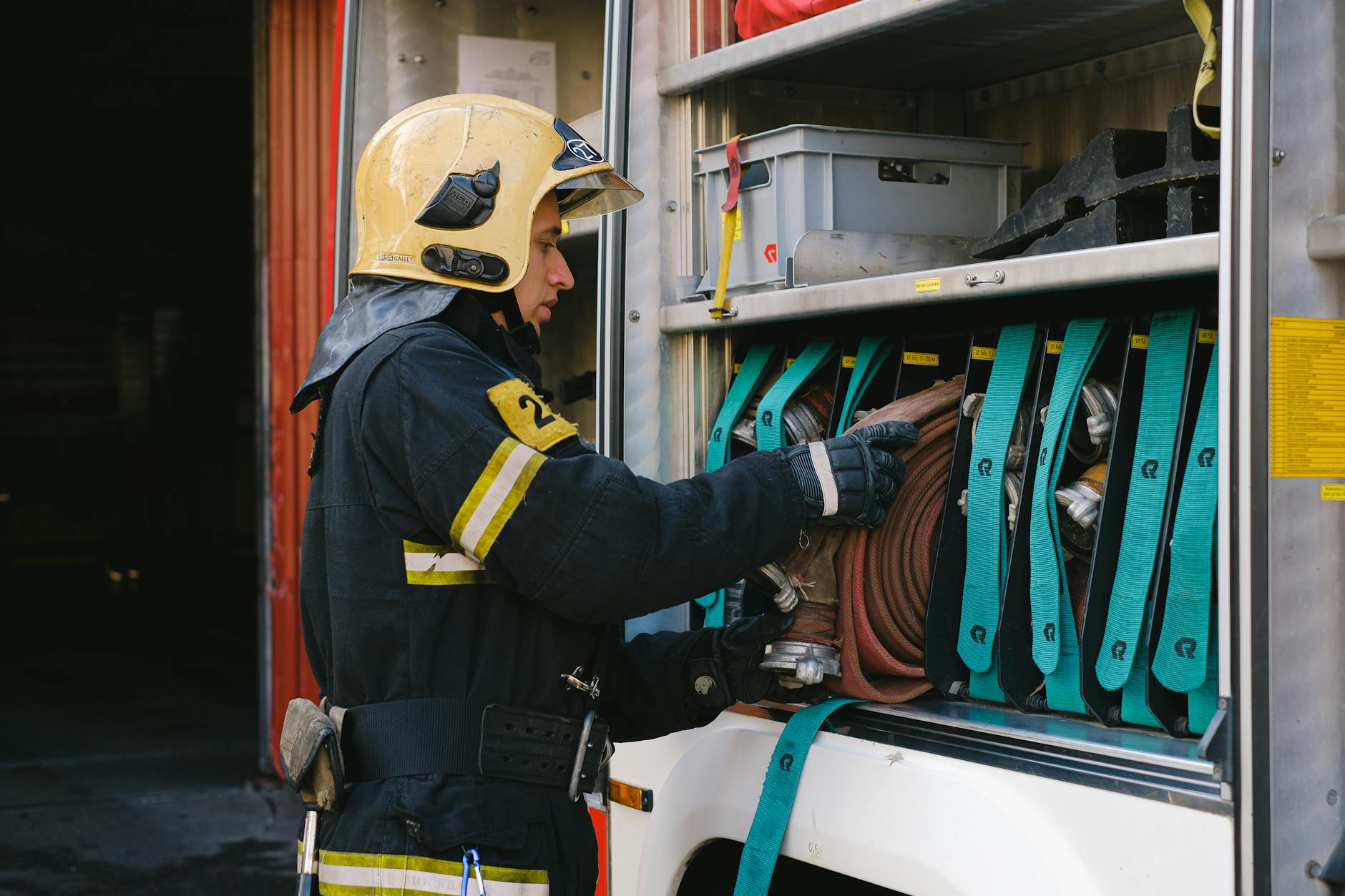
The incident involved five FDNY firefighters who were injured while responding to an emergency call. This represents a significant operational loss for the fire department, as it temporarily removed trained personnel from service while they received medical evaluation and treatment. Fire trucks are among the most visible and essential emergency response assets in any urban environment, and when one becomes involved in a collision, it affects not only that unit but also impacts the broader regional response capability. The FDNY operates under tight resource constraints in a city with millions of residents, and any temporary loss of units creates downstream effects on response times for other emergencies occurring simultaneously.
The Access-A-Ride van, which suffered one fatality, operates under contract with the Metropolitan Transportation Authority (MTA). The service provides transportation for individuals with disabilities who cannot use standard subway or bus services. When such a vehicle is involved in a serious collision, it raises immediate questions about driver training, vehicle maintenance standards, and whether certain routes or intersections present heightened risks for specialized transport vehicles. The MTA, which operates under public agency constraints and contractual obligations, faces both reputational and financial exposure when its service-delivery partners experience fatal incidents.
Insurance and Liability Implications for Multiple Parties
A four-vehicle collision with one fatality and multiple injuries creates complex insurance and liability exposure across several parties: the commercial van’s insurer, the FDNY (self-insured as a municipal agency), the MTA/Access-A-Ride service provider, and potentially the Lexus SUV owner. Insurance companies covering commercial vehicles face heightened exposure when their insureds are involved in high-impact collisions, particularly those with fatalities. The family of Placido D’Andrea may pursue wrongful death claims against multiple defendants, including the commercial van operator, potentially the vehicle maintenance provider, and in some cases the MTA if negligence in service operations can be demonstrated.
One critical limitation in such cases is New York’s comparative negligence doctrine, which means liability is apportioned based on fault percentages rather than assigned entirely to one party. If the commercial van driver can demonstrate that the fire truck’s emergency response operation created an unexpected hazard or that traffic control at the intersection was inadequate, the liability distribution becomes more complex. Additionally, municipal defendants (the FDNY and city) operate under sovereign immunity limitations, meaning claims against them are subject to statutory damage caps and procedural requirements distinct from standard insurance claims. For liability insurers and municipal bond investors, such incidents represent both direct claims costs and the ongoing expense of defending complex litigation that may take years to resolve.
Public Safety Infrastructure and Urban Traffic Coordination Challenges
The incident highlights a fundamental tension in emergency response: the necessity of rapid transit through urban areas versus the increased collision risk this necessity creates. The intersection of Avenue S and West 11th Street in Gravesend is a regular transit corridor, not an unusual or rarely-traveled location. This means the commercial van driver had previous experience with the intersection, yet still failed to observe or yield to the fire truck with active emergency lights. This suggests either that visibility/signaling was inadequate despite emergency equipment, or that traffic volume and driver attention deficits prevented safe avoidance.
One significant warning: emergency vehicle accidents like this one are not rare events but rather a documented recurring problem in emergency services. Studies indicate that emergency vehicle collisions, both those involving the emergency vehicle itself and those caused by emergency vehicle operations, represent a meaningful portion of serious traffic incidents in major cities. However, if cities were to reduce emergency response speeds or limit lights-and-sirens operations, this would increase response times to genuine medical and fire emergencies, potentially costing lives. This creates a no-win scenario for municipal administrators who must accept some level of emergency-response-related collisions as the cost of maintaining rapid emergency services. Insurance carriers and municipal finance specialists monitor these incident rates as indicators of operational effectiveness and emerging liability trends.

Access-A-Ride Service Provider Accountability and Specialized Transit Risk
The involvement of an Access-A-Ride van introduces an additional layer of vulnerability to the incident analysis. Access-A-Ride clients include individuals with cognitive disabilities, visual impairments, mobility challenges, and other conditions that may reduce their ability to brace for impact or exit vehicles after accidents. A 78-year-old passenger in a specialized transit vehicle represents exactly the population these services are designed to protect, yet the service delivery itself—being transported by a van on Brooklyn streets—carried inherent risks that manifested in this incident.
The MTA contracts with multiple providers to operate Access-A-Ride services throughout New York City. These contracted operators must meet specific safety and training standards, vehicle maintenance requirements, and driver qualification thresholds. When a contracted provider is involved in a fatal collision, the MTA faces scrutiny regarding whether sufficient oversight occurred. Did the contractor maintain adequate insurance? Were driver training records current? Was the vehicle properly maintained? These questions affect future contract terms, insurance costs, and service delivery models for the millions of New Yorkers with disabilities who depend on paratransit services.
Systemic Lessons and Future Investment Implications
Incidents like the March 10 Gravesend collision provide data points for city planners, emergency management agencies, and transportation professionals evaluating how to reduce similar events. Some municipalities have implemented dedicated emergency response lanes, traffic signal preemption technology, and intersection redesigns to improve emergency vehicle operations while maintaining traffic safety. These infrastructure upgrades represent capital investments that filter into municipal bond offerings, construction company contracts, and technology vendor relationships.
Looking forward, autonomous vehicle technology and advanced intersection management systems are positioned as potential solutions to reduce these types of collisions. If emergency vehicles were to communicate directly with surrounding vehicles, or if traffic systems could automatically clear paths for emergency response, the intersection-based collision risk might decrease. However, these technological transitions remain years away from widespread implementation, meaning traditional emergency response operations will continue to carry inherent collision risk. For long-term investors in municipal infrastructure, transportation technology, and emergency services equipment providers, the persistent demand for faster, safer emergency response solutions represents an ongoing investment thesis.
Conclusion
The March 10, 2026 multi-vehicle collision in Brooklyn resulted in one death and multiple injuries while highlighting the complex tradeoffs embedded in urban emergency response operations. The incident involved critical services—FDNY firefighters responding to an emergency and MTA paratransit providing service to vulnerable populations—yet created the very hazards those services are intended to mitigate.
Insurance carriers, municipal finance entities, and transportation service providers all face ongoing exposure to similar incidents in densely populated urban environments where emergency response is constant but risks are unavoidable. For investors monitoring these sectors, this incident reinforces that emergency services and public transit represent inherently risky operations where legal liability, insurance costs, and operational complexity will remain significant factors in financial performance. As cities continue to grapple with emergency response efficiency, public safety infrastructure becomes both a necessary investment and a source of persistent liability exposure that directly affects municipal borrowing costs, insurance premiums, and service delivery budgets across the public sector.