
You can stain a deck yourself and achieve a 5-year lifespan, but it requires two critical things: choosing the right stain product and getting the preparation absolutely correct. The most durable deck stains—solid and semi-transparent formulas—typically last between 3 to 5 years on horizontal surfaces when applied properly. A quality product like Sikkels Proluxe Cetol SRD or DEFY Extreme Wood Stain, combined with proper surface preparation, can push durability to the 5-year mark.
However, semi-transparent stains average 2 to 3 years, and the more transparent products last only about one year, so product selection is your first decision point. This article covers everything from choosing the right stain and preparing your deck surface to application techniques, maintenance schedules, and how to avoid the common mistakes that cut stain life short. The difference between a deck that looks worn after two years and one that holds its color through five seasons often comes down to one factor: did you wait 48 hours after power washing before applying stain? That single step affects adhesion more than anything else. Factor in regular maintenance pressure washing every 2 to 3 years, and you’re looking at a genuinely durable deck that won’t become a project every time the weather shifts.
Table of Contents
- Choosing a Stain Product That Actually Lasts Five Years
- How Stain Type and Application Thickness Affect Durability
- The Power Washing and Drying Foundation That Most DIYers Rush
- Application Tools and Techniques That Prevent Common Failures
- Why Stain Fails Prematurely and How to Prevent It
- Maintenance Routines That Extend Stain Life
- Planning for the Long Term and Protecting Your Investment
- Conclusion
Choosing a Stain Product That Actually Lasts Five Years
The stain type you select determines your durability ceiling from day one. Solid stains provide the best UV protection and last 3 to 5 years; semi-transparent stains offer moderate protection and typically last 2 to 3 years; transparent stains provide minimal UV coverage and fail in about one year. If your goal is five years, you need to stick with solid or high-quality semi-solid options. Modern formulations have improved significantly over the past decade thanks to nanoparticles of zinc oxide and advanced trans-oxide technology that resist ultraviolet damage far better than older products. This matters because UV exposure is the primary reason deck stains fail—the sun breaks down the protective film and the wood underneath starts graying and checking.
Three products consistently deliver the durability you’re chasing. Sikkens Proluxe Cetol SRD provides 5 to 7 years of protection and is particularly strong against UV degradation. DEFY Extreme Wood Stain is rated for up to five years before reapplication, and TWP 100 Series and Restore-A-Deck products have earned recommendations from professional deck restoration experts. The trade-off is price—these products cost more per gallon than budget stains from big box stores. However, if you’re doing the labor yourself, spending an extra $40 on premium stain is far cheaper than restoring a failed deck in three years.
How Stain Type and Application Thickness Affect Durability
Understanding the difference between stain types helps you make an informed choice. Solid stains sit on top of the wood and create a painted-like finish—this barrier blocks UV rays most effectively, which is why they last longer. Semi-transparent stains penetrate deeper into the wood grain and show wood texture, but they offer less UV protection. The durability trade-off is real: solid stains last longer, but semi-transparent stains look better if wood texture matters to you. If you choose semi-transparent, understand that you’re likely looking at 2 to 3 years before the deck starts fading and shows wear.
Application thickness also matters, though this is where many DIYers go wrong. A single thin coat will fail faster than two carefully applied thin coats. The goal is even coverage, not thickness—multiple thin layers adhere better and wear more uniformly than one thick coat that might peel or crack as the wood expands and contracts with temperature. The key is applying thin, even coats over 2 to 3 board sections at a time, giving each section your full attention rather than rushing across the entire deck. This controlled pace prevents lap marks and ensures consistent stain depth across all surfaces.
The Power Washing and Drying Foundation That Most DIYers Rush
Surface preparation determines whether your stain adheres properly or peels off in sheets within a year. Power washing removes dirt, mildew, algae, and old stain residue that blocks new stain from bonding to the wood. Sand rough spots and fill any cracks with wood filler, as these damaged areas soak up stain unevenly and accelerate failure. After cleaning, most DIYers make a critical mistake: they start staining while the wood is still damp. The wood needs at least 48 hours of dry weather after power washing before staining, and this timing is non-negotiable if you want adhesion to last five years.
Staining damp wood locks moisture into the wood grain, causing the stain to bubble and peel as that trapped water eventually evaporates. Work in optimal conditions whenever possible—ideally between 50°F and 90°F with at least two days of dry weather ahead. Temperature and humidity affect both drying time and stain behavior. If you stain when temperatures are dropping and humidity is rising, your drying time stretches to 48 hours or longer, and the stain film doesn’t cure properly. Plan your project for late spring or early fall when weather is relatively stable and predictable.
Application Tools and Techniques That Prevent Common Failures
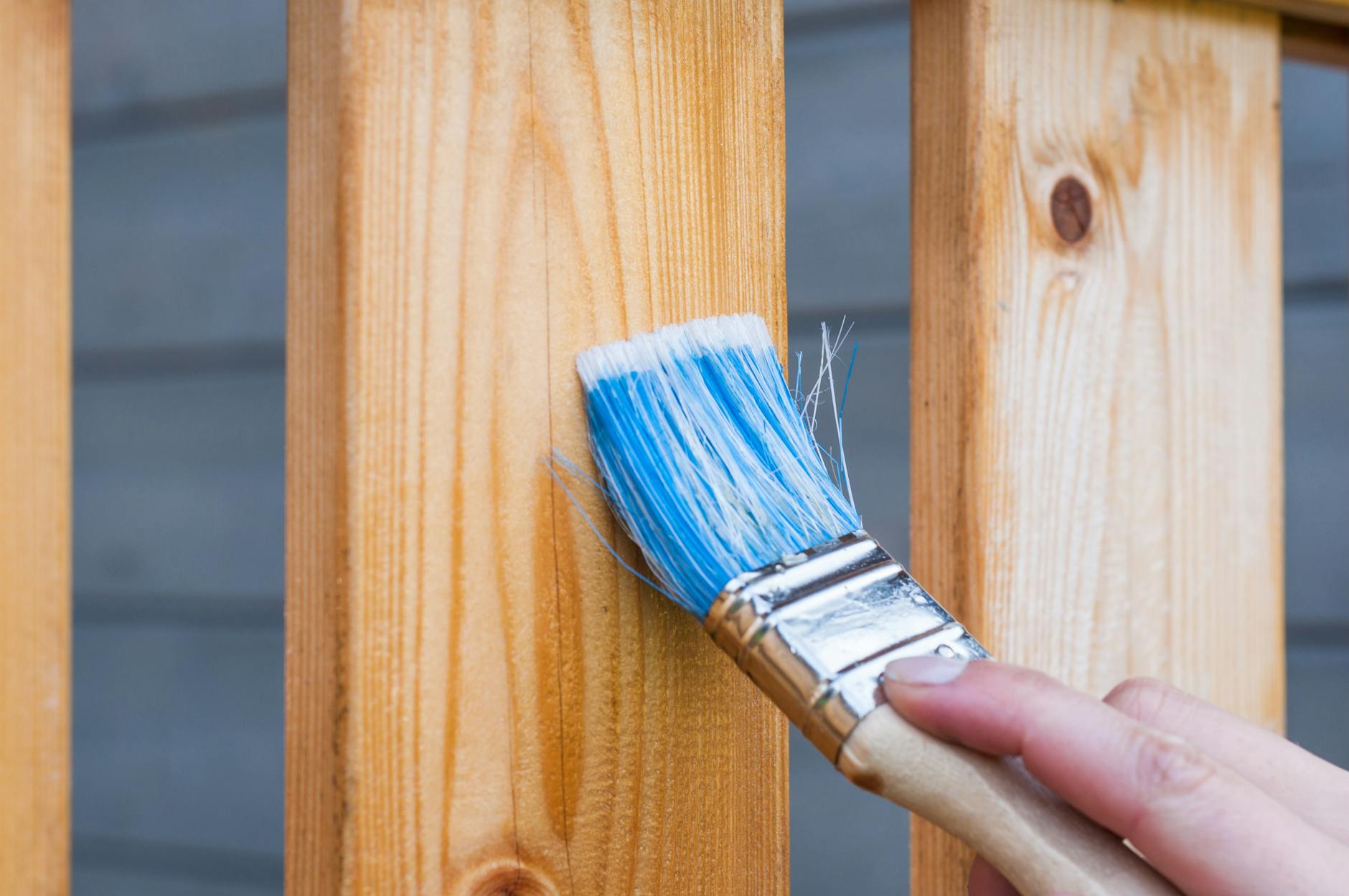
Your application approach affects how evenly the stain adheres and how long it lasts. Bristle brushes or foam brushes work well for edges and railings, but for large surface areas, rollers and stain pads are faster and create more even coverage. Many professionals prefer stain applicators like the Restore-A-Deck pad system because they apply consistent pressure and avoid the lap marks that brushes sometimes leave. Whatever tool you choose, the technique matters more than the tool itself: apply thin, even coats over 2 to 3 board sections at a time, maintaining a wet edge so you don’t have visible seams between sections.
One area where DIYers frequently cut corners is vertical surfaces. Railings and siding dry more slowly and hold stain longer because they’re not subject to the full force of overhead sun and rain. You’ll hear that semi-transparent stains last only 2 to 3 years on horizontal surfaces, but they can last 4 to 6 years on vertical railings and siding. This variation is crucial if you’re mixing stain types on the same deck—understand what you’re working with and set realistic expectations for each surface.
Why Stain Fails Prematurely and How to Prevent It
Stain failure usually follows one of three patterns. First, peeling occurs when stain doesn’t adhere because the prep work was incomplete or the wood was too wet. Second, fading and graying happen when UV damage breaks down the stain film, typically starting at board corners and edges that get extra sun exposure. Third, checking and cracking develop when the wood cycles through freeze-thaw or wet-dry periods that stress the stain film beyond its flexibility. These failures are mostly preventable through proper preparation and product choice, but once peeling starts, you can’t just apply a fresh coat over the failed stain—you need to strip or sand the old stain off first, which is why prevention is vastly cheaper than repair.
This is also where the maintenance schedule becomes crucial. Reapply stain every 2 to 3 years for best results, and do it before the stain completely fails. If you wait until the stain is peeling and the wood is graying, you’re looking at stripping work. But if you reapply while the previous coat still has some integrity, you can often use a light sand and power wash followed by a fresh coat. It’s the difference between a $50 to $100 maintenance project and a $500+ restoration project.

Maintenance Routines That Extend Stain Life
Beyond reapplication timing, regular maintenance directly affects how long your stain lasts. Pressure washing your deck every 2 to 3 years removes mildew, mold, and debris that trap moisture and accelerate stain breakdown. Use a low-pressure nozzle—1500 psi or less—to avoid driving water into the wood grain or stripping stain prematurely. If you notice wear spots or sun damage appearing in high-traffic areas, you can sometimes address these localized failures with a spot recoat rather than refinishing the entire deck.
This targeted approach extends the time between full refinishes. Don’t forget about the deck’s underside and substructure. Proper drainage prevents water from pooling under the deck, and good air circulation underneath helps the deck dry faster after rain or snow melt. Some deck failures that look like stain problems are actually moisture problems—water wicking up from underneath compromises wood integrity and makes any topcoat fail faster. If your deck is holding water pooling or has poor drainage, fixing that infrastructure extends stain life more than choosing a premium product ever could.
Planning for the Long Term and Protecting Your Investment
A 5-year stain lifespan isn’t a life-and-forget scenario; it’s a maintenance rhythm that protects your outdoor investment. The modern stains available now—with their improved UV technology—are genuinely better than the products from a decade ago, which means you have legitimate options to reach that 5-year target. However, achieving it requires you to view deck maintenance as an ongoing responsibility, similar to sealing a driveway or painting exterior trim.
As you plan future staining, keep detailed notes on what product you used, when you applied it, and how it performed in your specific climate. Some regions with intense sun exposure or heavy moisture will see faster degradation regardless of product quality. Building a maintenance history helps you predict when to schedule your next refinish and which products work best in your environment. The investment in understanding your deck now pays dividends in reduced emergency repairs and consistent curb appeal over the years ahead.
Conclusion
You absolutely can stain a deck yourself and achieve a 5-year lifespan, provided you invest in a quality solid or semi-solid stain product and commit to proper preparation. The 48-hour drying window after power washing, careful surface sanding, and consistent application technique are non-negotiable. Choose a product like Sikkens Proluxe Cetol SRD or DEFY Extreme Wood Stain that’s proven to last, and you’re looking at 5 to 7 years of protection instead of 2 to 3 years with budget options.
The other half of the equation is maintenance. Schedule pressure washing every 2 to 3 years, plan for reapplication before complete failure, and address spot problems as they emerge. This rhythm isn’t burdensome—it’s the difference between a deck that looks polished and one that becomes an eyesore by year three. With proper preparation, product selection, and maintenance discipline, your DIY deck staining project can genuinely deliver a durable, attractive outdoor space for five years or longer.