
Global markets respond to leadership uncertainty with heightened volatility, sharp selloffs, and pronounced valuation compression. When investors face doubt about what policies a new leader will implement, or uncertainty about how current leadership will navigate crises, the market pulls back defensively—selling first and asking questions later. This reaction is documented and measurable: markets show elevated volatility during pre-election months, sharp increases during election weeks, and historical data shows the S&P 500 suffers a median decline of 19% during midterm election years. In 2026, the U.S.
faces a midterm election year, Fed leadership transition, and multiple geopolitical flashpoints—all sources of leadership uncertainty that could trigger significant market stress. This uncertainty isn’t abstract economic theory. It affects real portfolios in measurable ways. When 43% of U.S. CEOs cite uncertainty as a top threat to business, when executives increasingly treat policy and geopolitical risk as permanent conditions rather than temporary shocks, and when global leadership changes create the most pronounced market impacts, individual investors need to understand how these dynamics work and how to position accordingly.
Table of Contents
- Why Do Markets React So Sharply to Leadership Uncertainty?
- Election Years and the Market’s Volatility Pattern
- The Specific Policy Uncertainties Feeding Market Anxiety in 2026
- The Valuation Vulnerability During Uncertain Leadership Periods
- How Executive Sentiment Translates Into Corporate Action and Market Moves
- Navigating the Leadership Uncertainty Cycle as an Individual Investor
- What the 2026 Leadership Uncertainty Cycle Means for Markets and Investors Going Forward
- Conclusion
Why Do Markets React So Sharply to Leadership Uncertainty?
Markets dislike ambiguity about future policy more than they dislike known bad news. When a new leader takes office or an incumbent faces an uncertain political environment, the market doesn’t know whether trade policies will shift, interest rates will rise or fall, regulatory frameworks will change, or geopolitical alliances will realign. This unknown creates a risk premium: investors demand higher returns to compensate for the uncertainty, which means lower valuations today. The S&P 500 saw a median peak-to-trough decline of 19% in historical midterm election years—and there’s currently a 50-50 probability the index declines at least 19% in 2026. The CEO sentiment data reveals how this trickles through the real economy. According to the Conference Board, 43% of U.S. CEOs rank uncertainty as a top threat to business in 2026, while 35% cite the risk of a downturn or recession as a top concern.
But here’s the critical detail: 22% of executives are outright unsure about future recession risk—up from just 16% at the start of 2025. This growing uncertainty among decision-makers compounds market anxiety. When executives themselves are unclear about the economic path forward, they slow hiring, delay capital expenditures, and reduce guidance. The market sees this hesitation and sells accordingly. What makes this period particularly acute is the confluence of uncertainty sources. The Federal Reserve is in a leadership transition, the Supreme Court is deciding cases on trade policy, and the 2026 midterm elections will reshape congressional power. Each of these alone would create volatility. Together, they create a sustained environment where investors must price in multiple possible futures simultaneously.
Election Years and the Market’s Volatility Pattern
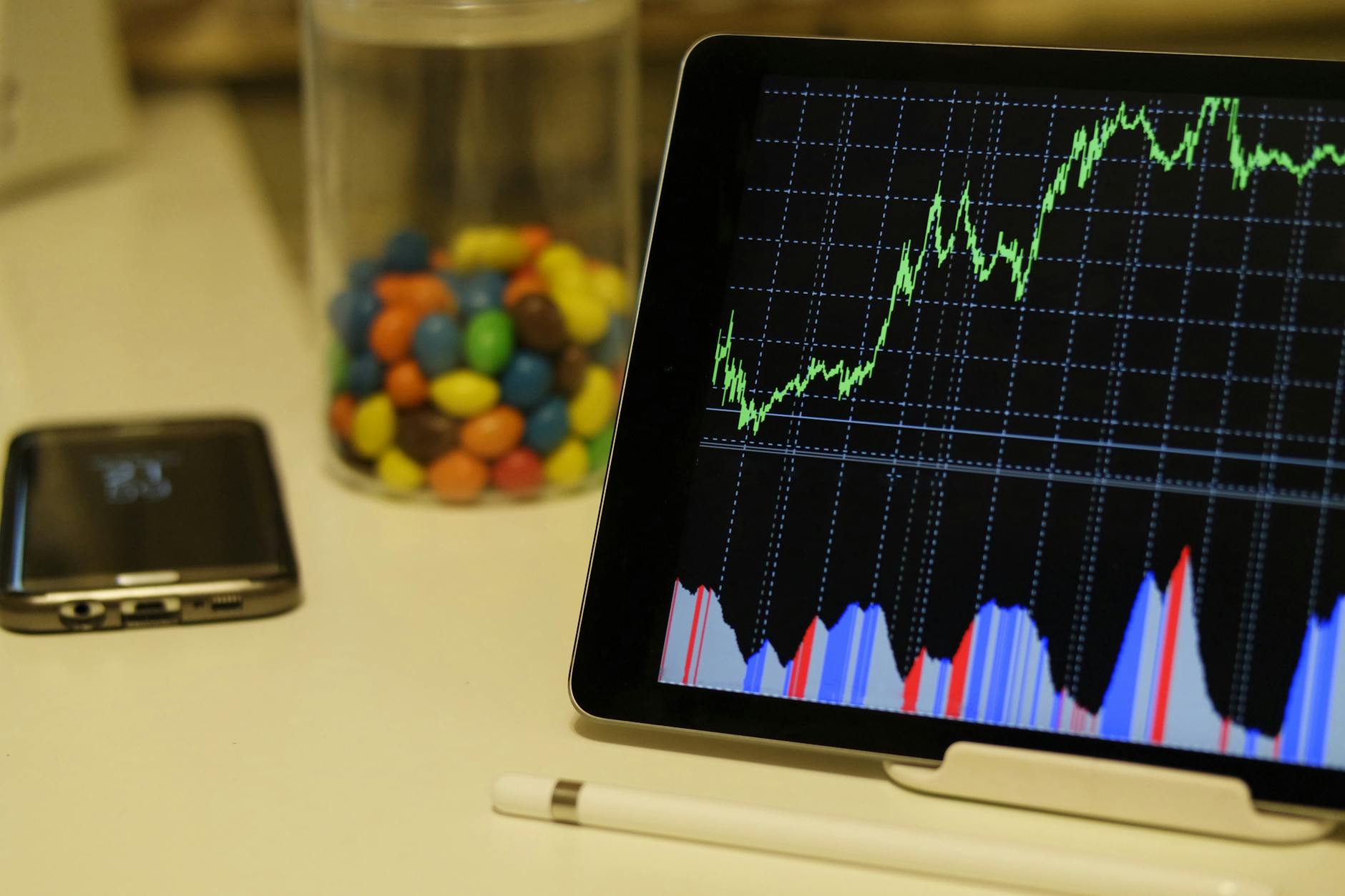
Historical patterns show markets behave in remarkably consistent ways during election years. Markets exhibit elevated volatility in pre-election months as investors grapple with policy unknowns. Then, counterintuitively, volatility dampens in the weeks immediately before elections—a “capitulation period” where investors stop fighting the outcome and accept whatever result is coming. Once the election occurs, volatility spikes sharply upward as markets rapidly process the implications of the chosen leadership. The 2024 election provides a concrete example. After Trump’s November 2024 victory, the S&P 500 experienced a 3-7% rally as markets initially bid up cyclical and lower-tax sectors. However, the durability of that rally tested the assumption quickly.
By late June 2025, 73% of S&P 500 stocks were trading above their 200-day moving averages—a sign of broad-based strength, but still representing an incomplete recovery of the initial post-election rally momentum. This suggests markets bounced on the outcome itself but struggled to build sustained conviction about longer-term policy implications. A critical limitation exists here: post-election rallies don’t always persist. The initial bounce may be tactical rather than fundamental. If the elected leader’s actual policies diverge from market expectations—particularly on trade, regulation, or fiscal policy—the market can whipsaw violently. This is why 2026 presents a double-edged risk: if the midterm results mirror baseline expectations, volatility may normalize. But if results surprise, the selloff could exceed historical 19% median declines. Investors betting on stability should remain vigilant about surprise election outcomes that could reset the policy baseline unexpectedly.
The Specific Policy Uncertainties Feeding Market Anxiety in 2026
Three major policy decisions are scheduled or likely to occur in 2026, creating concrete sources of leadership uncertainty. The Federal Reserve is managing a leadership transition even as it weighs interest rate decisions. The Supreme Court is considering cases on trade policy authority—potentially reshaping the government’s ability to impose tariffs. The 2026 midterm elections will determine whether the current administration can pass legislation or faces a divided Congress. Each creates genuine uncertainty about forward policy direction. Beyond these scheduled events, executives globally cite specific geopolitical concerns tied to leadership and policy. The Conference Board reports that 47% of executives globally rank cyberattacks as the #1 geopolitical threat for 2026, but close behind are ongoing concerns about U.S.
trade policy uncertainty, the Russia-Ukraine war, AI-driven market corrections, Venezuela intervention, Iran civil unrest, and NATO’s posture in Greenland. Each of these is ultimately a leadership question—how will various governments respond to these crises? What coalitions will form? Will containment succeed or fail? Markets hate being unable to answer these questions with confidence. The underlying condition amplifying these concerns is that political polarization in the U.S. has reached levels not seen in at least 50 years. This means that no matter what policy outcome emerges from leadership transitions, roughly half the country—and many investors—will view it as hostile to their interests. This polarization makes markets more reactive to each new leadership statement or policy shift, because the baseline political environment is already fractious. A policy shift that once would have been absorbed gradually now creates sharper market dislocations because it’s perceived as a fundamental rejection of the previous regime.

The Valuation Vulnerability During Uncertain Leadership Periods
Markets don’t just react to leadership uncertainty with volatility—they also compress valuations. This is particularly dangerous when valuations are already elevated. Currently, the S&P 500 valuations are rich, with the 10 largest stocks accounting for approximately 40% of total index value. This concentration means earnings disappointments or sentiment shifts among mega-cap stocks cascade through the entire index. When leadership uncertainty increases, investors rotate away from speculative and growth-oriented positions and toward defensive assets.
This rotation hits concentrated indices harder than diversified ones. A market where 40% of the index is held in 10 names experiences sharper downside when uncertainty spikes, because there’s nowhere to hide within the index itself. An investor holding a broad S&P 500 index fund faces the full brunt of this concentration risk—they can’t easily escape it through diversification within the U.S. equity market. The tradeoff here is important: concentrated indices like the S&P 500 have delivered outsized returns during confidence-driven bull markets, but they underperform dramatically during leadership-uncertainty periods when rotation into defensive positions accelerates. An investor seeking to hedge leadership-driven volatility should consider broadening beyond the mega-cap concentration—either through international equities, mid-cap stocks with less concentration, or quality dividend payers that provide some valuation cushion if sentiment deteriorates.
How Executive Sentiment Translates Into Corporate Action and Market Moves
Global executives are increasingly treating policy, geopolitical, and economic uncertainty as permanent baseline features rather than transitory shocks. This shift in mindset has profound implications for capital allocation and hiring decisions. According to the BNY Institute’s Q1 Global Investment Council Report, leadership changes at national and state levels create the most pronounced market impact due to uncertainty about government policy change. However, when executives begin assuming uncertainty is permanent rather than temporary, they adjust their behavior accordingly. This manifests in reduced capital expenditure guidance, slower hiring announcements, and lower forward revenue guidance. During the Trump transition period in 2024-2025, many mid-size corporations explicitly cited policy uncertainty in their guidance reductions.
They didn’t necessarily expect disaster—they simply couldn’t model confidently enough to commit capital. This caution is rational but creates a self-reinforcing cycle: reduced corporate investment slows economic growth, which justifies market pessimism about earnings, which drives valuations lower and volatility higher. A warning for investors: this environment rewards patience and dry powder. Trying to trade every headline about leadership changes or policy debates creates whipsaw losses. Instead, investors benefit from maintaining cash reserves to deploy when uncertainty-driven selloffs create valuation opportunities. The executives managing major corporations are doing this themselves—the Conference Board data shows many are hoarding cash and reducing commitments precisely because they expect uncertainty to persist. Following their lead by maintaining flexibility and waiting for clearer policy direction is often wiser than trying to front-run resolution of leadership uncertainties.

Navigating the Leadership Uncertainty Cycle as an Individual Investor
The first step is accepting that leadership uncertainty is now a permanent feature of markets, not an anomaly. During uncertain leadership periods, it’s normal for volatility to spike, valuations to compress, and sentiment to deteriorate. This is not a sign that you’ve invested incorrectly—it’s a sign that you’re investing during a period of genuine uncertainty about government policy and international relations. Given this reality, investors should construct portfolios that can tolerate leadership-driven volatility without forcing emotional decisions.
This might mean holding a larger percentage of bonds than traditional models suggest, or overweighting dividend-paying stocks that provide income cushions during selloffs. It means avoiding leverage during periods of peak political uncertainty, because margin calls during volatile swings can force distressed selling. It also means diversifying beyond concentrated indices—if 40% of the S&P 500 is held in 10 stocks, those 10 stocks will bear the brunt of rotation-driven selling during leadership transitions. A portfolio split between U.S. large-cap, mid-cap, small-cap, international developed markets, and emerging markets will experience less violent drawdowns during leadership-driven volatility, even if the overall index decline is similar.
What the 2026 Leadership Uncertainty Cycle Means for Markets and Investors Going Forward
The convergence of multiple leadership uncertainties in 2026—Fed transition, Supreme Court tariff decisions, midterm elections, and sustained geopolitical tensions—suggests elevated volatility is likely to persist through the year. The 50-50 probability of a 19% peak-to-trough S&P 500 decline is not a doomsday prediction; it’s a recognition that midterm election years historically deliver sharp corrections. This could occur gradually or all at once, depending on when uncertainty crystallizes around election results.
Looking beyond 2026, the baseline condition appears to be that leadership uncertainty will remain elevated. Political polarization isn’t reversing, geopolitical tensions are structural rather than cyclical, and technological disruption (particularly AI) is creating legitimate uncertainty about which industries and companies will thrive. Investors who adapt their mindset to assume permanent uncertainty—while maintaining discipline about valuation and position sizing—are likely to navigate this environment more successfully than those hoping for a return to low-volatility, confidence-driven markets.
Conclusion
Global markets react to leadership uncertainty with heightened volatility, valuation compression, and sharp rotations between risk-on and risk-off positioning. When 43% of CEOs cite uncertainty as a top business threat, when 22% of executives are unsure about recession risk, and when markets historically decline 19% in midterm election years, the risk isn’t theoretical—it’s built into market structure. The specific uncertainties of 2026—Fed leadership, trade policy decisions, midterm elections, and geopolitical tensions—create a plausible scenario for significant market stress.
Individual investors can’t eliminate leadership uncertainty, but they can structure portfolios and mindsets to tolerate it. This means accepting that volatility during leadership transitions is normal, holding sufficient cash reserves to deploy during selloffs, diversifying beyond concentrated indices, and avoiding leverage that could force distressed selling. The executives managing major corporations are already doing this—treating policy uncertainty as permanent and adjusting capital allocation accordingly. Following their prudent example of flexibility and patience, rather than trying to predict leadership outcomes, is likely to produce better long-term results.