
For Tesla to reach a $10 trillion valuation, the company would need to fundamentally transform from an automaker into a robotics and autonomous transportation conglomerate. Based on current analyst models, the revenue mix at that scale would look roughly like this: robotaxis contributing approximately 60% of enterprise value, humanoid robots (Optimus) potentially accounting for 80% of future value according to Elon Musk’s projections, and electric vehicles shrinking to just 26% of total revenue. The energy storage business, currently Tesla’s fastest-growing segment with 31.4% profit margins, would likely represent around 10% of revenue but contribute disproportionately to profits. To put this transformation in perspective, Tesla currently sits at a $1.615 trillion market cap””the world’s ninth most valuable company.
Reaching $10 trillion would require more than a six-fold increase, and at a price-to-earnings ratio of 30, that implies net income of approximately $50 billion annually. Tesla currently earns around $5 billion. This isn’t about selling more Model 3s. The math only works if Tesla successfully launches entirely new business lines that dwarf the automotive segment that built the company. This article examines each revenue stream required for a $10 trillion Tesla, the realistic timelines and obstacles for each, and what investors should watch as indicators of progress or failure.
Table of Contents
- How Does Tesla’s Current Revenue Mix Compare to the Ten Trillion Target?
- What Role Would Robotaxis Play in Tesla’s Ten Trillion Valuation?
- Can Optimus Humanoid Robots Justify Trillions in Market Value?
- Why Energy Storage May Be Tesla’s Most Reliable Path to Higher Margins
- What Does Tesla Need to Earn to Support a Ten Trillion Valuation?
- What Risks Could Prevent Tesla From Reaching Ten Trillion?
- How Is Tesla Investing to Enable the Ten Trillion Scenario?
- Where Should Investors Focus When Evaluating Tesla’s Path?
- Conclusion
How Does Tesla’s Current Revenue Mix Compare to the Ten Trillion Target?
Today’s tesla bears little resemblance to the company that would need to exist at $10 trillion. The current revenue breakdown stands at approximately 72% automotive, 12.4% services and FSD subscriptions, and 12.2% energy storage. More troubling for the growth narrative: 2025 marked the first year Tesla’s total revenue declined on record, with automotive revenue falling 10% as competition from BYD, Volkswagen, and BMW intensified. The contrast with Ark Invest’s model for an $8-9 trillion Tesla by 2030 is stark.
In Cathie Wood’s framework, electric vehicles shrink to 26% of revenue while robotaxis dominate at roughly 90% of enterprise value. Energy storage holds steady at about 10%. The current Full Self-Driving software, which Musk has long positioned as a future profit engine, accounts for less than 2% of revenue today despite being available for years. Only 12% of Tesla owners currently pay for FSD. This gap between present and projected represents either an extraordinary opportunity or a valuation disconnected from operational reality””depending on your view of Tesla’s execution capabilities over the next five to ten years.
What Role Would Robotaxis Play in Tesla’s Ten Trillion Valuation?
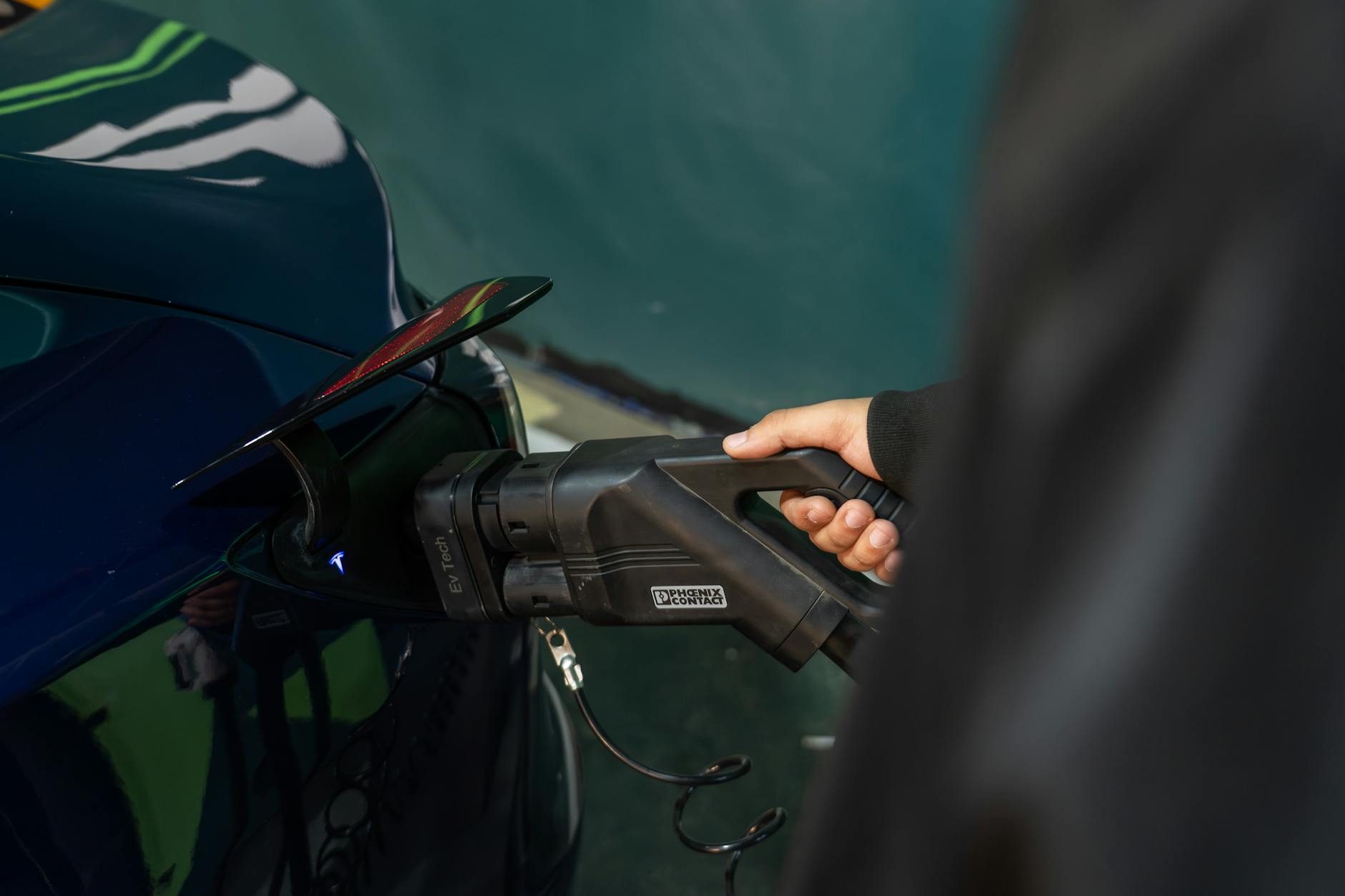
Cathie Wood describes autonomous taxis as an “$8-10 trillion global revenue opportunity,” and her firm’s models show Tesla’s robotaxi business making up 60% of expected value and over half of EBITDA by 2026. This is the linchpin of every bullish Tesla thesis. Without robotaxis succeeding at scale, the math for $10 trillion simply doesn’t work. The Cybercab represents Tesla’s dedicated robotaxi vehicle, with production beginning in April 2026. Tesla plans to scale from 150 units to 1,000 units within 2026″”numbers that sound modest until you consider that no company has successfully deployed fully autonomous vehicles at commercial scale.
Waymo operates a limited robotaxi service, but Tesla’s approach differs fundamentally: camera-only systems trained on billions of miles of real-world data versus lidar-equipped vehicles limited to geofenced areas. However, regulatory approval remains the critical variable that no amount of capital can guarantee. Tesla needs authorization to operate driverless vehicles in multiple jurisdictions, and the regulatory timeline has consistently slipped. If robotaxi deployment gets delayed by even two to three years, the entire valuation framework built around near-term autonomy revenue collapses. Investors should watch regulatory developments in California, Texas, and Arizona as leading indicators.
Can Optimus Humanoid Robots Justify Trillions in Market Value?
Elon Musk has made his most aggressive claim around Optimus, suggesting the humanoid robot could make Tesla a $25 trillion company and represent 80% of the firm’s future value. The addressable market he cites””$10-20 trillion in global manufacturing and logistics labor””is genuinely massive. If Optimus can perform dangerous, repetitive, or undesirable work at lower total cost than human labor, demand would be essentially unlimited. Tesla’s production targets show accelerating ambition: 5,000 factory units by end of 2025, scaling to 100,000 in 2026, with a goal of one million units annually by decade’s end. The $20 billion 2026 capital expenditure budget explicitly includes an Optimus factory.
This represents more than double 2025’s capex and signals Tesla is betting heavily on robotics. The limitation here is that humanoid robots represent a technology category where Tesla has no proven track record. Building cars and building general-purpose robots that can navigate unstructured environments, manipulate objects with human-like dexterity, and operate safely alongside workers are fundamentally different engineering challenges. Boston Dynamics has worked on bipedal robots for decades without achieving commercial-scale deployment. Tesla may succeed where others haven’t, but anyone building a $10 trillion valuation on Optimus should acknowledge this is a bet on unproven technology.
Why Energy Storage May Be Tesla’s Most Reliable Path to Higher Margins
While robotaxis and Optimus dominate headlines, Tesla’s energy storage business offers something rarer: proven execution and superior economics today. Energy deployments hit 43.5 GWh in the most recent period, up 84% year-over-year, with annual capacity reaching 133 GWh by 2026. The segment is on track to contribute nearly 25% of total company profits. The margin story tells you why this matters.
Energy storage generates 31.4% profit margins compared to 16.1% for automotive. Every dollar of revenue from Megapack deployments flows to the bottom line almost twice as efficiently as vehicle sales. This doesn’t mean energy storage alone can drive a $10 trillion valuation””the total addressable market isn’t large enough””but it provides ballast to the financial model while speculative bets play out. For comparison, consider that Tesla’s automotive margins have compressed under competitive pressure while energy storage margins have expanded. If Tesla’s core car business continues facing headwinds from Chinese competitors with lower cost structures, energy storage becomes increasingly important as a profit engine that funds AI compute infrastructure and robotics development.
What Does Tesla Need to Earn to Support a Ten Trillion Valuation?
The arithmetic is straightforward even if the execution is not. At a price-to-earnings ratio of 30″”roughly where Tesla trades historically””a $10 trillion market cap requires $333 billion in net income. That’s clearly unrealistic in any near-term scenario. More conservatively, if markets assign a P/E of 50 to a high-growth Tesla that has proven its autonomy thesis, the company would still need approximately $200 billion in net income. At a P/E of 100, which assumes extraordinary growth expectations, Tesla needs $100 billion annually. Current net income sits around $5 billion.
Dan Ives at Wedbush, one of Wall Street’s more bullish Tesla analysts, forecasts market cap reaching $2-3 trillion in optimistic scenarios””not $10 trillion. Consensus estimates project 15% revenue growth to $108.9 billion in 2026 with earnings per share of $2.25. These numbers represent solid growth for a company Tesla’s size but fall far short of $10 trillion mathematics. The tradeoff investors face is this: buying Tesla at current valuations means paying for robotaxi and Optimus success that hasn’t materialized yet. If those bets pay off, the upside is substantial. If they don’t, you’ve paid a premium for an automotive company losing market share to competitors with lower production costs.
What Risks Could Prevent Tesla From Reaching Ten Trillion?
Competition presents the most tangible near-term risk. BYD has surpassed Tesla in total vehicle sales and operates with structural cost advantages from vertical integration in China. Tesla’s 2025 automotive revenue decline of 10% wasn’t a one-time event””it reflects competitive dynamics that may persist. If the core automotive business continues eroding faster than new revenue streams ramp, Tesla faces a difficult transition period. Regulatory and technical risks around autonomy could delay robotaxi revenue indefinitely.
Full Self-Driving remains in supervised beta after years of development, and Tesla has faced scrutiny over safety claims. A serious accident involving Tesla’s autonomous technology could set back regulatory approval timelines by years and impose liability costs that hurt margins. Execution risk on Optimus is severe. Tesla has never manufactured humanoid robots at scale, and the jump from prototype demonstrations to millions of reliable commercial units involves solving problems that don’t exist in automotive manufacturing. Supply chain constraints on advanced actuators, sensors, and AI chips could bottleneck production even if the core technology works.
How Is Tesla Investing to Enable the Ten Trillion Scenario?
Tesla’s $20 billion 2026 capex budget””more than double 2025 spending””reveals where management sees the path forward. The allocation spans AI compute infrastructure for training autonomous systems, driverless Cybercab development, the Semi electric truck, Optimus factory construction, and battery storage refinery capacity.
This spending level signals that the Tesla of yesterday is gone, as CNBC characterized it. The company is explicitly prioritizing AI and robotics over automotive expansion. Whether this capital deployment generates returns commensurate with the stock’s valuation remains the central question for the next three to five years.
Where Should Investors Focus When Evaluating Tesla’s Path?
Watch three metrics above all else. First, robotaxi regulatory approvals and deployment numbers””not promises, actual licensed commercial operations in specific cities. Second, Optimus units deployed in Tesla’s own factories performing real work, which proves the technology before commercial sales begin. Third, energy storage deployment growth and margin stability, which indicates whether Tesla can maintain its one profitable growth engine while building speculative businesses.
The $10 trillion thesis requires all three to succeed. Automotive alone, even with modest growth, doesn’t get there. FSD adoption at 12% penetration isn’t moving the needle. Tesla needs new revenue streams that don’t exist at scale today to justify a six-fold increase from current valuation.
Conclusion
Tesla reaching $10 trillion requires a complete reinvention from automaker to robotics and autonomous transportation company. The revenue mix would need to shift dramatically: robotaxis contributing the majority of enterprise value, Optimus potentially representing 80% of future worth, automotive shrinking to roughly a quarter of revenue, and energy storage providing high-margin profits to fund continued investment. Current operations, with 72% automotive revenue and declining sales, look nothing like this target state. The pieces are in motion””Cybercab production starting, Optimus scaling toward 100,000 units, $20 billion in AI-focused capital deployment””but execution across multiple unproven technologies must succeed simultaneously.
Investors considering Tesla at current valuations are paying for optionality on robotaxi and robot success. Those who believe the technology will work and regulatory approval will come have a path to substantial returns. Those who doubt Tesla can execute on three revolutionary businesses at once while fending off automotive competition see an overvalued car company. The next three years will determine which view proves correct.