
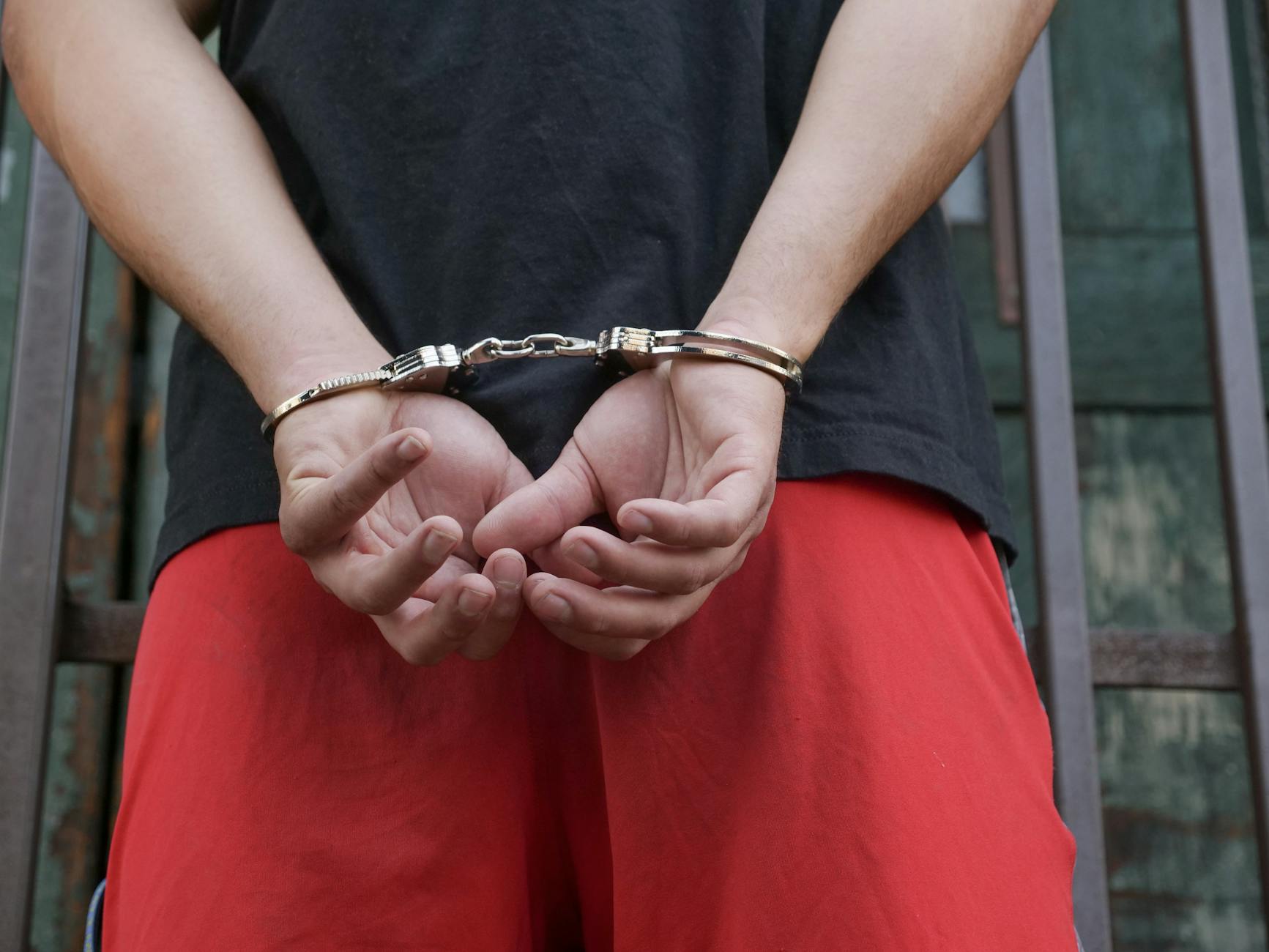
Iranian authorities arrested Oscar-nominated screenwriter Mehdi Mahmoudian on January 31, 2026, in Tehran, part of a broader crackdown on dissidents who publicly blamed Supreme Leader Ayatollah Ali Khamenei for the mass killing of protesters. Mahmoudian, who co-wrote the film “It Was Just an Accident” with director Jafar Panahi, faces detention for the roughly eighth time in his life — this time for co-signing an open letter that called the regime’s violence against citizens a crime against humanity. Two other signatories, Abdollah Momeni and Vida Rabbani, were arrested alongside him. The film Mahmoudian helped write is nominated for Best Screenplay and Best International Feature Film at the 98th Academy Awards, scheduled for March 15, 2026, making his imprisonment a collision of art, politics, and global attention that investors in media and geopolitical risk cannot afford to ignore.
For those watching markets tied to Middle Eastern stability, energy pricing, and the entertainment sector, this arrest is more than a human rights headline. Iran’s ongoing protest movement — triggered by rampant inflation and a cost-of-living crisis that erupted in December 2025 — has reportedly killed thousands and shows no sign of abating. When a regime cracks down on internationally recognized cultural figures, it signals deepening internal instability, the kind that historically rattles oil markets and reshapes risk premiums across emerging market portfolios. This article examines the details of the arrest, the broader protest crackdown, the film’s significance, and what it all means for investors tracking geopolitical risk.
Table of Contents
- Why Did Iran Arrest an Oscar-Nominated Screenwriter During Its Protest Crackdown?
- The Film Behind the Headlines and Its Oscar Significance
- Iran’s Protest Movement and the Economic Crisis Driving It
- What Mahmoudian’s Arrest Means for Geopolitical Risk Portfolios
- The Limits of International Attention and Sanctions Pressure
- The Role of Exiled Dissidents in Shaping the Narrative
- What Comes Next for Iran and for Markets
- Conclusion
- Frequently Asked Questions
Why Did Iran Arrest an Oscar-Nominated Screenwriter During Its Protest Crackdown?
The immediate trigger was an open letter published on Instagram on January 28, 2026. Mahmoudian was among 17 signatories — a group that included Nobel Peace Prize laureate Narges Mohammadi, exiled director Mohammad Rasoulof, and Jafar Panahi — who directly accused Khamenei of authorizing the “mass and systematic killing of citizens” during anti-regime protests. The letter did not hedge or equivocate. It called the killings a crime against humanity and placed principal responsibility on iran‘s supreme leader by name. For a regime that tolerates no public challenge to its authority, the letter was an act of extraordinary defiance. The distinction between signatories who were arrested and those who were not is telling. Several of the 17 live in exile — Rasoulof, for instance, now resides in Germany — and were beyond Tehran’s reach. Those still inside Iran, including Mahmoudian, Momeni, and Rabbani, faced immediate detention.
This pattern is familiar to anyone who has studied authoritarian crackdowns: regimes punish those they can physically access, which creates a chilling effect on domestic dissent while exiled critics remain free to speak. For Mahmoudian, whose history of activism has landed him in prison roughly eight times, the arrest was not a surprise. But the timing — weeks before the Academy Awards — ensures that the world is watching. The protests themselves stem from economic desperation. Rampant inflation and a cost-of-living crisis that began in December 2025 pushed ordinary Iranians into the streets. When governments respond to economic grievances with lethal force, it typically accelerates capital flight and deepens the economic spiral. Iran is no exception. The regime’s inability to address the underlying economic crisis while simultaneously spending resources on repression is a textbook example of what political scientists call the “repression-legitimacy tradeoff,” and it rarely ends well for the government in question.
The Film Behind the Headlines and Its Oscar Significance
“It Was Just an Accident” is not a typical Oscar contender. Director Jafar Panahi first met Mahmoudian in an Iranian prison in 2022, and he recruited the screenwriter specifically to make the script more “believable” based on Mahmoudian’s real experiences as a political prisoner. The film is nominated for both Best Screenplay and Best International Feature Film at the 98th Academy Awards. that dual nomination gives it unusual visibility, and Mahmoudian’s arrest guarantees the film will dominate awards-season coverage in ways that no marketing budget could replicate. However, investors should be careful about conflating media attention with box office performance or streaming revenue. Oscar-nominated foreign-language films often see a bump in distribution deals and platform licensing fees, but the bump is modest compared to mainstream Hollywood releases.
Where the real financial impact lies is in the broader narrative. When the Academy Awards become a stage for geopolitical confrontation — as happened with the 2024 ceremony following the Gaza conflict — it affects advertising revenue, viewership numbers, and the risk calculus for studios investing in politically sensitive content. Networks broadcasting the ceremony and studios distributing the film will be weighing reputational risk against the attention windfall. Panahi’s own response to Mahmoudian’s arrest was unsparing. He called Iran a “failed state,” stating that “this regime has collapsed and it is a failed state in any way you can possibly imagine. It is a failed state politically, ideologically, economically, culturally and environmentally.” That language from a globally recognized filmmaker carries weight beyond the art world. When credible voices describe a nation as a failed state, it influences how sovereign debt analysts, insurance underwriters, and foreign direct investment committees assess risk.
Iran’s Protest Movement and the Economic Crisis Driving It
The protests that began in December 2025 did not emerge from nowhere. Iran’s economy has been under sustained pressure from international sanctions, mismanagement, and a currency that has lost the vast majority of its value over the past decade. The immediate catalyst was a cost-of-living crisis marked by rampant inflation that made basic goods unaffordable for large segments of the population. When people cannot feed their families, political ideology becomes secondary to survival, and that is when protests become genuinely dangerous for regimes. The open letter signed by Mahmoudian and 16 others alleged that the crackdown on these protests has killed thousands. While independent verification of casualty figures inside Iran is notoriously difficult, the scale of the crackdown is consistent with reporting from multiple international outlets and human rights organizations.
For investors, the key variable is not the precise death toll but the trajectory: a regime that responds to economic protests with mass violence is a regime that is unlikely to implement the economic reforms necessary to stabilize its currency, attract foreign investment, or negotiate sanctions relief. Each escalation of repression makes diplomatic engagement harder, which in turn makes economic recovery less likely. This creates a feedback loop that energy market participants should monitor closely. Iran sits on some of the world’s largest oil and gas reserves, and any scenario involving regime instability — whether gradual erosion or sudden collapse — has direct implications for global energy supply. The current crackdown suggests the regime is prioritizing short-term control over long-term stability, a strategy that historically precedes either prolonged stagnation or abrupt political transition. Neither outcome is priced neatly into markets.
What Mahmoudian’s Arrest Means for Geopolitical Risk Portfolios
Investors who maintain geopolitical risk exposure — whether through energy futures, emerging market bonds, or defense sector equities — should weigh Mahmoudian’s arrest as a signal rather than an isolated event. The arrest of a single screenwriter matters less than what it represents: a regime that feels threatened enough to detain internationally prominent figures despite knowing the global backlash it will provoke. Governments that are confident in their grip on power tend to ignore dissidents; governments that arrest them publicly are broadcasting their own insecurity. The tradeoff for portfolio managers is between short-term stability and medium-term tail risk. In the short term, Iran’s crackdown may succeed in suppressing protests, which could reduce immediate volatility in regional risk premiums.
But the underlying economic conditions — inflation, currency depreciation, sanctions pressure — remain unresolved. Historically, regimes that survive protest waves through repression rather than reform tend to face larger, more destabilizing crises within three to five years. The comparison to the late-stage Soviet Union or pre-revolution Iran in the late 1970s is imperfect but instructive: economic stagnation combined with political repression creates pressure that eventually finds an outlet. For those with direct exposure to Middle Eastern assets, the practical question is whether to hedge or hold. Energy-heavy portfolios may benefit from the supply uncertainty that Iranian instability creates, since any disruption to Iranian production or exports would tighten global supply. But broader emerging market funds with Iranian-adjacent exposure — particularly those with positions in neighboring Iraq, Turkey, or Gulf states — face contagion risk if the situation deteriorates further.
The Limits of International Attention and Sanctions Pressure
One warning for investors counting on international pressure to moderate Tehran’s behavior: it rarely works the way markets expect. The Academy Awards will put Mahmoudian’s imprisonment on a global stage, and Western governments will likely issue statements condemning the arrest. But the gap between rhetorical condemnation and effective policy action is wide. Iran has operated under some of the world’s most comprehensive sanctions regimes for decades, and additional symbolic measures are unlikely to change the regime’s calculus on domestic repression. The limitation here is structural. Iran’s key economic relationships are increasingly with China, Russia, and other nations that do not condition trade on human rights performance.
As long as those relationships hold, Western sanctions function more as a constraint on Iran’s integration with global capital markets than as a lever for behavioral change. Investors should factor this into their analysis: the protest crackdown is unlikely to produce a sanctions breakthrough or a diplomatic opening in the near term. Instead, it will likely deepen Iran’s isolation from Western financial systems while reinforcing its dependence on non-Western trading partners, a dynamic that has implications for dollar-denominated oil pricing and sanctions-evasion networks. The arrest of cultural figures like Mahmoudian also creates a specific kind of reputational risk for companies operating in adjacent markets. Entertainment companies, streaming platforms, and media distributors will face pressure from advocacy groups to take public positions, and some may face boycott campaigns depending on how the Oscar ceremony handles the situation. These risks are manageable but real, and corporate communications teams at major studios are already likely scenario-planning for them.
The Role of Exiled Dissidents in Shaping the Narrative
The 17 signatories of the open letter illustrate a pattern that has become common in authoritarian crackdowns: the most prominent voices are often beyond the regime’s physical reach. Mohammad Rasoulof, who directed the 2025 Oscar nominee “The Seed of the Sacred Fig,” signed the letter from exile in Germany. Narges Mohammadi, the Nobel laureate, has been in and out of Iranian prisons for years. Jafar Panahi, who has faced his own restrictions in Iran, continues to speak out.
The signatories who remain inside Iran — Mahmoudian, Momeni, Rabbani — pay the heaviest price, while those in exile amplify the message to a global audience. For investors, the relevant dynamic is that exile communities often serve as conduits for information, fundraising, and diplomatic lobbying that can shift policy over time. The Iranian diaspora is well-organized and politically active in the United States, Europe, and Canada. When Oscar-nominated films become entangled with political repression, it creates a mobilization opportunity that can influence everything from congressional hearings to European Union sanctions reviews. Markets that are sensitive to policy shifts — particularly energy markets — should track these advocacy campaigns as leading indicators.
What Comes Next for Iran and for Markets
The weeks between now and the March 15 Academy Awards ceremony will be a period of heightened attention on Iran’s domestic situation. If Mahmoudian remains imprisoned during the ceremony, the event will almost certainly become a platform for statements about Iranian repression, drawing comparisons to past moments when the Oscars intersected with geopolitics. Whether that attention translates into policy action or merely symbolic solidarity remains to be seen, but the spotlight alone increases pressure on the regime at a moment when it is already struggling with economic crisis and popular unrest.
Looking further out, the trajectory of Iran’s protest movement and the regime’s response will shape regional risk for the rest of 2026 and beyond. The combination of economic desperation, mass repression, and a fractured international response creates an unstable equilibrium that could tip in multiple directions. Investors should resist the temptation to assign a single probability to outcomes in Iran and instead maintain flexible positions that can accommodate a range of scenarios, from prolonged stagnation to accelerated instability. The arrest of Mehdi Mahmoudian is one data point in a larger pattern, but it is a data point that deserves attention.
Conclusion
The arrest of Mehdi Mahmoudian underscores the deepening crisis inside Iran, where a regime facing economic collapse and mass protests has chosen repression over reform. His detention — alongside Abdollah Momeni and Vida Rabbani — for co-signing a letter that accused Khamenei of authorizing the mass killing of citizens signals a government that is both threatened and unyielding. The intersection with the Academy Awards, where “It Was Just an Accident” is nominated for two major categories, ensures that this story will reach an audience far beyond the usual geopolitical risk analysts and human rights organizations. For investors, the key takeaways are threefold.
First, Iran’s internal instability is a material risk factor for energy markets and regional portfolios, and the crackdown suggests conditions are deteriorating rather than stabilizing. Second, the international attention generated by the Oscar nominations creates a possible catalyst for policy shifts, particularly in Europe, that could affect sanctions frameworks. Third, the broader pattern of authoritarian regimes arresting cultural figures during periods of domestic crisis is a reliable indicator of regime insecurity — and insecure regimes are unpredictable ones. Position accordingly.
Frequently Asked Questions
Who is Mehdi Mahmoudian and why was he arrested?
Mahmoudian is an Iranian screenwriter and human rights activist who co-wrote the Oscar-nominated film “It Was Just an Accident” with director Jafar Panahi. He was arrested on January 31, 2026, in Tehran after co-signing an open letter that blamed Supreme Leader Ayatollah Ali Khamenei for authorizing the mass killing of protesters. It was approximately his eighth time being imprisoned.
What film is nominated for the Oscars and in which categories?
“It Was Just an Accident,” directed by Jafar Panahi and co-written by Mahmoudian, is nominated for Best Screenplay and Best International Feature Film at the 98th Academy Awards, scheduled for March 15, 2026.
What triggered the protests in Iran?
The protests began in December 2025, sparked by rampant inflation and a cost-of-living crisis that made basic goods unaffordable for many Iranians. The regime’s violent response to these economic grievances escalated the unrest.
How does Iran’s crackdown affect energy markets?
Iran holds some of the world’s largest oil and gas reserves. Domestic instability increases the risk of supply disruptions and complicates any diplomatic efforts toward sanctions relief, both of which can affect global energy pricing and supply forecasts.
Who else signed the open letter that led to the arrests?
The letter had 17 signatories, including Nobel Peace Prize laureate Narges Mohammadi, exiled director Mohammad Rasoulof, and director Jafar Panahi. Several signatories living in exile were not subject to arrest, while those inside Iran faced immediate detention.
Has international attention on Iran at previous award ceremonies led to policy changes?
Historically, the gap between international rhetorical condemnation and effective policy action on Iran has been wide. While Oscar-stage attention increases public pressure, Iran’s key economic relationships with China and Russia limit the leverage that Western sanctions and statements can exert on the regime’s domestic behavior.