
Apple stock dipped roughly 0.7% to $256.44 in late January 2026 as investors braced for the company’s Q1 FY2026 earnings report, a move that reflected genuine uncertainty about iPhone sales momentum, margin pressures from rising memory costs, and whether the long-awaited AI-powered Siri overhaul would translate into tangible revenue. The slip, coming off a prior close of $258.31, was modest in percentage terms but significant in what it signaled — Wall Street was nervous, and the options market was pricing in a meaningful swing in either direction once results dropped on January 29. As it turned out, those jitters were largely unfounded.
Apple posted record quarterly revenue of $143.8 billion, a 16% year-over-year increase, with iPhone sales alone hitting $85.3 billion. The stock subsequently surged, analyst upgrades rolled in, and by mid-February shares were trading in the $273–$277 range. This article breaks down what drove the pre-earnings anxiety, how the results reshaped the narrative, where analysts see Apple heading from here, and what catalysts investors should watch in the months ahead.
Table of Contents
- Why Did Apple Stock Slip Ahead of Its Key Earnings Update?
- Breaking Down Apple’s Record Q1 FY2026 Earnings Performance
- How Analysts Recalibrated After the Earnings Beat
- What Apple’s Post-Earnings Price Action Tells Investors
- Key Risks That Could Derail Apple’s 2026 Momentum
- Upcoming Catalysts That Will Shape Apple’s Near-Term Trajectory
- Where Apple Stock Goes From Here
- Conclusion
- Frequently Asked Questions
Why Did Apple Stock Slip Ahead of Its Key Earnings Update?
The 0.7% decline ahead of earnings was not a dramatic sell-off by any measure, but it reflected a pattern that plays out regularly with mega-cap tech stocks before major reports. Investors who had ridden apple shares higher into January were trimming positions to manage risk, a practice known as “de-risking” that intensifies when uncertainty about a specific metric — in this case, iPhone unit volumes and average selling prices — is unusually high. There was also legitimate concern about margin compression. DRAM and NAND flash prices had been climbing through the second half of 2025, and Apple absorbs those costs directly in its hardware business. If iPhone margins contracted even modestly on an $85 billion revenue line, the earnings impact would be substantial.
The other overhang was Siri. Apple had spent much of 2025 telegraphing a major AI upgrade to its voice assistant, and investors wanted to see early indicators that the investment was paying off — either through higher device engagement, increased Services attach rates, or some other measurable outcome. Without clear evidence, there was a risk the market would treat the AI push as an expense drag rather than a growth driver. For context, compare this to the pre-earnings dynamic around Microsoft in the same period, where Azure AI revenue growth gave investors a concrete number to anchor their optimism. Apple, heading into its report, lacked that kind of clean data point.
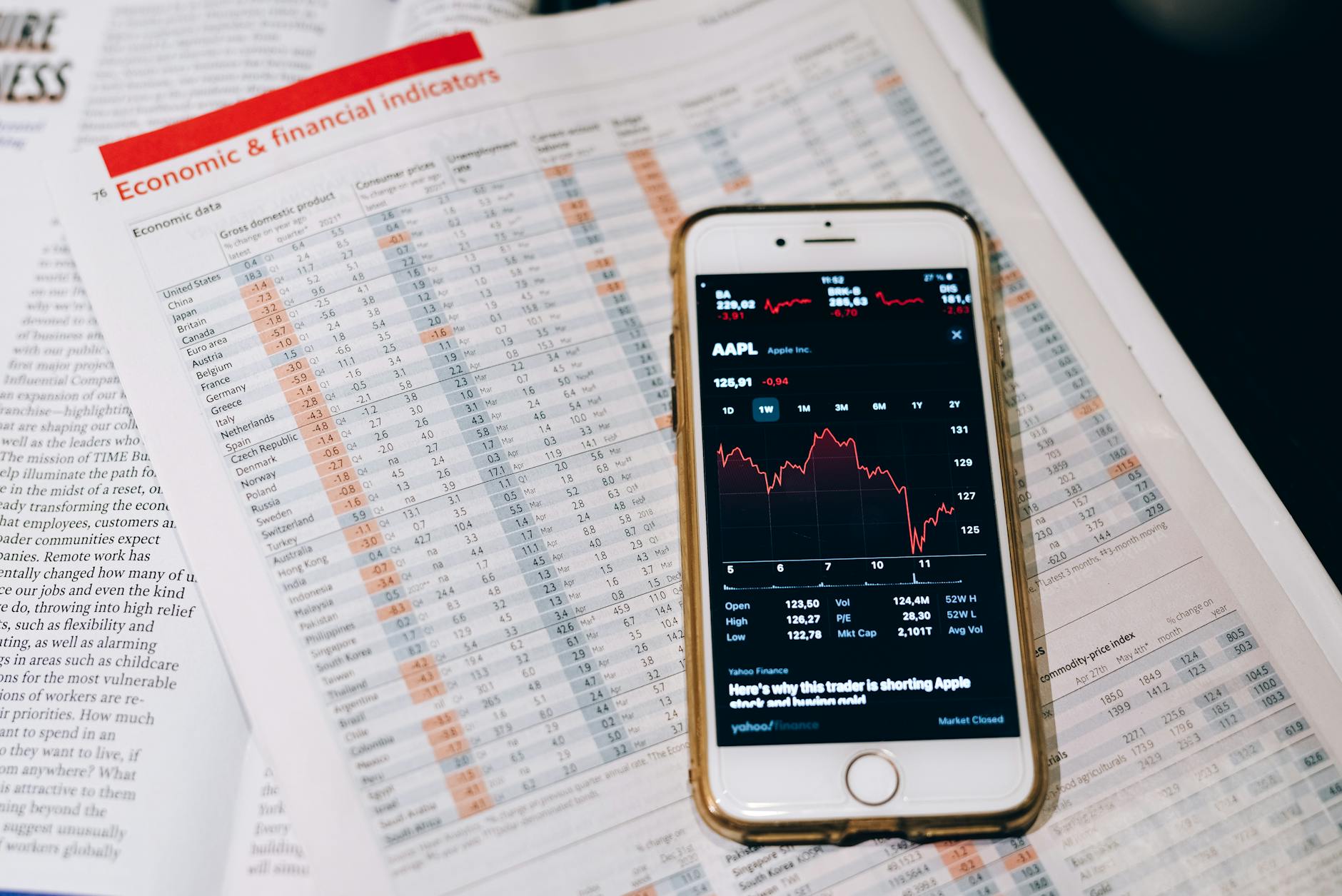
Breaking Down Apple’s Record Q1 FY2026 Earnings Performance
When the numbers arrived after the bell on January 29, they silenced most of the skeptics. Revenue of $143.8 billion topped expectations handily, and diluted earnings per share of $2.84 beat the analyst consensus of $2.66 by nearly 7%. The iPhone business was the star, generating $85.3 billion in revenue — a 23% year-over-year increase that represented an all-time record across every geographic segment Apple reports. Services revenue hit $30 billion, up 14%, extending a streak of quarterly records in a business line that carries significantly higher margins than hardware. The China number may have been the most striking line item in the entire report.
Revenue from Greater China surged 38% to $25.53 billion, a result that confounded analysts who had been worried about competitive pressure from Huawei and broader macroeconomic softness in the region. Operating cash flow reached $53.9 billion for the quarter — another all-time record — and net profit came in at $42.1 billion. Apple also disclosed that its active installed base had grown to 2.5 billion devices, up from 2.35 billion a year earlier, a metric that matters because it represents the addressable market for Services revenue. However, investors should be careful about extrapolating a single blockbuster quarter into a full-year thesis. Q1 is Apple’s holiday quarter, historically its strongest, and the 23% iPhone growth was partly a function of the iPhone 17 cycle landing at a favorable point in the upgrade calendar. If the March and June quarters show iPhone revenue reverting to single-digit growth, the stock’s valuation multiple could come under pressure even if absolute numbers remain strong.
How Analysts Recalibrated After the Earnings Beat
The post-earnings analyst reaction was swift and broadly positive. Apple stock surged 3% on February 2 as upgrades and bullish research notes hit the wires. Morgan Stanley was among the most vocal bulls, arguing that Apple is positioned to outperform through 2026 on the back of new product launches and AI-related catalysts. Their thesis centers on the idea that the Siri overhaul and on-device AI features will drive an accelerated upgrade cycle, particularly among the roughly 300 million iPhones in the installed base that are more than three years old.
Not everyone was as enthusiastic. Jefferies lowered its price target from $283.36 to $276.47 while maintaining a Hold rating, a move that reflected concern about whether the Q1 growth rate is sustainable and whether Services revenue growth might decelerate as App Store regulatory pressures mount in the EU and other jurisdictions. The broader Wall Street consensus settled on a Moderate Buy rating, with average price targets clustering in the $287 to $305 range, implying roughly 8% to 15% upside from mid-February levels. At least one bearish analyst, cited by Barchart and Yahoo Finance, expects Apple stock to essentially stagnate through 2026, arguing that the current valuation already prices in the AI optionality that bulls are counting on.

What Apple’s Post-Earnings Price Action Tells Investors
The trading action in early February offered a useful case study in how earnings momentum can be interrupted by mechanical market events. After the 3% surge on February 2, Apple shares drifted higher before slipping 1.6% to $273.63 on February 9 — a move driven almost entirely by the stock trading ex-dividend. Apple’s $0.26 quarterly dividend, payable on February 12, was stripped from the share price that day, and some investors used the occasion to take profits after a strong run. By February 11, shares were trading in a range between $272.91 and $277.44, essentially consolidating around the post-earnings gains.
The tradeoff for investors here is straightforward. If you believe the Q1 results represent the beginning of a multi-quarter acceleration — driven by AI features, a strong iPhone cycle, and recovering China demand — then buying in the low $270s represents a reasonable entry point, with analyst targets suggesting $287 to $305 as a destination. If you think Q1 was a one-off peak boosted by holiday spending and pent-up upgrade demand, then waiting for the Q2 report in late April or early May before adding to a position makes more sense. The risk of waiting is that the stock moves higher before you act; the risk of buying now is that you catch a quarter or two of decelerating growth before the next product catalyst arrives.
Key Risks That Could Derail Apple’s 2026 Momentum
Despite the blockbuster quarter, several risks deserve attention. First, the memory cost issue that worried investors heading into earnings has not gone away. DRAM and NAND prices are influenced by supply dynamics in the semiconductor industry that Apple does not control, and if prices continue to rise through the first half of 2026, gross margins on iPhones, iPads, and Macs could narrow meaningfully. Apple has historically managed component costs through long-term supply agreements and sheer purchasing scale, but there are limits to how much cost absorption is possible before it hits the income statement. Second, regulatory risk is a persistent overhang.
The EU’s Digital Markets Act is forcing Apple to open up its App Store ecosystem in ways that could reduce the take rate on in-app purchases — a direct threat to the high-margin Services business that Wall Street values so richly. Japan and India are considering similar frameworks. If Services revenue growth slows from 14% to the high single digits because of regulatory-driven fee reductions, the impact on Apple’s blended margins and earnings multiple could be significant. Third, and this is a limitation that even bulls acknowledge, Apple’s AI strategy is still largely a promise rather than a delivered product. The Siri overhaul is progressing, but it has not yet reached the kind of functionality that competes head-to-head with standalone AI assistants or the deeply integrated AI features that Google and Samsung are shipping on Android devices. If the spring software update cycle does not meaningfully close that gap, investor patience could wear thin.
Upcoming Catalysts That Will Shape Apple’s Near-Term Trajectory
Several dates on the calendar matter for Apple investors in the near term. The CPI report on February 13, 2026, will influence broader market sentiment and could move Apple along with the rest of the large-cap tech sector if inflation data comes in hot or cold relative to expectations. Apple’s Annual Meeting on February 24 will give management an opportunity to address shareholder questions about capital allocation, AI strategy, and the regulatory environment — topics that could generate headlines if Tim Cook offers any forward-looking commentary beyond the usual scripted remarks.
The most consequential event, though, is the Q2 FY2026 earnings report expected in late April or early May. That report will cover the January-through-March quarter, which lacks the holiday tailwind and will provide the first clean read on whether the iPhone 17 cycle has staying power beyond the initial launch surge. Investors should watch the China revenue line especially closely, as the 38% growth in Q1 set a high bar that will be difficult to repeat.
Where Apple Stock Goes From Here
Apple’s position heading into the middle of 2026 is fundamentally strong but priced accordingly. With shares trading in the mid-$270s against a consensus target range of $287 to $305, the implied upside is real but not extraordinary — this is not a deep-value setup. The bull case rests on the AI upgrade cycle materializing, Services revenue continuing to compound at double-digit rates, and China demand remaining robust.
The bear case hinges on margin pressure, regulatory headwinds, and the possibility that $143.8 billion in quarterly revenue represents a near-term ceiling rather than a floor. For long-term holders, the 2.5-billion-device installed base remains the most compelling asset in the story. That ecosystem generates recurring revenue through Services, creates switching costs that protect market share, and provides a distribution channel for whatever AI products Apple ultimately ships. Whether the stock is at $273 or $305 six months from now will depend largely on execution — and on whether the broader market environment, shaped by interest rates and economic growth, continues to reward premium multiples on premium businesses.
Conclusion
Apple’s pre-earnings stock slip in late January turned out to be a buying opportunity in hindsight, as the company delivered record revenue of $143.8 billion, record iPhone sales of $85.3 billion, and earnings per share that beat consensus by nearly 7%. The post-earnings rally, analyst upgrades, and subsequent price consolidation in the mid-$270s have set the stage for the next phase of the debate — whether Q1’s exceptional growth can be sustained or whether it was a cyclical peak amplified by holiday demand and a favorable upgrade cycle.
Investors weighing an Apple position should focus on the Q2 earnings report expected in late April as the next major inflection point, while keeping an eye on macro catalysts like the February 13 CPI report and any commentary from management at the February 24 Annual Meeting. The consensus view leans bullish, with price targets suggesting meaningful upside, but the risks around margins, regulation, and AI execution are real enough to warrant a measured approach rather than aggressive conviction in either direction.
Frequently Asked Questions
Why did Apple stock drop before its January 2026 earnings report?
Apple shares slipped about 0.7% to $256.44 ahead of the January 29 earnings release. The decline reflected investor uncertainty about iPhone sales performance, potential margin pressures from rising memory component costs, and questions about whether Apple’s AI-powered Siri overhaul would show tangible progress. This kind of pre-earnings de-risking is common among mega-cap stocks when key metrics are in doubt.
What were Apple’s Q1 FY2026 earnings results?
Apple reported record quarterly revenue of $143.8 billion, up 16% year-over-year, with diluted EPS of $2.84, beating the analyst consensus of $2.66 by approximately 7%. iPhone revenue hit an all-time record of $85.3 billion, Services reached $30 billion, and China revenue surged 38% to $25.53 billion.
What is the current analyst consensus on Apple stock?
As of early February 2026, the Wall Street consensus is a Moderate Buy with average price targets ranging from $287 to $305, implying 8% to 15% upside from mid-February trading levels. Morgan Stanley is among the more bullish voices, while Jefferies maintains a Hold rating with a price target of $276.47.
When is Apple’s next earnings report?
Apple’s Q2 FY2026 earnings report is expected in late April or early May 2026. That report will cover the January-through-March quarter and will be closely watched for signs of whether the strong iPhone 17 cycle and China demand growth can persist beyond the holiday season.
What is Apple’s current dividend?
Apple pays a quarterly dividend of $0.26 per share. Shares traded ex-dividend on February 9, 2026, with the dividend payable on February 12. At mid-February share prices, the annualized yield is modest — roughly 0.4% — making Apple primarily a capital appreciation story rather than an income play.